 Vietnamnet.vn

 Podcast




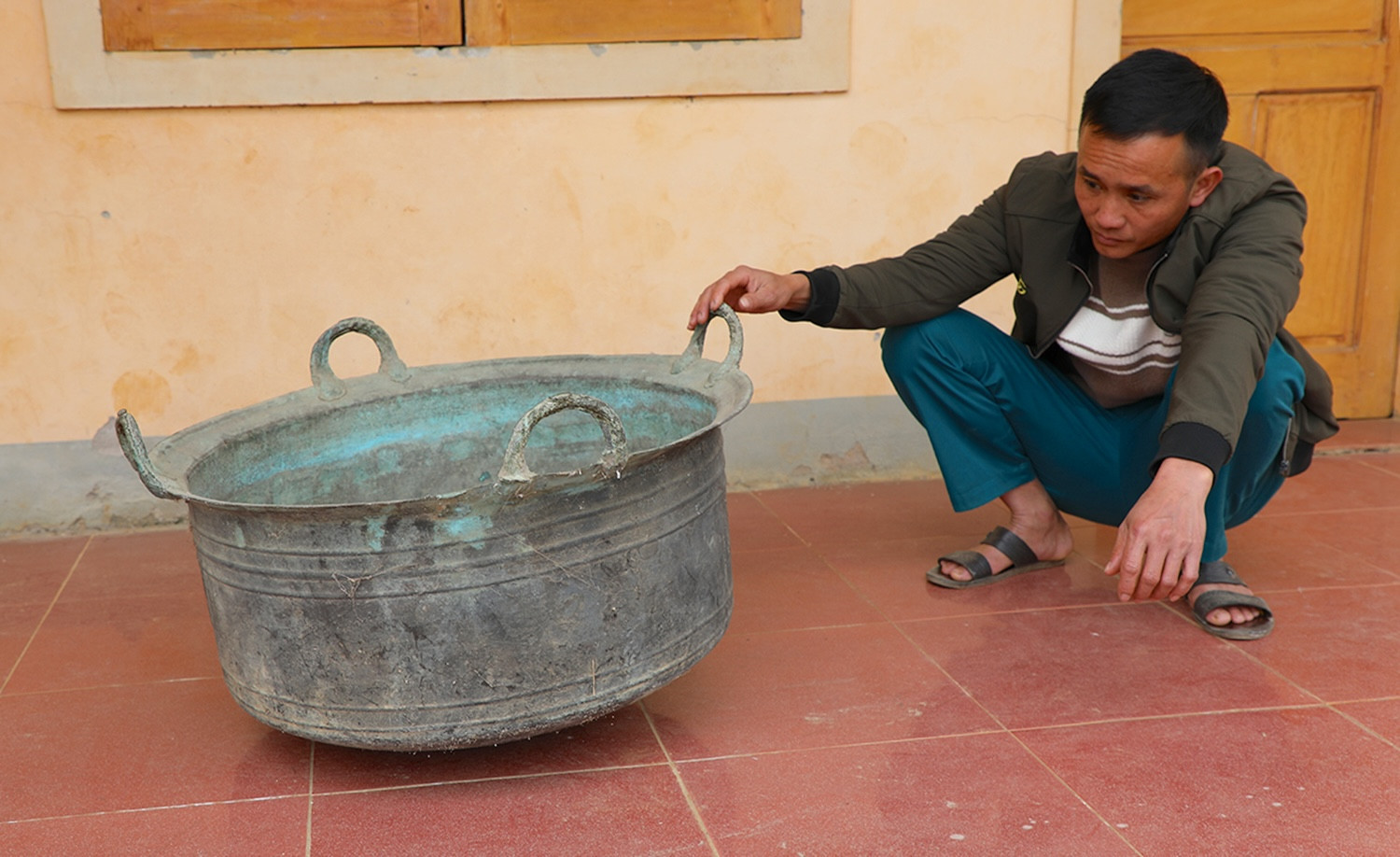
Over the centuries, the ancient cauldron survived countless upheavals. Yet one of the most remarkable chapters in its story involves the repeated attempts to steal it.
Vi Ngoc Duyen, former Chairman of the People's Committee of Chau Thuan Commune, recalled that despite being stolen several times, the artifact was always returned.
More than 30 years ago, while temporarily stored beneath a shelter at the local kindergarten, the cauldron suddenly disappeared.
As villagers searched frantically, an unexpected development occurred several weeks later.
A man from the former Dien Chau District, more than 100 kilometers away, arrived and personally returned the cauldron, admitting that he had stolen it.
He confessed that he intended to sell the artifact to antique collectors for profit. However, after bringing it home, his family reportedly began hearing strange noises at night.
Terrified and increasingly anxious, the man eventually decided to return the relic.
Given his apparent remorse, local authorities chose not to pursue criminal charges. Instead, they transferred the cauldron to the commune headquarters for safekeeping.
In 2000, the bronze cauldron once again became the target of thieves.
An unidentified individual allegedly broke into the Chau Thuan Commune headquarters in the middle of the night, removed the cauldron and tied it to the back of a motorbike before transporting it to a scrap metal dealer.
One week later, the owner of a scrap collection business in the former Quy Chau District unexpectedly delivered the cauldron back to local authorities.
The business owner explained that the artifact had been purchased from an unknown man and that they had no idea it was a culturally significant relic belonging to the commune.
After storing it for several days, acquaintances informed them that the cauldron was under official management and carried deep local significance.
Concerned about potential legal consequences, the dealer voluntarily returned the artifact.
Speaking about future preservation efforts, Vi Van Lam, Deputy Chief of Office of the Chau Tien Commune People's Committee, said local authorities are preparing documentation to seek official heritage recognition for the bronze cauldron.
The move is expected not only to strengthen protection of the artifact but also to support research and promote the area's unique cultural heritage, potentially creating new opportunities for local tourism development.
Tran Tuyen
.svg)
