 Vietnamnet.vn

 Podcast


More than two decades later, scientist Nguyen Van Hieu returned from the Soviet Union and, at just 31, was entrusted by Prime Minister Pham Van Dong with establishing the Institute of Physics.
Their stories reflect not only the desire of Vietnamese intellectuals to contribute to their homeland, but also the importance of recognizing talent, bringing capable people together and giving them opportunities to make a difference.
Today, as science, technology and innovation become increasingly important drivers of development, those lessons remain highly relevant.
Politburo Resolution No. 57-NQ/TW, which focuses on breakthroughs in science, technology, innovation and national digital transformation, calls for stronger efforts to develop and attract talent and create an environment in which intellectuals can fully realize their potential and contribute to the country.
From the pioneers who laid the foundations of Vietnamese science to today's researchers exploring new scientific frontiers, one question remains: How can Vietnam attract and make effective use of talented people, turning their aspirations to contribute into scientific achievements that serve national development?
Through the stories of successive generations of Vietnamese intellectuals, this five-part VietNamNet series revisits lessons in identifying and empowering talent while examining the policies and institutional mechanisms needed to make Vietnamese expertise a driving force for development in a new era.
Leaving France to answer President Ho Chi Minh's call
In September 1946, during a visit to France, President Ho Chi Minh met several Vietnamese intellectuals living abroad and encouraged them to return home to help build the newly independent country.
Among those who decided to return was Pham Quang Le, then a 33-year-old engineer working in France after more than a decade of study and research in Europe.
According to documents from the Vietnam National Museum of History, Le was born on September 13, 1913, in Vinh Long. He traveled to France in 1935 to pursue his education.
After completing his studies, he worked in aeronautical engineering and mechanical engineering while independently studying weapons manufacturing technology.
A research article on Tran Dai Nghia published by the museum in 2015 states that he traveled to Germany in 1942, where he worked at an aircraft manufacturing facility and a weapons research establishment.
During his years in Europe, Le accumulated not only specialized engineering knowledge but also extensive technical documents on military technology, particularly infantry weapons and explosives.
One episode frequently recounted in historical records concerns a conversation between Ho Chi Minh and Le on their journey back to Vietnam.
Asked whether he could endure the difficult living conditions awaiting him at home, Le replied that he could.
When Ho Chi Minh asked whether he would be able to manufacture weapons despite shortages of engineers, skilled workers and machinery, Le answered: "Uncle Ho, I have spent 11 years preparing for this. I am confident I can do it!"
The exchange was recounted by the Vietnam National Museum of History in its article on Professor Tran Dai Nghia and Vietnam's defense industry.
On September 16, 1946, Le and several other Vietnamese intellectuals departed for Vietnam with Ho Chi Minh.
Their return came just over a year after the establishment of the Democratic Republic of Vietnam, at a time when the young government faced a complicated political and military situation and the growing threat of war.
Historical documents show that Le was not the only intellectual to make the journey.
The group also included engineer Vo Quy Huan, physician Tran Huu Tuoc and several others who had received their education in Europe and later contributed to building and defending the revolutionary government during the country's early years of independence.
A new name and a mission to develop weapons
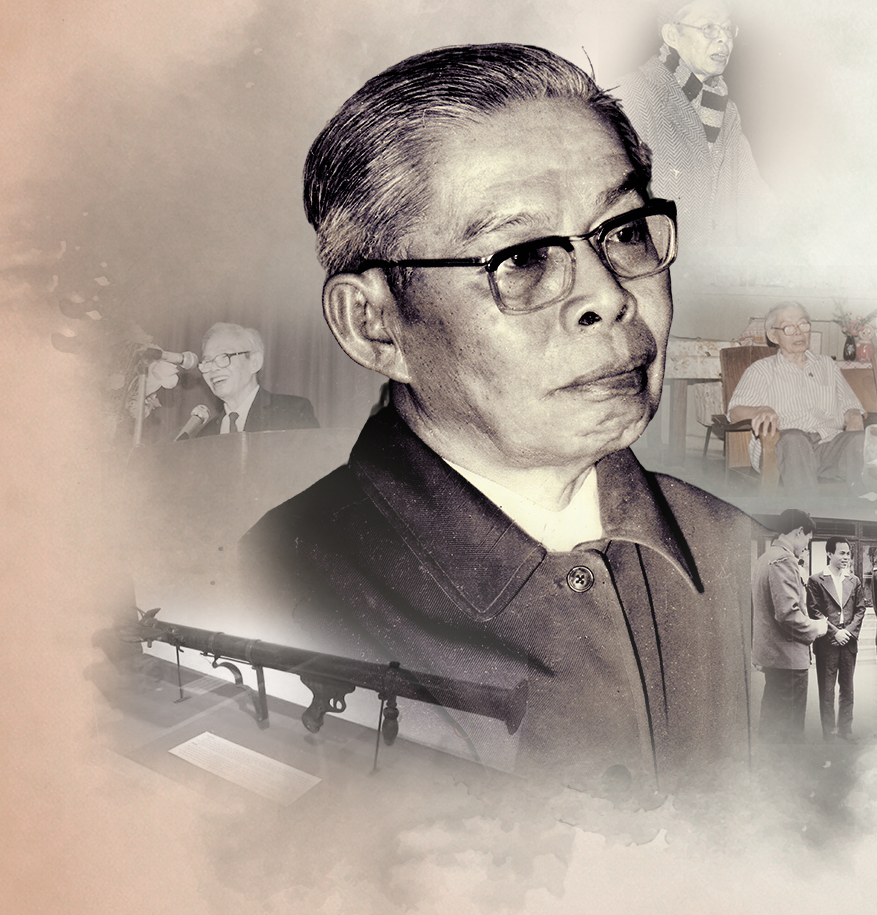
On December 5, 1946, at the Tonkin Palace in Hanoi, President Ho Chi Minh appointed Pham Quang Le director of the Military Ordnance Department.
According to the Vietnam National Museum of History, President Ho Chi Minh told him during the meeting: "The resistance war is approaching. Today, I have called you here to entrust you with the position of director of the Military Ordnance Department. Your task is to provide weapons for our soldiers to fight the enemy."
At the same meeting, President Ho Chi Minh gave him a new name: Tran Dai Nghia.
Historical accounts explain that the name reflected the importance of his mission and also served as an alias to maintain secrecy and protect his family and relatives who remained in southern Vietnam.
On December 19, 1946, the nationwide resistance war against French forces began.
According to documents from the Department of Cultural Heritage concerning a military ordnance workshop in Thai Nguyen, General Vo Nguyen Giap had instructed the ordnance sector to research and manufacture Bazooka anti-tank weapons as early as June 1946.
However, the project encountered considerable technical and material difficulties.
After returning to Vietnam, Tran Dai Nghia took charge of the research program, concentrating on resolving outstanding technical problems.
His contribution lay in applying his specialized knowledge, organizing research and working with colleagues to overcome engineering obstacles and complete the weapon.
Under wartime conditions, military workshops had to conduct research and manufacturing simultaneously while maintaining safety and meeting urgent battlefield requirements.
Documents from the Vietnam Academy of Science and Technology indicate that Tran Dai Nghia recalculated technical specifications, studied adjustments to propellant formulations and sought ways to adapt knowledge acquired abroad to the materials available in Vietnam.
Technical personnel, factory workers and soldiers from the military ordnance sector all participated in the effort.
From the Bazooka to Vietnam's recoilless weapon
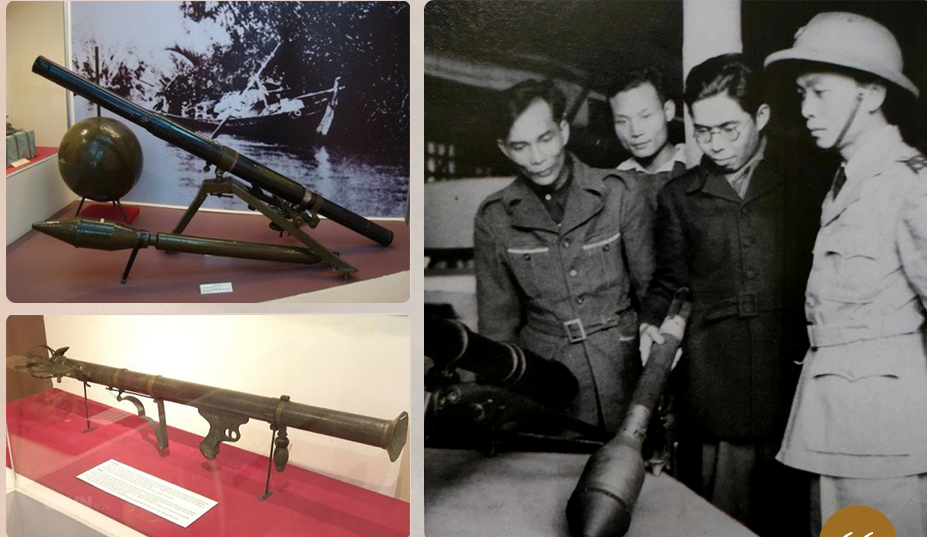
In February 1947, following extensive research and testing, Vietnam's military ordnance sector successfully manufactured its own Bazooka.
According to the Department of Cultural Heritage, the weapon was developed from an American Bazooka design, with technical modifications suited to domestic manufacturing conditions.
Records from the Vietnam Academy of Science and Technology confirm that, by late February 1947, ordnance personnel had successfully produced the weapon under the technical direction of department chief Tran Dai Nghia.
On March 3, 1947, the Bazooka was deployed against French armored forces west of Hanoi.
According to the academy's records, the weapon destroyed two French tanks in the Son Lo area of Quoc Oai, helping halt an armored advance.
The event became a milestone in the development of Vietnam's military ordnance industry.
Following the Bazooka's success, Tran Dai Nghia and his colleagues continued researching new weapons capable of attacking fortified defensive positions.
A historical study titled Tran Dai Nghia from a Historical Perspective, published in a journal of the Institute of History, describes the development of the SKZ recoilless weapon.
Following a military ordnance technical conference in 1948, Tran Dai Nghia worked with Nguyen Trinh Tiep, Le Tam and other colleagues to research and develop the weapon.
Unlike the Bazooka, for which a reference design was available, the SKZ presented greater technical challenges because many engineering solutions had to be developed independently.
After approximately seven months of research, the SKZ weapon and its ammunition were completed and successfully test-fired at the ancient citadel of Tuyen Quang in late May 1949.
Historical research documents indicate that the weapon was capable of destroying bunkers and fortified positions while remaining relatively compact and lightweight, making it suitable for mobile military operations.
The SKZ was subsequently deployed on the battlefield, including during the Pho Lu battle.
These achievements resulted from the collective efforts of researchers, engineers, factory workers and military personnel operating under wartime conditions.
Historical sources consistently recognize Tran Dai Nghia's technical and organizational leadership while also acknowledging the contributions of the many people involved in developing and manufacturing the weapons.
Building Vietnam's scientific institutions after the war
In January 1948, Tran Dai Nghia was promoted to major general during the first round of military rank appointments in the Vietnam People's Army.
In 1952, he received the title of Labor Hero in the country's first round of such honors.
According to documents from the State Committee for Overseas Vietnamese, he became a member of the Communist Party of Vietnam in May 1949.
Following the resistance war against French colonial forces, he continued to hold important positions in industry, higher education and scientific administration.
On May 20, 1975, the Vietnamese Government decided to establish the Vietnam Institute of Science, the predecessor of today's Vietnam Academy of Science and Technology.
Professor and Academician Tran Dai Nghia was appointed its first director while concurrently serving as chairman of the State Science and Technology Committee.
From February 1977, he concentrated on his responsibilities as director of the institute.
The challenge had changed considerably.
During the war, the immediate objective had been to develop weapons for military operations. In peacetime, the task was to build a research institution with qualified personnel, an effective organizational structure and a long-term scientific direction.
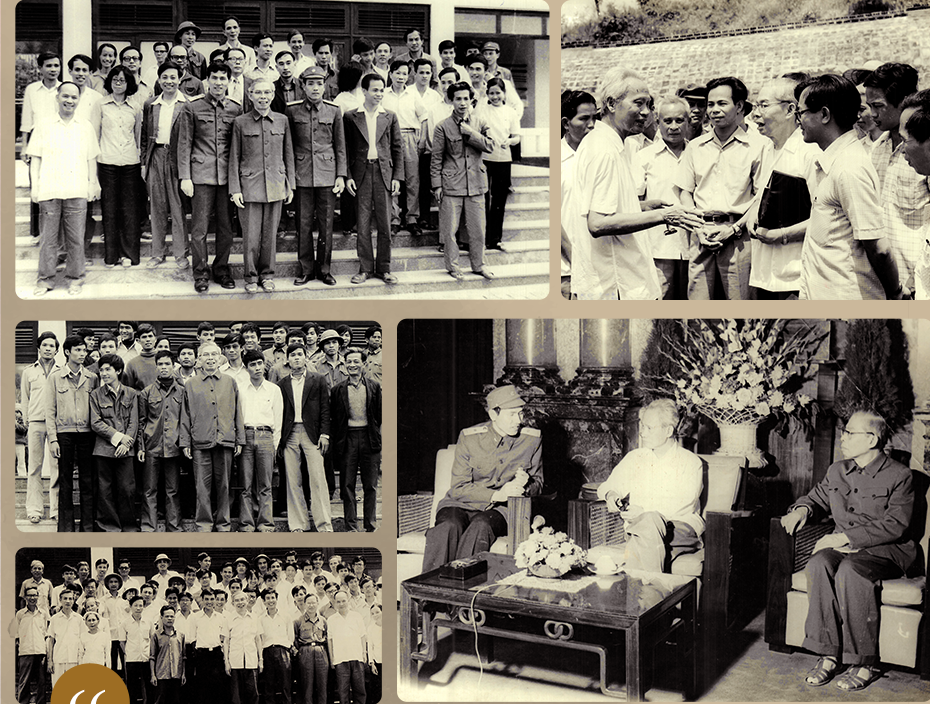
According to institutional records, the Vietnam Institute of Science had approximately 1,300 employees across 30 units throughout northern and southern Vietnam in 1977, despite significant shortages of facilities and equipment.
Responding to these conditions, Tran Dai Nghia promoted the training of researchers at overseas institutions, recruited outstanding young graduates and invited leading scientists to participate in research projects or contribute to the institute's Scientific Council.
His approach was not simply to fill staffing positions. It was to create a professional network capable of supporting a newly established scientific institution.
He regarded the Scientific Council as a forum for bringing together expertise from different disciplines, including scientists working outside the institute, to determine research priorities, establish scientific directions and evaluate results.
His leadership emphasized collective professional discussion in making scientific decisions.
Records from the Vietnam Academy of Science and Technology also highlight his interest in developing basic sciences, particularly computational science.
During his tenure, the Institute of Computational Science and Control was established, laying the groundwork for subsequent research in computing technology and informatics.
Another priority was connecting Vietnamese research more closely with the international scientific community.
Tran Dai Nghia invited foreign scientists to participate in academic exchanges, sought overseas training opportunities for Vietnamese researchers and promoted international research cooperation.
In 1979, the Vietnam Institute of Science worked with the Soviet Academy of Sciences to prepare a research program for the spaceflight of Pham Tuan and V. V. Gorbatko.
As chairman of Vietnam's Space Research Committee, Tran Dai Nghia participated in preparations for the program alongside Academician Nguyen Van Hieu.
The project illustrated how Vietnam's scientific institutions could contribute to major research initiatives through international cooperation.
The enduring lesson of trusting and empowering talent
Eighty years ago, President Ho Chi Minh entrusted engineer Pham Quang Le, later known as Tran Dai Nghia, with the mission of researching and manufacturing weapons to support Vietnam's struggle for independence.
Following his appointment on December 5, 1946, he and his colleagues helped develop weapons that met the demands of the battlefield.
He subsequently assumed major responsibilities in the country's scientific and industrial institutions.
Looking back at these two stages of his career, the connecting thread was not simply Tran Dai Nghia's individual talent.
In the military ordnance sector, he worked with colleagues to turn scientific knowledge into practical weapons.
At the Vietnam Institute of Science, he focused on developing human resources, establishing mechanisms for professional discussion and identifying research directions that could serve national needs.
Although his responsibilities changed, his approach remained rooted in practical requirements: identifying the right people, securing the necessary conditions and organizing efforts to achieve concrete results.
His story offers a specific lesson for the Communist Party of Vietnam's institution-building efforts today.
Recognizing capable individuals must go hand in hand with trusting them and assigning meaningful responsibilities.
Making effective use of a scientist's abilities also means creating the conditions for that person to build a strong team and ensuring that the team can continue its work after the individual has moved on.
The decision to bring Pham Quang Le home in 1946 demonstrated the importance of recognizing and appointing talent at a critical moment.
The early years of the Vietnam Institute of Science showed the lasting value of that decision, as the scientist entrusted with a national mission went on to train, attract and bring together other talented people.
Thai An - Van Nga

