 Vietnamnet.vn

 Podcast



Hanh Thien village, located in Xuan Hong commune, Ninh Binh province, is widely known for its longstanding tradition of academic excellence spanning generations. Remarkably, the village still preserves many century-old houses that silently tell the tales of this storied land.
Historically celebrated for its devotion to learning and scholarly achievements, Hanh Thien is often described as a “sacred land that nurtures talent,” having produced more than 200 doctors of literature and many renowned figures across various fields.
At the heart of the village stands the communal house, where stone steles inscribe the names of professors and doctorate holders who hail from Hanh Thien.
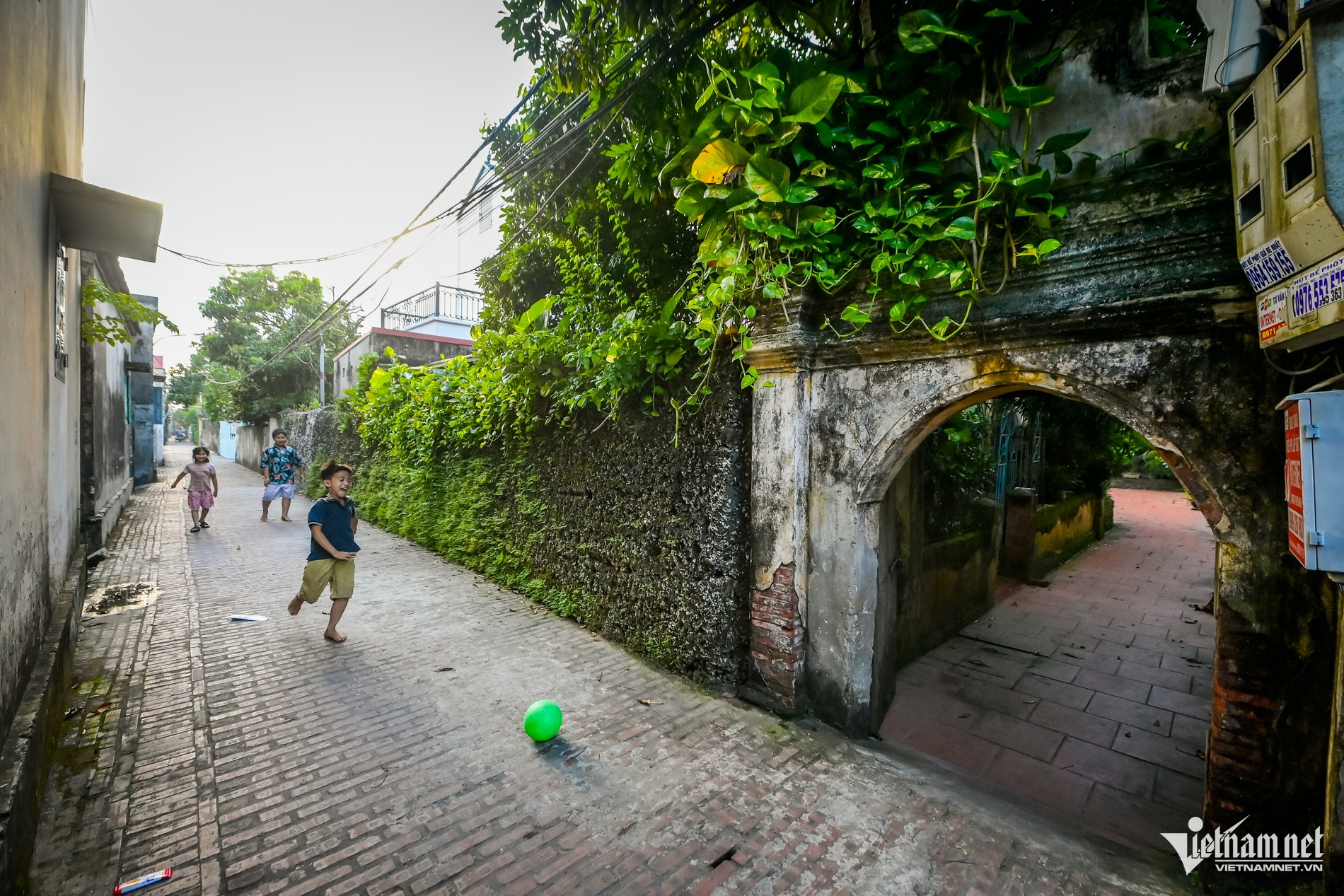
Beyond its educational heritage, the village is also distinguished by its architectural charm. It was thoughtfully planned hundreds of years ago, and even today, despite modern developments, many old houses remain intact. Unlike other places where new constructions rapidly replace the old, Hanh Thien has managed to retain much of its historic charm.
A stroll through the village reveals tile-roofed houses, weathered with moss and time, forming a tranquil mosaic of the past.
These over-100-year-old houses, steeped in the architectural character of northern Vietnam’s rural delta, serve as silent witnesses to the region's historical and cultural journey.
One notable example is the modest old home of former General Secretary Truong Chinh, located in Hamlet 7 of Hanh Thien. Built in 1902, the main house features five compartments made of ironwood with a traditional southern-style tiled roof.
Nearby stands the memorial complex of Doctor Dang Xuan Bang (1828–1910), the grandfather of Truong Chinh. This is also among the best-preserved ancient homes in the village.
According to Dang Vu Manh, the caretaker of the Dang Xuan family temple, this house was constructed by Doctor Dang Xuan Bang after his retirement to serve as both a residence and a place of teaching.
The house is entirely made of ironwood and sits on a plot of approximately 500 square meters. Despite having endured more than a century, it still retains its original structure.
Notably, this house was also where the revolutionary newspaper Dan Cay (Peasant) was printed and published. It was one of the earliest revolutionary publications in the country, written and printed by Truong Chinh and his two cousins Dang Xuan Thieu and Dang Xuan Quyen.
Today, the house serves as a shrine to Doctor Dang Xuan Bang and other family members.
A statue of Doctor Dang Xuan Bang, cast as a gift from his students, still stands within the compound.
Many century-old homes in Hanh Thien remain structurally unchanged, carefully preserved by generations of owners. For them, a house is not merely a dwelling - it is a space to instill family values, a place where the younger generations are taught about filial piety and the importance of education.
That is why, despite the tides of modern life, many families in Hanh Thien have made the conscious decision to preserve these ancestral homes, viewing them as treasured legacies handed down through time.
Among them is the home of Dang Ngoc Toan - also known as Teacher Kien - which served as the first site for publishing the Dan Cay newspaper between 1928 and 1930.
Another striking example is the home of Do Vu Hung (born in 1950), built in 1891. This three-compartment, two-wing house stands on a northern Vietnamese plot of about 576 square meters.
The structure, built entirely from ironwood, remains robust and well-preserved, requiring only one retiling of its roof in over a century.
Even the boundary wall at the gate, made of crushed oyster shells, has stood the test of time.
Despite having constructed a more modern house next door, Mr. Hung and his family remain committed to preserving their old home. For them, it is a tangible link to their homeland’s spirit - a vessel carrying the values, traditions, and way of life painstakingly cultivated by previous generations.


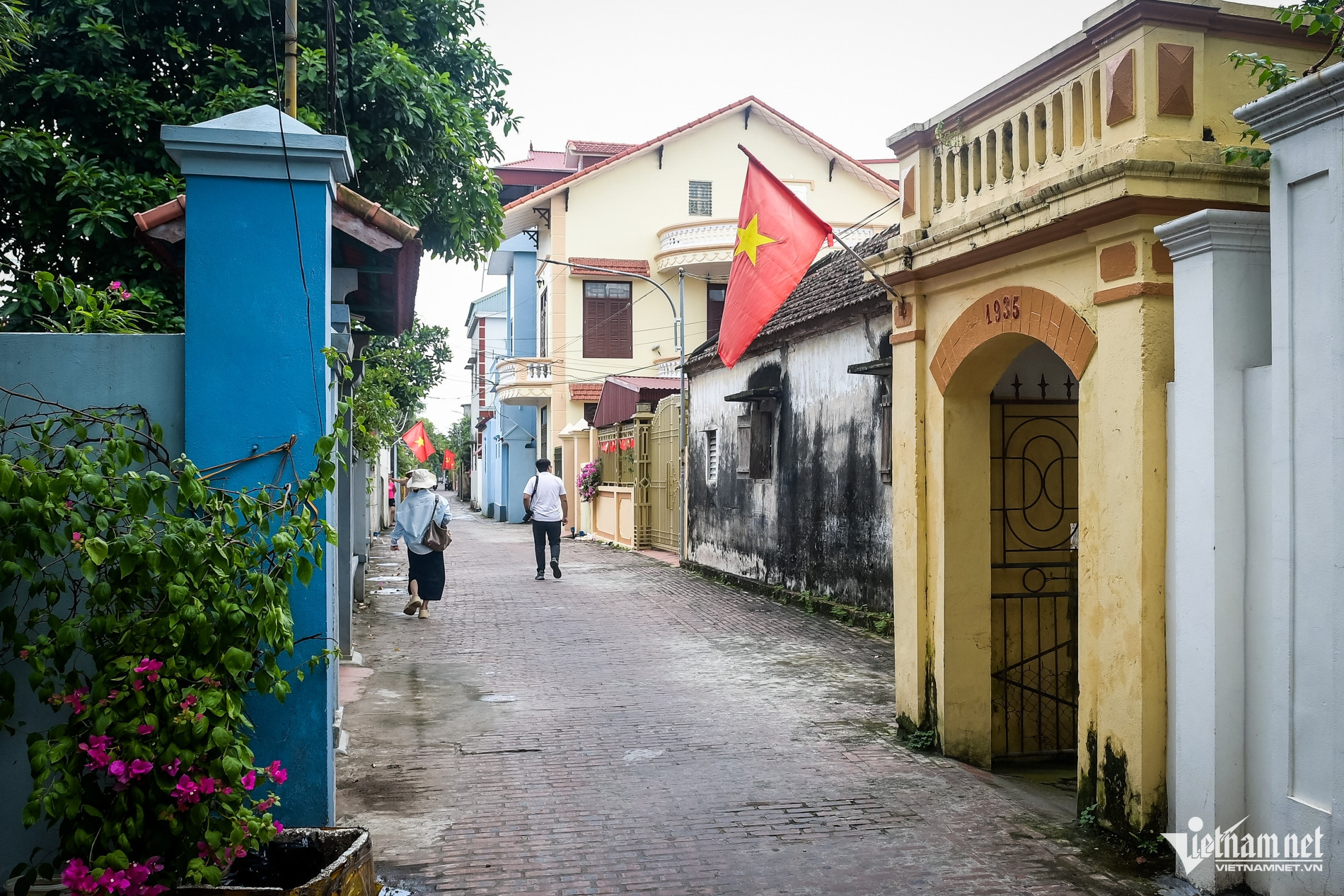

The ancestral home of former General Secretary Truong Chinh was built in 1902 and retains its five-compartment ironwood structure.


This is the ancestral house of Dang Ngoc Toan, where Dan Cay was first published from 1928 to 1930.


Trong Tung
.svg)
