 Vietnamnet.vn

 Podcast



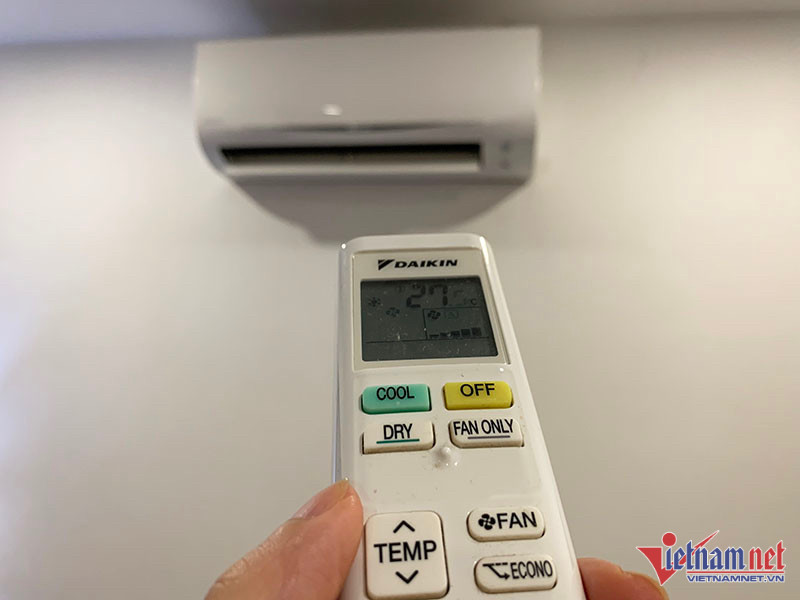
Ha Dang Son, chair of the Center for Energy and Green Growth Research, highlighted the current state of public awareness regarding electricity conservation among households during the seminar "Saving Electricity During Peak Seasons: Responsibilities and Solutions", organized by the Government Electronic Information Portal on June 22.
Son said the Ministry of Industry and Trade (MOIT) and the Vietnam Electricity Group (EVN) have implemented numerous communication campaigns to raise awareness among communities and businesses about energy efficiency and electricity conservation. Every year, the Prime Minister also issues directives related to electricity-saving measures.
As a result, most businesses now have a strong awareness of electricity conservation because it directly affects their costs, profits, and operational risks. If electricity supply is unstable or power quality cannot be ensured, production and product quality may be negatively affected.
However, among residential consumers, who account for roughly 30 percent of total electricity demand, awareness remains problematic. Son pointed out that many people still think, "If I have money, why can't I use more electricity?”
This often leads to the belief that "If I earn the money, I have the right to waste it." They have not fully recognized the broader impacts of excessive electricity consumption.
Once consumption exceeds a particular capacity threshold, the power system must deploy more expensive resources, resulting in significant additional investment costs.
Meanwhile, consumers who waste electricity do not fully bear the costs that their behavior imposes on the power system. Retail electricity prices remain regulated, still contain cross-subsidies, and do not fully reflect capacity-related costs.
At the same time, many people wonder why most products become cheaper when purchased in larger quantities, while electricity becomes more expensive as consumption increases.
Son noted that this is not easy to explain because most consumers do not fully understand the unique characteristics of the power sector.
Electricity is a special commodity that requires the system to remain ready to meet demand at all times. Therefore, every kilowatt-hour (kWh) saved not only reduces household expenses but also helps lower investment and operating pressures across the entire power system.
Son also stressed the importance of investing in energy-efficient appliances. For both businesses and households, the first instinct is often to purchase the cheapest equipment. However, low-cost devices frequently have poor energy efficiency, may pose fire and safety risks during operation, and often fail to meet energy-saving standards.
Son noted that people generally lack the habit of measuring and monitoring their electricity consumption. EVN has developed tools that allow consumers to track daily electricity usage, but relatively few households or businesses regularly review these figures.
"When we were in school, our teachers taught us that 'You cannot manage what you do not measure.' We must measure, evaluate, and monitor data to understand whether our consumption and conservation practices are appropriate," Son said.
Ngo Son Hai, EVN's deputy general director, said saving electricity is not simply about reducing electricity bills. It also plays a much larger role in ensuring energy security and promoting sustainable development.
With electricity demand continuing to grow rapidly, Vietnam's power system needs to add 4,000-5,000 MW of new capacity every year. In this context, electricity saving plays a particularly important role in reducing investment pressure on the power sector.
Hai noted that adding 1,000 MW from offshore wind farms or LNG power projects would still require three to four years to become operational after all procedures are completed.
By contrast, reducing electricity consumption by around 2 percent would have an impact equivalent to avoiding the need for roughly 1,000 MW of new capacity. This demonstrates that electricity conservation is a faster and significantly less costly solution.
For households and businesses, economic efficiency is always important. However, it is also necessary to recognize that every kilowatt-hour of electricity saved not only lowers costs for users but also reduces costs for society as a whole.
Currently, power system operators dispatch electricity sources starting from lower-cost to higher-cost generation to meet demand. As electricity consumption rises, the system is forced to utilize more expensive power sources. Therefore, conserving electricity helps limit reliance on costly generation sources, reducing overall operating costs across the entire power system.
Tran Chung
.svg)
