 Vietnamnet.vn

 Podcast



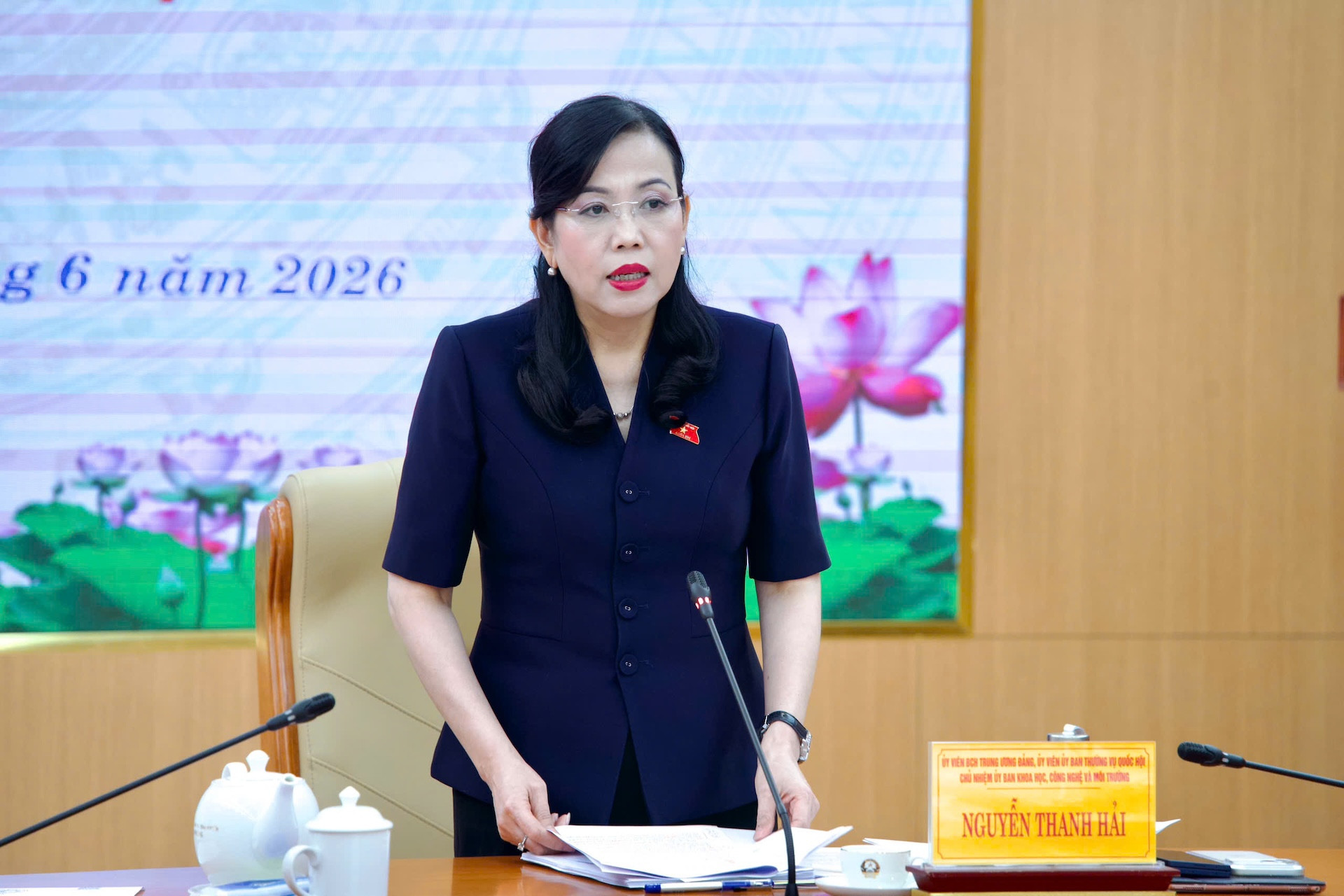
On June 12, the National Assembly’s Committee for Science, Technology and Environment visited Samsung Electronics Vietnam Thai Nguyen (SEVT) and held discussions with Thai Nguyen authorities on the draft Law Amending and Supplementing Several Articles of the Electricity Law.
The visit was intended to assess the practical implementation of electricity regulations and gather feedback to serve the review of the draft law before it is submitted to the National Assembly at an upcoming session.
Nguyen Thanh Hai, chair of the National Assembly’s Committee on Science, Technology and Environment, said direct power trading is a major policy of the Party and State that needs to be legalized toward transparency, stability, feasibility, long-term predictability, and balancing interests among the State, businesses, and citizens.
She noted that the direct power purchase mechanism remains a relatively new policy that requires further refinement. Resolution 70 of the Politburo on ensuring national energy security through 2030, with a vision to 2045, clearly calls for the effective implementation of this mechanism.
The objective is to strengthen consumer choice, promote a competitive electricity market, encourage renewable energy development and improve the competitiveness of the economy.
This legislative revision aims to institutionalize Resolution 70 by placing businesses and citizens at the center of the energy transition and market development process. It also seeks to expand consumer choice and advance administrative reform in line with directions repeatedly emphasized by the Government and the Prime Minister.
Removing bottlenecks
Chair of the Thai Nguyen Provincial People’s Committee Vuong Quoc Tuan said the working delegation’s survey is very important, especially for a locality where industry is the main growth driver like Thai Nguyen.
The chairman noted that investment procedures in this sector remain numerous and take a long time to observe. For example, a wind power project can take up to three years from the start of investment procedures.
According to Tuan, amid rising electricity demand and growing requirements for power system investment, continuing to improve electricity pricing toward transparency and closer to a market mechanism under State management is essential.
At the same time, the State needs to maintain support policies for disadvantaged groups and manufacturing enterprises to ensure sustainable power sector development going forward.
Nguyen Duc Cuong, director general of the Electricity Authority under the Ministry of Industry and Trade, said the proposed amendments focus on decentralization and delegation of authority in the electricity sector, reducing and simplifying business conditions and administrative procedures, and addressing bottlenecks related to power planning, investor selection, renewable energy development, electricity pricing and power trading activities.
The draft law has been circulated for consultation and several issues still require input from ministries, localities and stakeholders, including power planning, eliminating investment policy approval requirements for power projects and mechanisms for wind and solar power pricing.
The draft also proposes that central and local authorities only approve four categories of issues: environmental safety, infrastructure safety, human safety and security of electricity supply.
“All remaining matters will be handled by investors themselves, who must comply with applicable standards and regulations. At the same time, authorities will strengthen post-inspection mechanisms. Investors will only need to consult the Department of Industry and Trade or other relevant agencies and take responsibility for their own decisions rather than going through excessive procedures as before. The State will focus on establishing standards and technical regulations for compliance,” Cuong said.
Thai Nguyen Chair expressed hope that the amendments would be more fundamental in nature and, most importantly, remove longstanding bottlenecks and restrictive mechanisms.
“Amending and supplementing the Electricity Law is particularly important in breaking monopoly structures. In reality, compared with developed countries, Vietnam’s electricity consumption remains relatively low, while consumption levels elsewhere can be many times higher. The revised law should create more open mechanisms for choosing and purchasing electricity, dismantle monopoly barriers and make direct power trading more accessible for businesses,” he said.
Hai said the reviewing body would carefully consider stakeholder feedback to ensure that the new provisions create the most favorable and transparent environment possible without creating legal loopholes, allowing businesses to effectively utilize direct power purchase mechanisms.
She emphasized that the law must also ensure power system security, promote competitive electricity trading and prevent monopolistic practices while making direct power trading as accessible as possible. Such reforms would also strengthen Vietnam’s attractiveness to foreign investors, particularly in industrial provinces such as Thai Nguyen.
Tran Thuong
.svg)
