 Vietnamnet.vn

 Podcast



Thao Trinh
Known as sau chit, these larvae live parasitically inside the chit tree (or le and dot trees), found mostly in northern mountainous provinces of Vietnam - especially in Dien Bien.
For years, locals have harvested sau chit for both food and medicinal purposes. Passed down through generations, this larva is considered highly nutritious, believed to improve health and energy. It’s earned the title of a "heaven-sent gift," attracting curious buyers from across the country.
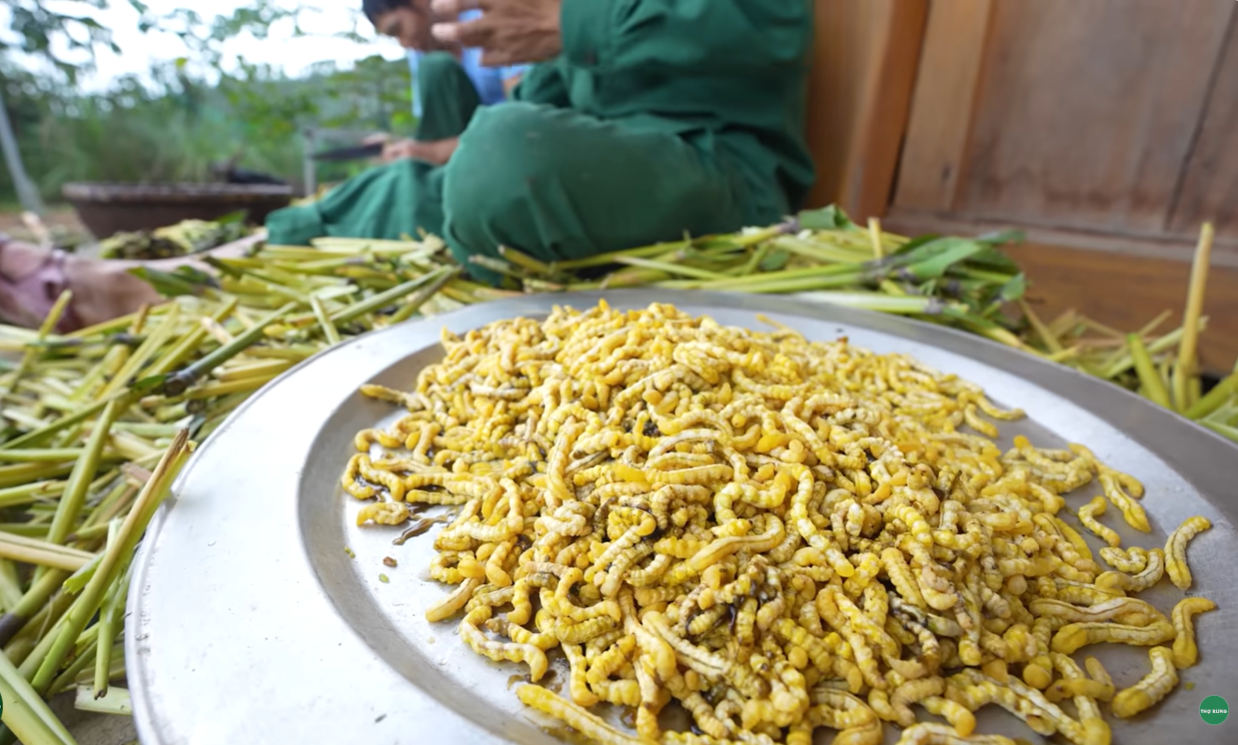
The sau chit resembles silkworms but is smaller, longer, soft-bodied, with a yellowish or ivory-white color. It has no fuzz, and its tiny black-tipped mouth and jaws are the size of a toothpick tip.
According to Nguyen Giap, a forest worker from Muong Luan commune, Dien Bien, the worm harvest season falls between late autumn and early winter - usually from November to December, or around January–February in the lunar calendar. This is when the worms are at their largest, plumpest, and most nutritious.
Giap says the high price of sau chit stems from its rising popularity and the difficulty in harvesting. The intact stems containing the worms fetch around 70,000–90,000 VND (approximately $2.85–$3.65) per hundred segments. Pre-extracted worms go for 900,000 to over 1 million VND per kilogram ($37–$41).
Dried sau chit is even more expensive - costing several million VND per kilo (over $100), depending on the supplier and season.
But harvesting them is no easy feat. “Finding them requires luck,” says Giap. “You have to wake up early, trek through forests and wade across streams for hours to find groves of tall chit trees.”
If you’re lucky, a good day can yield a few kilos. But on dry days, even a full day of work may barely yield a few hundred grams - hardly worth the effort.
Not every tree is harvested. Foragers look for trees that show signs of sau chit infestation - typically those that are stunted, have swollen trunks, and no flowers. They bring the tree shoots home and carefully split the stems to extract the larvae inside.
This extraction process must be done delicately to avoid crushing or damaging the worms. Once removed, they are immediately dropped into diluted alcohol to prevent spoilage, cleanse them of impurities, and retain freshness.
In Dien Bien, sau chit can be eaten fresh, sun-dried, or oven-dried. They are most commonly infused in rice wine or cooked into dishes like stir-fried with lime leaves, deep-fried with batter, cooked into porridge, or scrambled with eggs.
In fact, sau chit wine has been recognized as a local delicacy and was selected in the Top 100 Vietnamese Specialty Gifts 2020–2021 by the Vietnam Records Organization (VietKings) and VietTop.
Pham Chi, a Hanoi resident who has tried sau chit several times while visiting Dien Bien, admits she was initially put off by the appearance but ended up enjoying the taste.
“The worms are soft, juicy, and buttery - more flavorful than other larvae I’ve tried, like bee pupae or silkworms,” she said.
Now, every sau chit season, she places orders with contacts in the north to have fresh worms sent down to the capital - for both her own meals and as gifts.
Besides wine, her two favorite ways to prepare the worms are deep-fried and scrambled with eggs.
“At first, people are hesitant. But once they try them, they’ll find the worms rich and uniquely flavorful,” she adds. “Still, as tasty and nutritious as they are, it’s best not to eat them too frequently or in large quantities at once, to avoid allergies or digestive issues.”

Sau chit larvae look similar to silkworms but are longer, softer, and ivory-colored. Photo: Bang Tam

The worms are harvested only once a year and command high prices. Photo: Forest forager

Extracting the worms from the tree shoots requires care to keep them intact. Photo: Forest forager
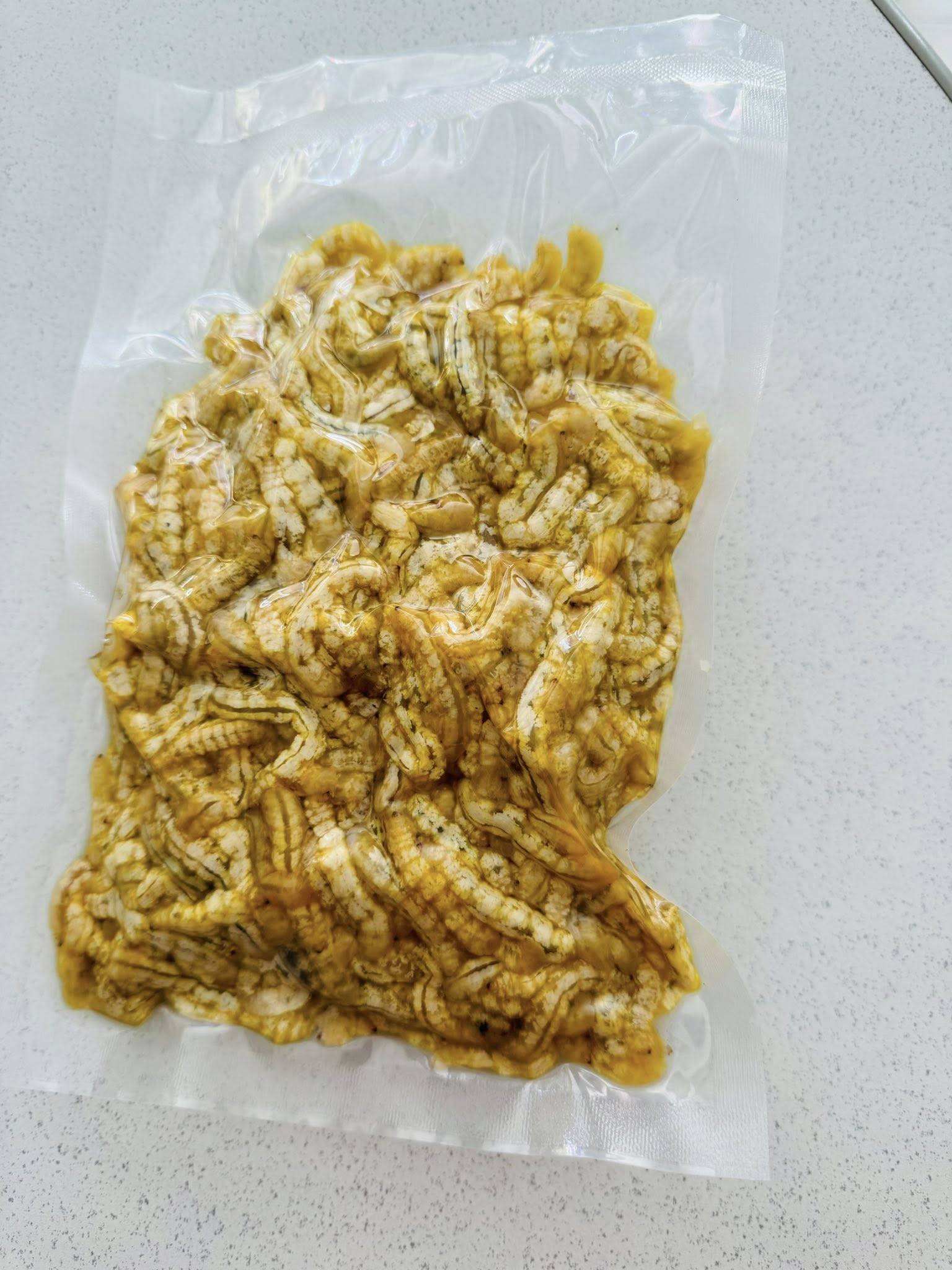
The worms can be used fresh or dried. Photo: Forest forager

Sau chit wine is officially recognized as a local specialty of Dien Bien. Photo: Forest forager

.svg)
