 Vietnamnet.vn

 Podcast



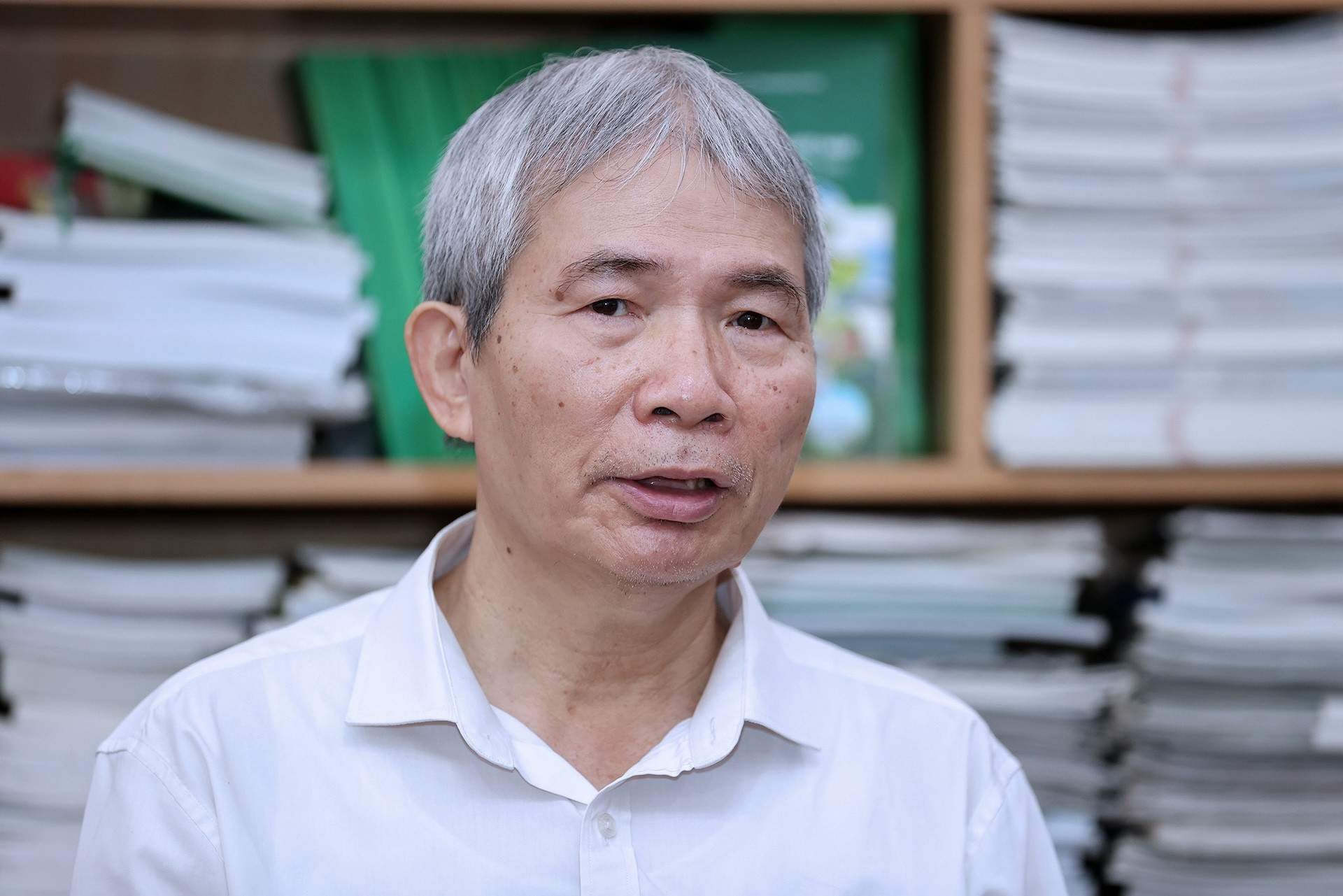
Faced with this test, Vietnamese wood enterprises must become stronger, more flexible, and willing to accept risks to maintain their current position. VietNamNet spoke about this issue with Ngo Sy Hoai, Secretary General of the Vietnam Timber and Forest Products Association (Vifores).
Is the nearly 200 percent anti-dumping duty a temporary shock or a signal of a long-term shift in US policy?
Although this is only a preliminary ruling, the US has already closely examined two mandatory respondents from Vietnam - Junma and Trieu Thai Son. At this moment, the US inspection team is working with Vietnam’s Trade Remedies Authority, Forestry and Forest Protection Department, the State Bank, and the association. So the final conclusion may still change.
If we only look at the figure of 193 percent, it is clearly a shock. But this is not a random shock, it is a systemic signal.
The US is not targeting Vietnam alone. When launching anti-dumping and countervailing investigations on plywood, it simultaneously targeted three countries: Vietnam, China, and Indonesia. Vietnam faces the highest preliminary rate - around 193 percent, higher than China (over 180 percent) and nearly six times Indonesia (34–35 percent).
Why? The answer is quite clear: Vietnam is currently the most prominent “player”.
In the context of “Trump 2.0,” investigation timelines may be shortened and trade remedy tools risk being used for broader objectives. On one hand, the US wants to protect domestic production; on the other, it needs to increase fiscal revenue, especially after having to refund retaliatory tariffs rejected by the US Supreme Court (up to $166 billion), alongside the political goal of MAGA - Make America Great Again.
The key issue is not just the final tariff level, but the shift in approach. Previously, trade remedies mainly aimed to correct market behavior and unfair competition. Now they have become multi-purpose tools: protectionist, fiscal, and political.
In short: this is not a “rain shower,” but a “monsoon”, and monsoons do not blow just once.
Does Vietnam’s wood sector receive state support or operate fully on market principles?
If one claims Vietnam subsidizes the sector, they must identify specific cash flows, where the money comes from and where it goes. In reality, such flows do not exist. Even if the government wanted to “back” businesses, injecting funds into a large sector like wood processing and exports would be nearly impossible.
Vietnam’s plywood supply chain is based on about 2.5 million hectares of plantation forests, mainly acacia, managed by over 1 million households. This is an ecosystem operating transparently under market mechanisms: households grow timber, enterprises purchase, process, and export, with capital mainly sourced from commercial banks under market principles.
Companies are not funded to dump products. Banks do not provide preferential loans at unusually low rates. Even concessional credit packages, if any, are difficult to access; most firms still borrow at commercial rates. Land, tax, and infrastructure also do not enjoy special incentives.
Regarding dumping allegations, Vietnamese firms face disadvantages because Vietnam is not recognized as a market economy. Therefore, the US uses surrogate production costs from the Philippines for calculations, leading to unfavorable results where plywood costs appear much higher than they actually are in Vietnam.
In reality, Vietnam's competitive advantage comes from basic factors: relatively low labor costs, abundant raw materials from planted forests, and efficient production organization. Our advantage is "natural and accumulated," not "artificial and subsidized."
Could you please update us on the types of taxes the US is currently applying to wood products?
The current US tax system can be envisioned as a "three-tier matrix":
Tier 1 – Section 122 of the 1974 Trade Act: A flat 10 percent tax (ceiling of 15 percent, maximum 5 months) on all goods imported into the US. This is broad-based and does not significantly distort competition, but impacts Vietnam more in absolute terms due to large export volumes.
Tier 2 – Section 232: Applied to specific products such as kitchen cabinets, vanities, and upholstered chairs at 25 percent. The Trump administration proposed increases to 50 percent for cabinets and vanities and 30 percent for upholstered seating from January 1, 2026, later delayed to 2027. Though framed as national security, these are actually selective protection tools.
Tier 3 – Section 301: In 2020, Vietnam was investigated under Section 301 for alleged currency manipulation and use of illegal timber. Later, the Biden administration terminated the investigation, and both sides signed a cooperation agreement to eliminate illegal timber.
Tu Giang
.svg)
