 Vietnamnet.vn

 Podcast



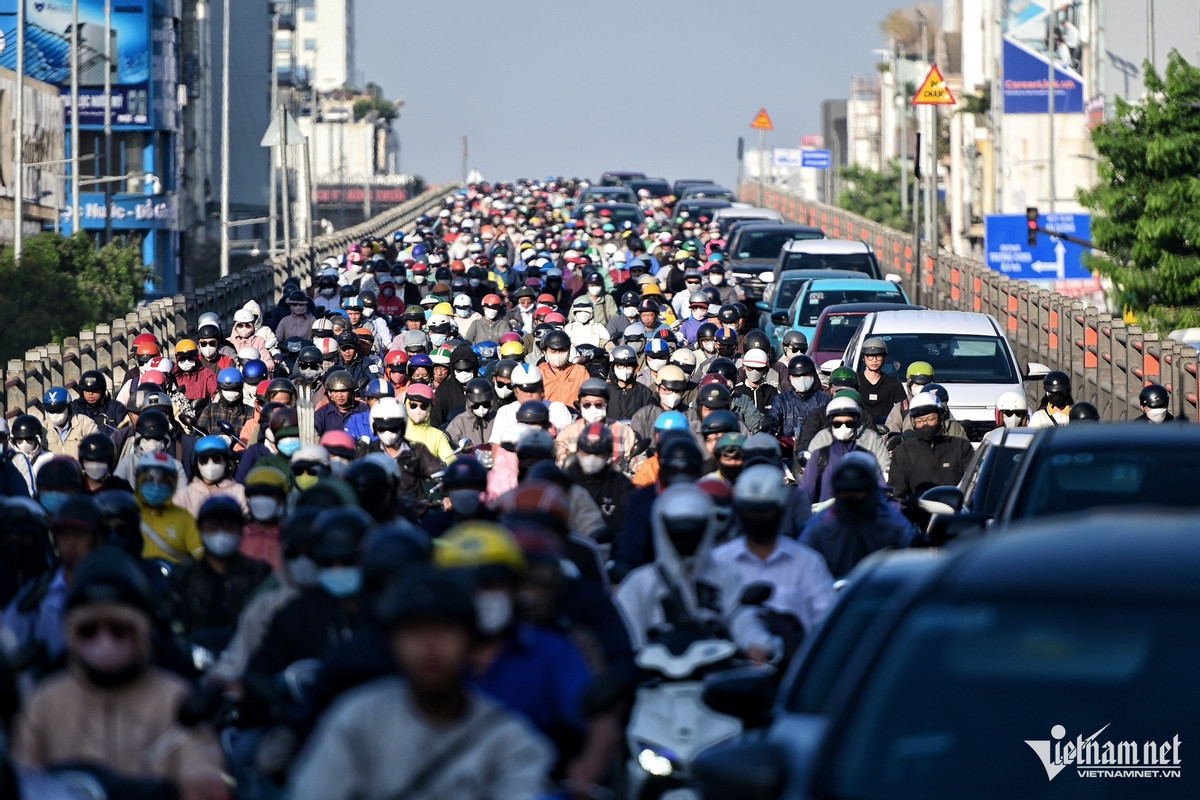
Once the city manages to reduce the "time tax”, such as procedural and bureaucratic delays, double-digit growth will no longer be an uphill battle.
One hour after a recent trade promotion event wrapped up, Nguyen Nguyen Phuong, deputy director of the HCMC Department of Industry and Trade, was still walking through each booth to discuss how brands can "touch" customers the fastest.
According to Phuong, among thousands of products on supermarket shelves, consumers usually pay attention to the most prominent packaging. When the quality is not yet known, an impressive design can spark curiosity and drive purchasing decisions.
Currently, SMEs account for about 98 percent of the total number of businesses in HCMC. However, many of them remain weak in packaging design, product modeling, and marketing activities.
Meanwhile, HCMC's total retail sales of goods reached VND997 trillion in 2025, a 15.8 percent increase compared to the previous year, contributing significantly to local economic growth.
Growth can spark from minor changes. Beautiful product packaging attracts buyers, helping businesses increase sales and profits. This, in turn, expands production scale and contributes to the overarching growth goals.
Lam Quoc Thanh, director general of Saigon Trading Corporation (Satra), said that the company has adjusted its market approach. The enterprise is ramping up online sales channels while partnering with another HCMC SOE to expand distribution channels at social housing projects and residential areas for factory workers.
This direction aims to reach low- and middle-income customer segments.
HCMC's double-digit growth target is highly achievable if businesses make the effort and the State provides effective support mechanisms, the Satra representative said.
Pham Minh Thang, CEO of ELCOM, said the world's fastest-growing countries and cities have shifted from experience-based management to data-driven governance. This is also the direction HCMC is pursuing.
Technology does not directly create growth, but it boosts productivity, the fundamental driver of economic expansion. When technology helps reduce traffic congestion, shortens incident response times, lowers government operating costs, improves urban management, and accelerates decision-making, the entire economy benefits.
An integrated economic ecosystem
However, experts argue that business efforts alone, while important, are not enough to deliver a breakthrough. To achieve double-digit growth, HCMC must make better use of the structural advantages of its expanded urban economy.
Accounting for about 23 percent of Vietnam's GDP and nearly one-third of national budget revenue, HCMC's economic performance has a direct impact on the country's overall growth.
Yet the city's GRDP grew only 7.53 percent in 2025, or 8.03 percent excluding oil and gas, and reached 8.27 percent in the first quarter of 2026, still below target.
According to Chu Thanh Tuan of RMIT Vietnam, the gap to double-digit growth will can only be filled with a significant leap in productivity.
"HCMC's double-digit growth target should not be viewed simply as increasing public investment, expanding credit, or stimulating the real estate market," he said, adding that the city's greatest competitive advantage lies in its ability to create "a fully integrated economic ecosystem within a single governance framework."
Following its merger with Binh Duong and Ba Ria-Vung Tau, HCMC now combines three complementary strengths: HCMC's financial, commercial, technological, and human resource base; Binh Duong's industrial manufacturing capacity; and Ba Ria–Vung Tau's deep-water ports, logistics infrastructure, energy sector, and heavy industries.
Together, they form an economic structure that integrates a large domestic market, manufacturing capabilities, and an international maritime gateway.
However, this advantage exists more on paper than in practice. The key bottleneck, he argued, is the "time tax."
Investment approvals, land clearance, commuting, freight transportation, and administrative procedures all remain time-consuming. Traffic congestion, fragmented infrastructure, land constraints, and uneven implementation capacity continue to erode the benefits of urban concentration.
Therefore, the top priority should be shortening the time between decision-making and implementation, as well as between factories and seaports.
To address these challenges, HCMC needs a unified growth strategy for the entire mega-city, including a value chain map, a list of priority projects, and a transparent system for monitoring implementation and accountability.
Infrastructure investments should be selected based on their impact on productivity, with priority given to transport links connecting industrial parks to the Cai Mep–Thi Vai Port port complex, Can Gio, Long Thanh International Airport, ring roads, and urban rail networks. Also, Vietnam's economic engine must shift its focus from attracting capital to attracting high-value economic functions.
Tran Chung
.svg)
