 Vietnamnet.vn

 Podcast



The National Assembly Standing Committee recently agreed to submit to the NA a draft resolution on a number of articles of Resolution 98 on pilot policies for HCMC development during the 10th session of the 15th National Assembly.
The goal of the resolution is to continue completing the legal basis, ensuring feasible and more effective mechanisms and policies, in order to meet urgent requirements to attract strategic investors and mobilize domestic and foreign resources for HCMC’s development after the merger.
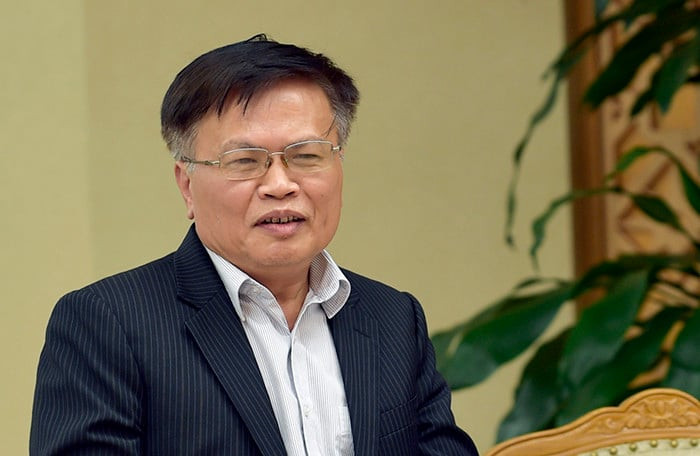
VietNamNet exchanged views with Cung about the issue. Below is our interview:
Why has Resolution 98 still not yielded significant results in removing the bottlenecks of HCMC after more than two years of deployment?
Resolution 98, after more than two years of implementation, still has not created clear results in resolving the bottlenecks and development issues of the city.
There are many reasons, but, first and foremost, is that Resolution 98 was designed based on a system of thinking and within the framework of law which is no longer suitable. HCMC only asks for a different approach in some matters, but the implementation of those contents must still comply with the current law.
The feasibility of implementing the permitted "different" contents depends entirely on the central agencies' amendments or implementation guidelines for the related laws. The incentives called "superior" also remain within the framework of current law and are not truly superior.
In addition, over the past time, the contingent of officials and civil servants in general, and in HCMC in particular, has tended to choose a working method that prioritizes safety over daring to innovate and be creative in policy implementation, even regarding contents belonging to the specific mechanisms for general development goals.
If the current approach continues, even with continuously issued specific mechanisms, HCMC will find it difficult to restructure, upgrade its development level, or switch to a new growth model based on productivity, quality, efficiency, competitiveness, science and technology, innovation, and digital transformation.
HCMC needs a genuine institutional experimentation sandbox, a space to learn and test new institutions, rather than continuously asking for separate mechanisms. A new resolution on an institutional sandbox to replace Resolution 98 must first be a legal document that permits HCMC to experiment with new institutional models.
How do you envision the institutional experimentation sandbox for HCMC?
In my opinion, HCMC needs the following points:
First, clearly define the areas permitted for experimentation, and these areas must stick closely to the city’s fundamental development problems and strategic direction; this is the limit of the experimentation scope.
Second, identify the expected results corresponding to each experimentation area, including short-term results (2–3 years), medium-term results (5–7 years), and long-term results (7–10 years).
Third, give the HCMC Party Committee and government full authority to stipulate and decide the methods, implementation tools, and the executing organizational apparatus. The city should have the right to flexibly adjust or change as necessary if the current approach is deemed not to meet the goals—meaning the implementation method must have high flexibility to move towards the final result.
Fourth, clearly identify potential risks, and simultaneously stipulate the mechanisms and tools for risk management, as well as the actions that the HCMC government must not take during the experimentation process.
Fifth, a specialized central agency is needed to coordinate with the HCMC government and relevant parties for continuous monitoring and periodic six-month evaluations; based on this, the city makes appropriate adjustments. Annually, there must be a summary and lessons learned regarding institutional reform.
Why is the economic strength of HCMC, once overwhelmingly dominant, now declining?
HCMC remains economically stronger than any other locality, but this strength is declining; it is still the engine of the national economy, but the “locomotive” has become outdated and is slowing down.
HCMC is still "deeply and too long immersed" in the extensive growth model (which has been fully exploited); it has not been able to break through and transition to a growth model based on improved productivity, science & technology, and innovation. It is the locality with the most investment opportunities but it fails to realize them to promote development, and it has the most resources but fails to mobilize enough resources to meet development requirements.
Tu Giang - Lan Anh
.svg)
