 Vietnamnet.vn

 Podcast



Investigators from Ho Chi Minh City Police are currently probing a case of food safety violations led by a husband-and-wife pair, Nguyen Thi My Phung and Pham Tuan Thanh, both born in 1982 and residing in Tan Tao Ward.
Over 12 years of operation, the business is believed to have produced and sold approximately 2,800 tons of fresh noodles treated with substances such as borax, sodium silicate - commonly known as liquid glass - and artificial coloring agents. These chemicals, used to enhance texture and prolong shelf life, pose serious risks to consumers.
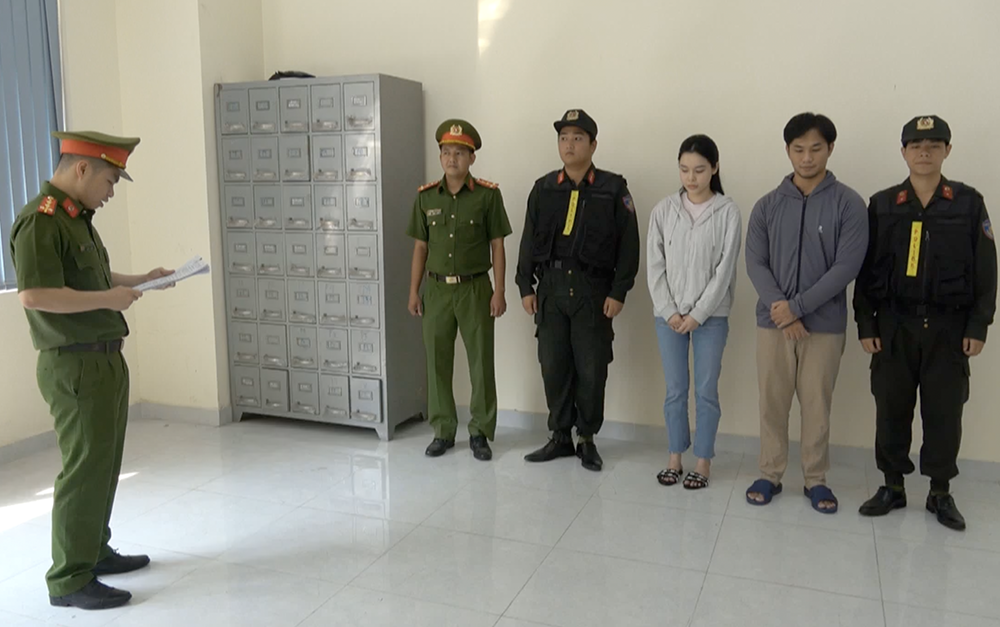
In a separate but similar case, authorities are expanding their investigation into another household business run by Vuong Luong Toan and Huynh Cam Lai, both also born in the early 1980s and based in Phu Thanh Ward.
When arrested earlier this year, the couple admitted to producing between 600 and 700 kilograms of chemically treated noodles per day. Over the past three years alone, an estimated 800 tons of contaminated products had been distributed. Authorities believe that over a decade, the total volume could reach several thousand tons.
According to police findings, these operations sourced chemicals primarily from Kim Bien market, a well-known hub for industrial substances. Despite being aware of the health risks, those involved admitted they continued production to sustain their livelihoods.
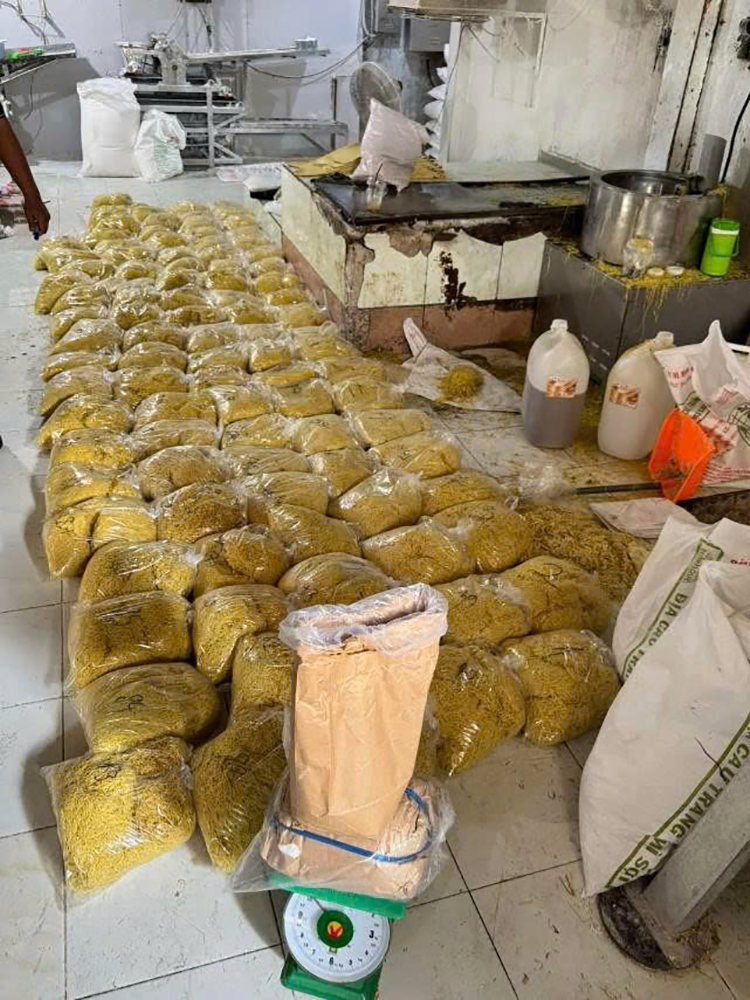
Fresh noodles treated with chemicals are packaged and prepared for distribution to markets and eateries. Photo: Police

The use of banned additives such as borax aims to create a firmer, more elastic texture and extend shelf life from just eight hours to as long as two or three days. Sodium silicate, on the other hand, is an industrial chemical with strong alkaline properties, typically used in detergents and ceramics manufacturing.
Investigators have identified multiple distribution channels, including traditional markets and food vendors, raising concerns about the widespread reach of these contaminated products.
Authorities are now examining not only the producers but also those involved in distributing and supplying the chemicals, as part of efforts to build a comprehensive legal case.
A widening crackdown on unsafe food
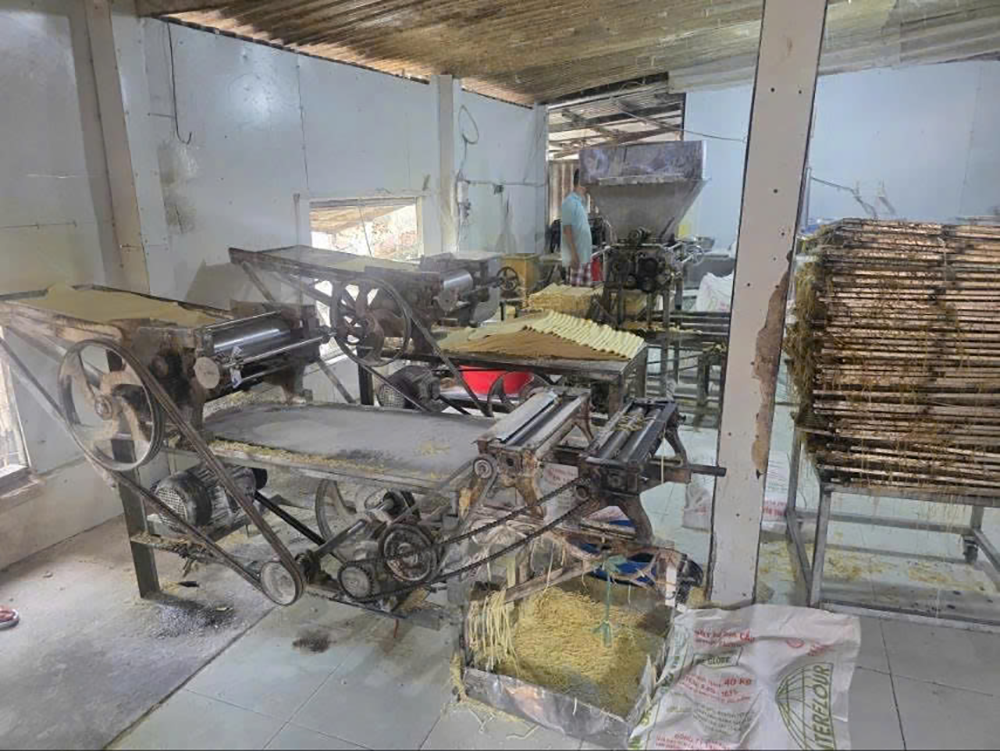
The noodle production workshop operated by Nguyen Thi My Phung and Pham Tuan Thanh, where chemicals were used in processing. Photo: Police
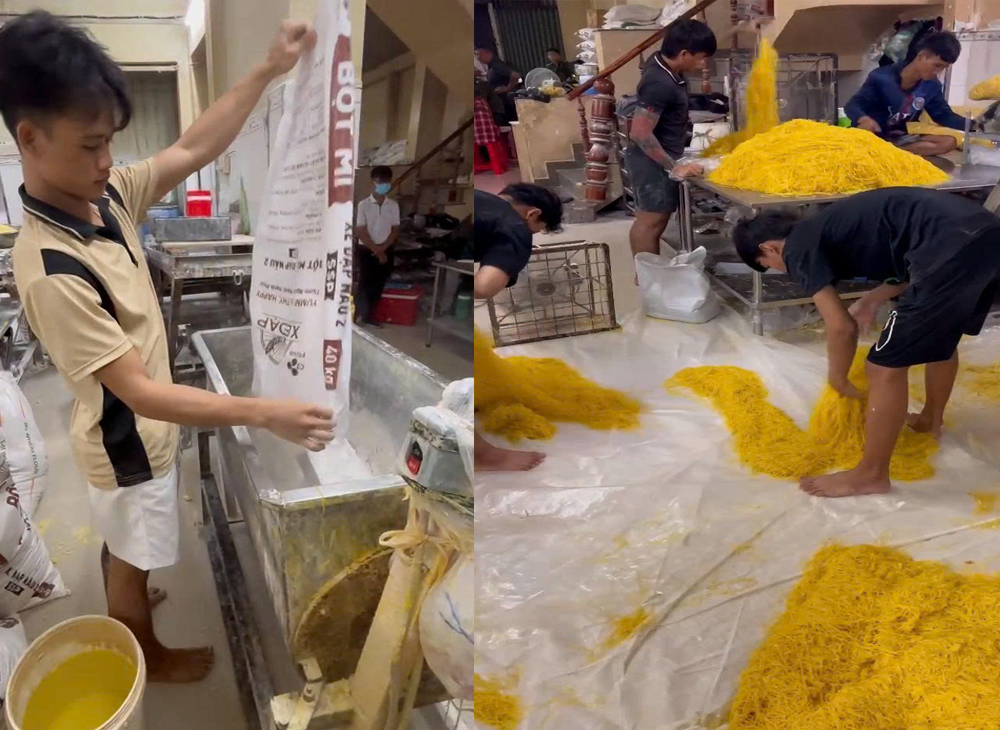
Officials describe the fight against contaminated food as an ongoing battle. In recent months, Ho Chi Minh City Police have intensified efforts to combat environmental and food-related crimes, working in coordination with relevant agencies to protect public health.
What initially appeared to be small, family-run businesses have in reality operated as closed, large-scale production facilities. Many employed tactics to evade detection, such as locating workshops away from residential areas or storing chemicals separately to avoid suspicion. Labor was often limited to family members to maintain secrecy.
However, authorities have moved decisively. Once violations are detected, police coordinate with specialized agencies to conduct testing, identify the chemicals involved, and assess their impact on human health. Criminal proceedings are initiated promptly where sufficient evidence is found.
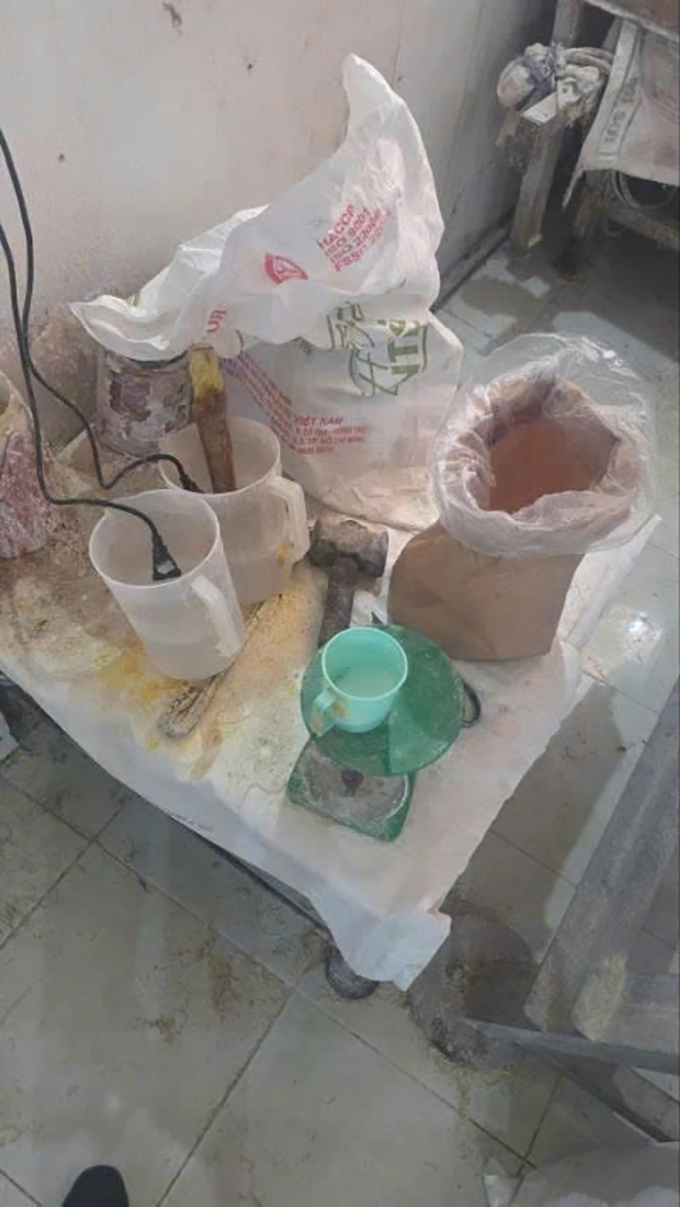
At the same time, officials stress that tackling unsafe food requires a collective effort. Beyond law enforcement, it calls for stronger coordination among regulatory bodies, ethical responsibility from businesses, and greater awareness among consumers.
Residents are urged to report any suspected violations to the nearest police unit or directly to the Economic Police Division, contributing to the broader effort to safeguard community health.
Health risks of banned chemicals in food
Borax is commonly used to improve texture and extend shelf life in foods such as processed meat, noodles, and rice-based products. Acute exposure can lead to nausea, diarrhea, seizures, and skin irritation. Over time, the substance accumulates in the liver, kidneys, and brain, potentially causing organ failure, reproductive harm, and increased risk of birth defects.
Sodium silicate, often misused to alter the appearance of food, is a highly alkaline industrial chemical. When ingested, it can cause severe irritation and burns to the digestive tract, disrupt nutrient absorption, and lead to serious gastrointestinal complications with prolonged exposure.
Dam De
.svg)
