 Vietnamnet.vn

 Podcast



The State Records and Archives Department has launched an event titled “Admiring imperial rescripts - Preserving woodblock imprints,” drawing large numbers of domestic and international visitors eager to explore and experience Vietnam’s documentary heritage.
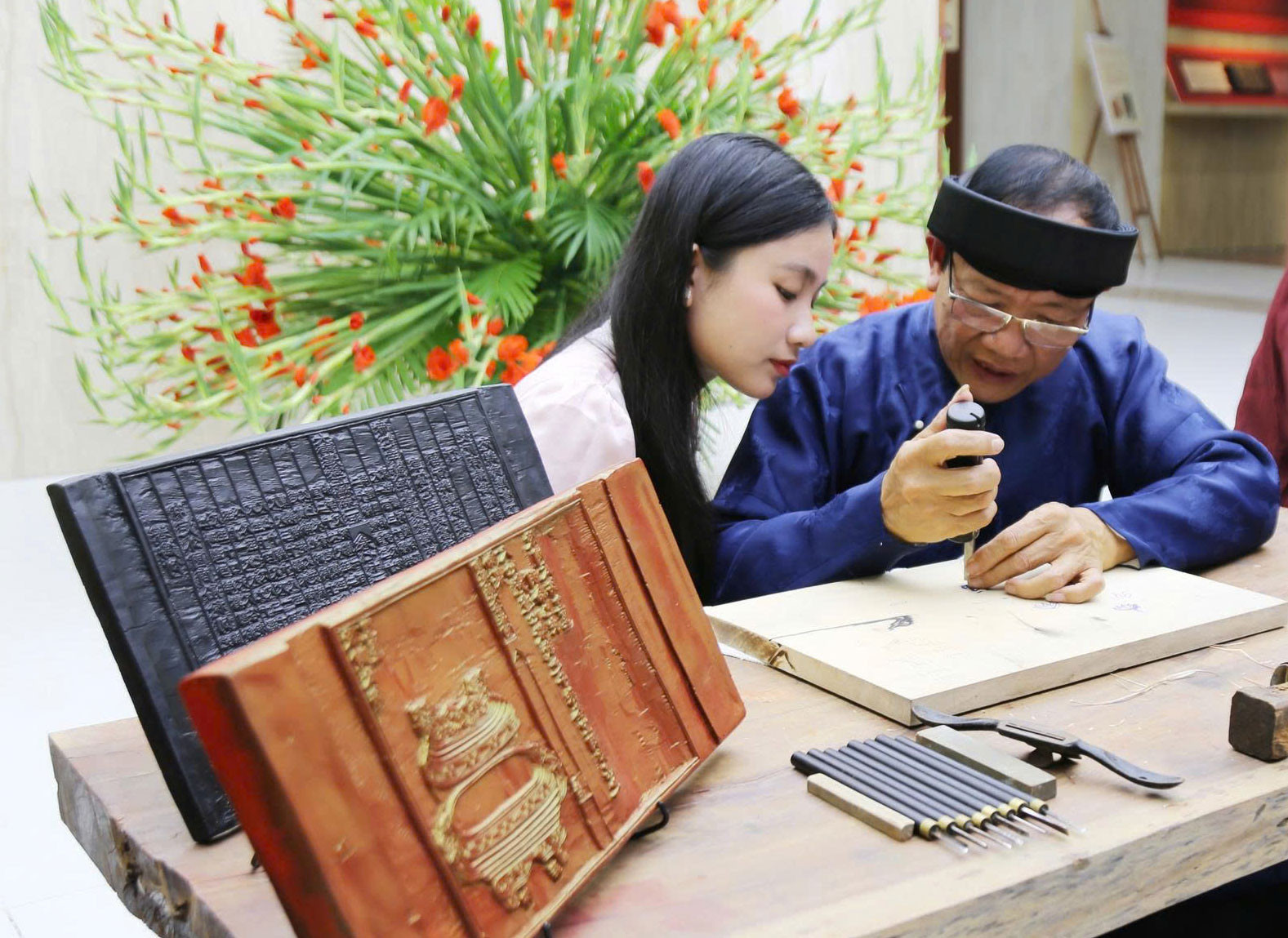
From March 3, the Space Introducing Vietnam’s World Documentary Heritage and Outstanding National Archival Records, organized by the State Records and Archives Department under the Ministry of Home Affairs, officially opened to the public free of charge from 9am to 4pm on weekdays.
The initiative aims to implement Resolution No. 80-NQ/TW of the Politburo on cultural development, bringing documentary heritage closer to the public and transforming it into an important cultural resource in social life.
The exhibition space is structured into three components. At its center is a modern media space, where archival materials are transformed into communication content, digital data and interactive multimedia products.
Alongside this is the Space for Vietnam’s World Documentary Heritage and Outstanding National Archival Records, offering an accessible overview of the country’s documentary heritage system and significant archival holdings. Visitors can research, explore, interact with and learn from original documents through interactive screens.
The Space on the History of Vietnam’s Archival Sector is designed to honor the formation and development of the archival profession, as well as the generations of officials who have quietly safeguarded, protected and passed down heritage through different eras.
To mark the opening, the State Records and Archives Department organized the event “Admiring imperial rescripts - Preserving woodblock imprints,” attracting a wide audience from Vietnam and abroad. The public has the opportunity to contemplate the imperial annotations, auspicious seals and well-wishes for prosperity left by Nguyen dynasty emperors, preserved on the Chau ban and woodblocks of the Nguyen dynasty.
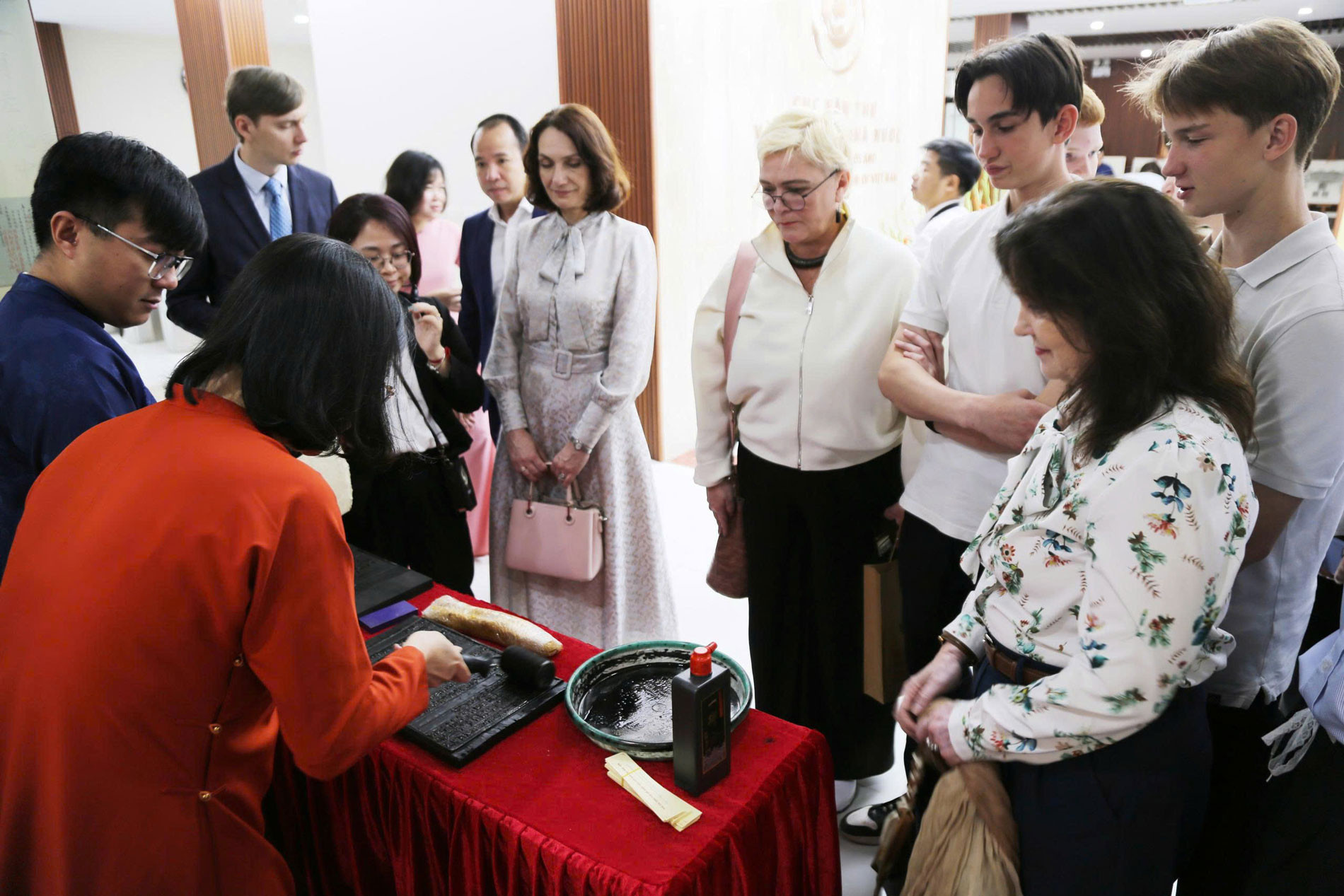
On the first day of opening, a delegation from the Russian Embassy in Vietnam visited to explore the art of woodblock engraving and experience woodblock printing.
In the “Admiring imperial rescripts” section, visitors can approach versions of the Nguyen dynasty’s Chau ban bearing vermilion comments handwritten by emperors, expressing aspirations for national prosperity and peace under heaven.
Through the “Preserving woodblock imprints” activity, members of the public can directly experience the technique of woodblock printing on do paper, stamp seals onto cards and keep the prints as souvenirs.
Visitors may also watch documentary films such as “Royal Palace Welcomes Tet” and “The Art of Woodblock Engraving” in the media space, gaining vivid insights into life within the imperial court of the past. Each guest receives a limited-edition lucky red envelope as a New Year greeting drawn from heritage.
On the very first day of opening, a delegation from the Russian Embassy in Vietnam visited to learn about the art of woodblock engraving and to experience woodblock printing firsthand.
Dang Thanh Tung, Director of the State Records and Archives Department, said documentary heritage and archival records can only fully realize their value when brought into service for the community. Resolution 80 underscores the task of preserving and promoting cultural heritage in association with science, technology and digital transformation. Documentary heritage, especially national archival records, is not only a primary historical source but also an important soft resource that contributes to strengthening identity, nurturing patriotism and enhancing the nation’s standing.
In the coming time, the State Records and Archives Department will continue linking archival exhibitions with the country’s historical and political events and with the general education curriculum. It will also step up digital applications, innovate service models at the National Archives Centers, improve access to information and bring archival materials closer to society.
Tinh Le
.svg)
