 Vietnamnet.vn

 Podcast



For many years, Bui Van Quang, a resident of Nam Dinh ward in Ninh Binh province, has dedicated himself to studying and collecting folk antiques passed down through generations.
Despite his experience, Quang modestly considers himself a “youngster” in Vietnam’s collector circle, noting that the pursuit of artifacts is a journey with no end.
Among the items he feels most connected to are imperial decrees and royal edicts from the Nguyen dynasty. Through these, Quang became fascinated with the symbolic visual language, particularly the dragon - leading him toward court art bearing high ceremonial and symbolic value.
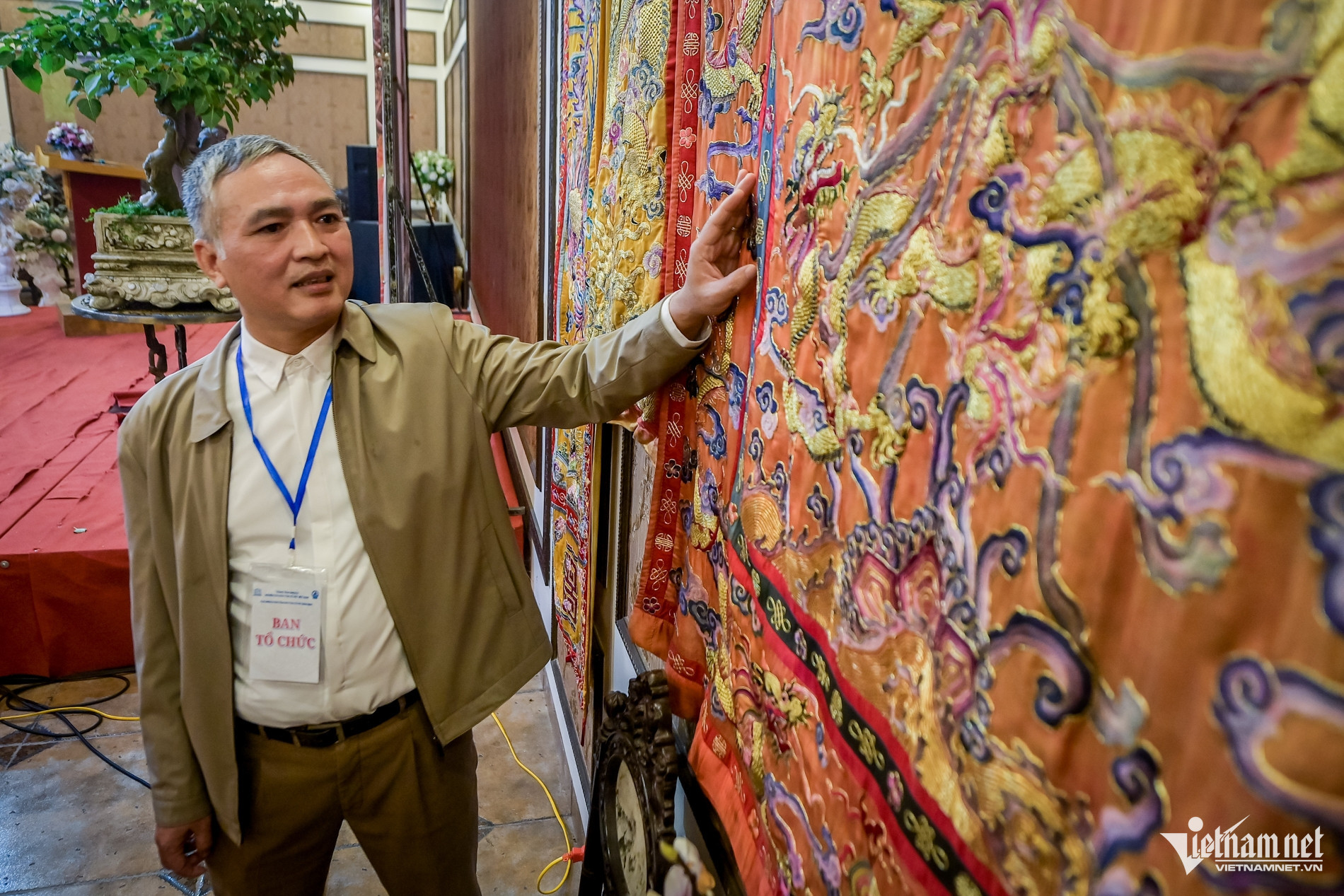
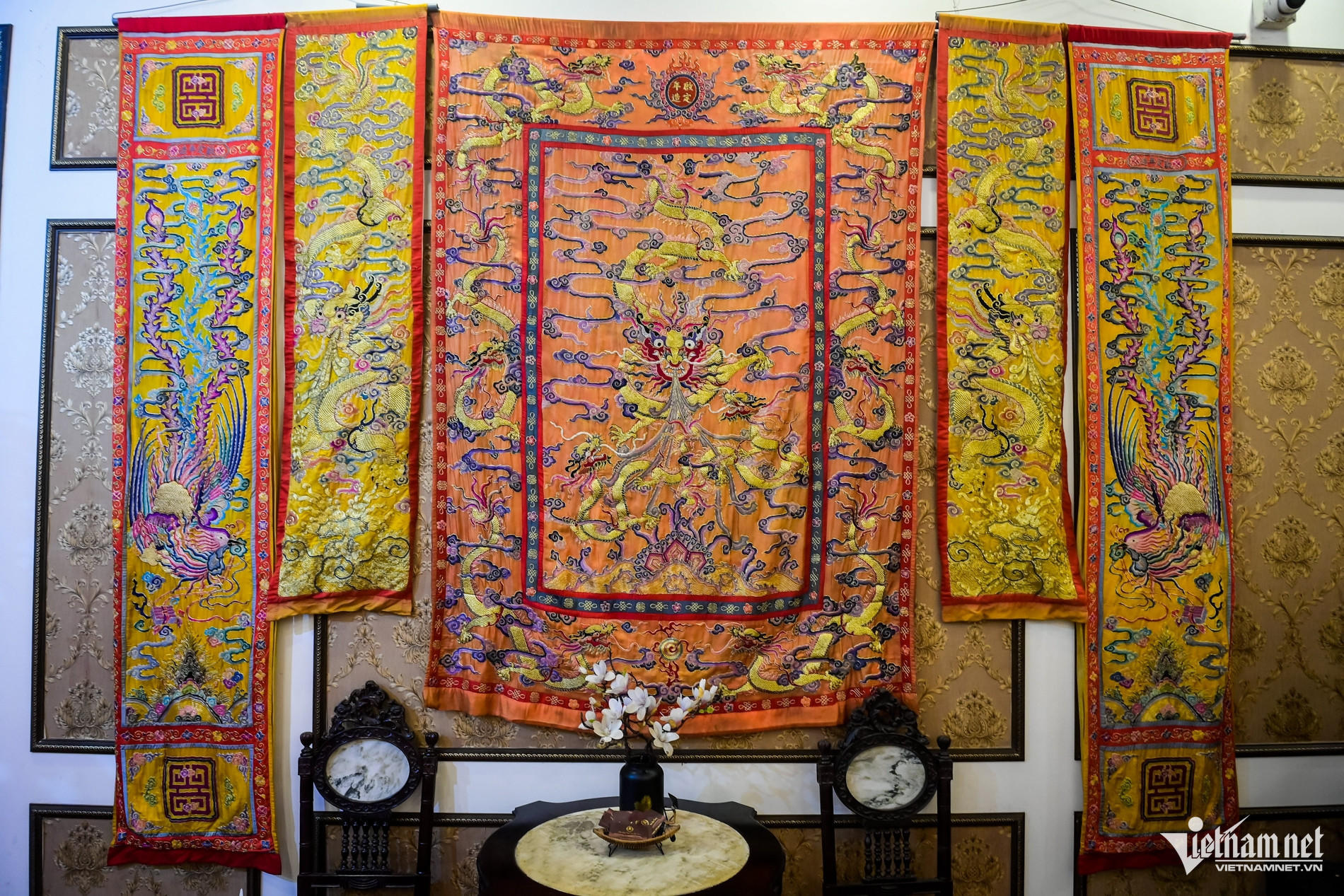
This passion culminated in his acquisition of the "Cuu Long" embroidered silk artwork, believed to date back to the Nguyen era. The piece showcases the exquisite craftsmanship of imperial artisans, who are thought to have poured both technical mastery and reverence into its creation.
The embroidery, designed in a vertical hanging scroll style, measures 2.25 meters long and 1.65 meters wide. It is embroidered using golden threads and multicolored silk floss on a bright flame-yellow silk background known as lua hoa hoang, once reserved exclusively for royalty.
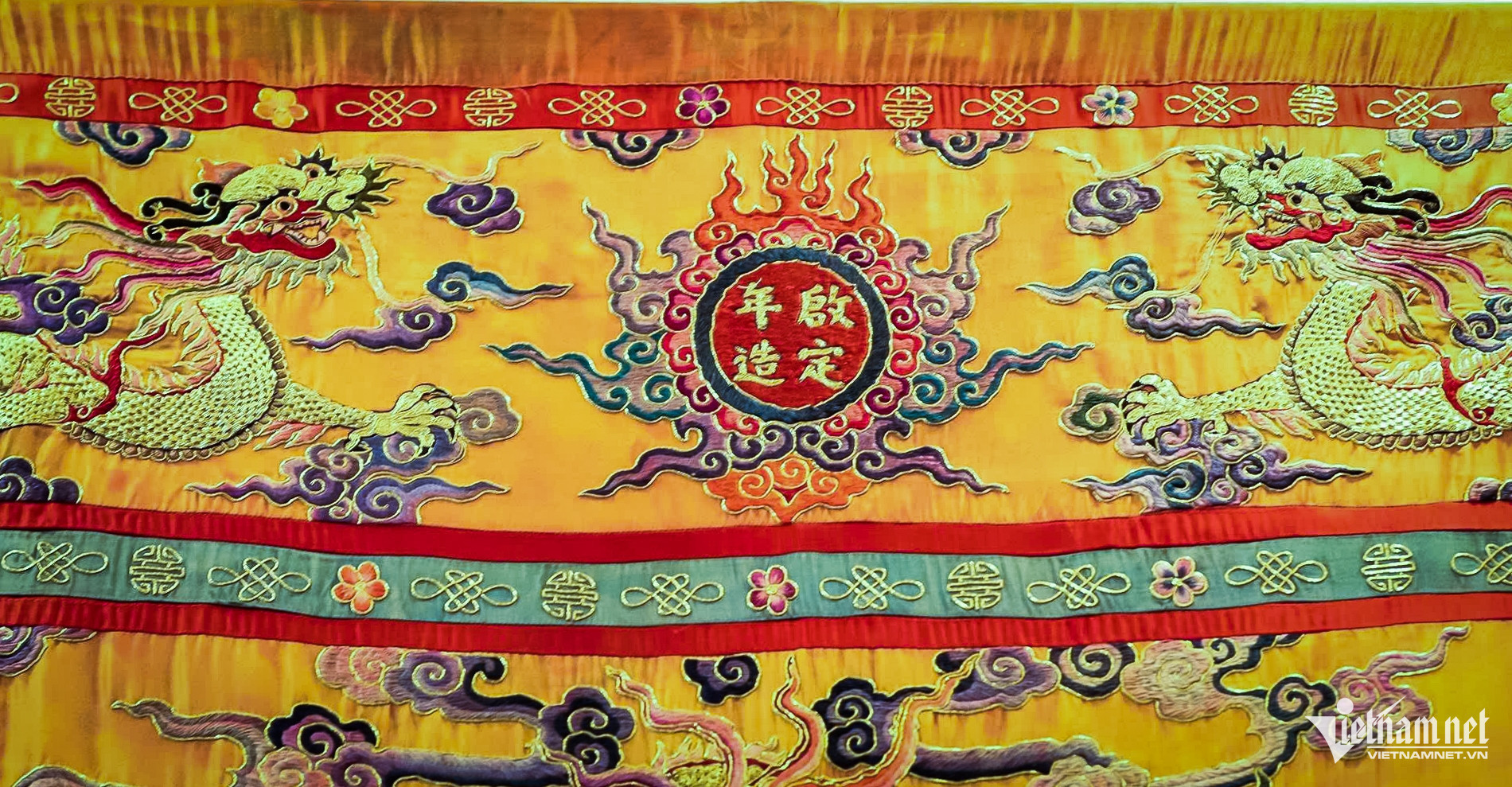
To secure this masterpiece, Quang pursued it persistently for more than ten years, making numerous attempts to persuade its former owner - who only recently agreed to part with it.
"From my research, this was an imperial embroidery made specifically for the emperor’s use. It was likely hung behind the royal throne. The artwork features nine five-clawed dragons, with the central dragon representing the emperor himself. The remaining eight dragons are arranged around it, signifying absolute monarchical power," Quang shared.
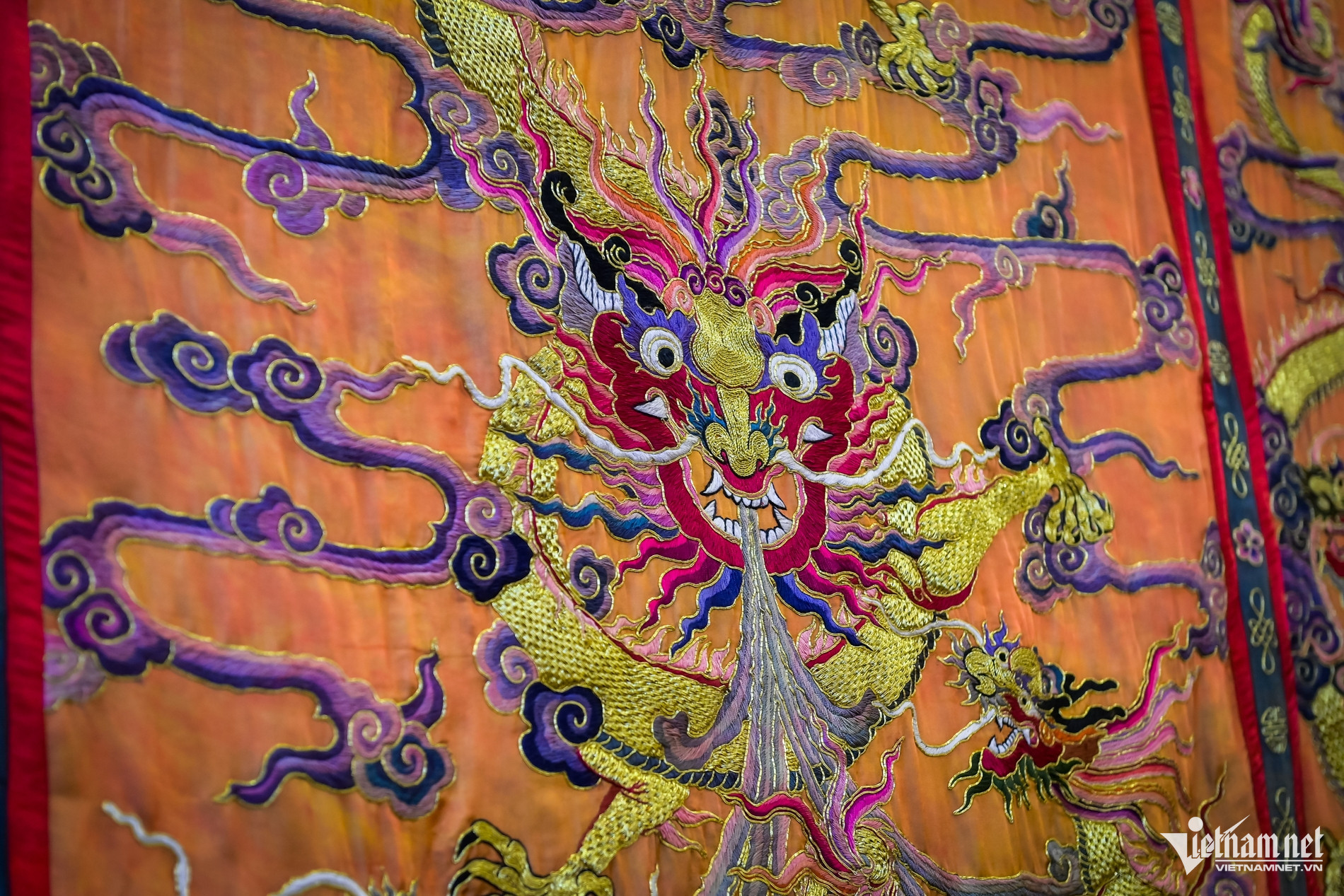
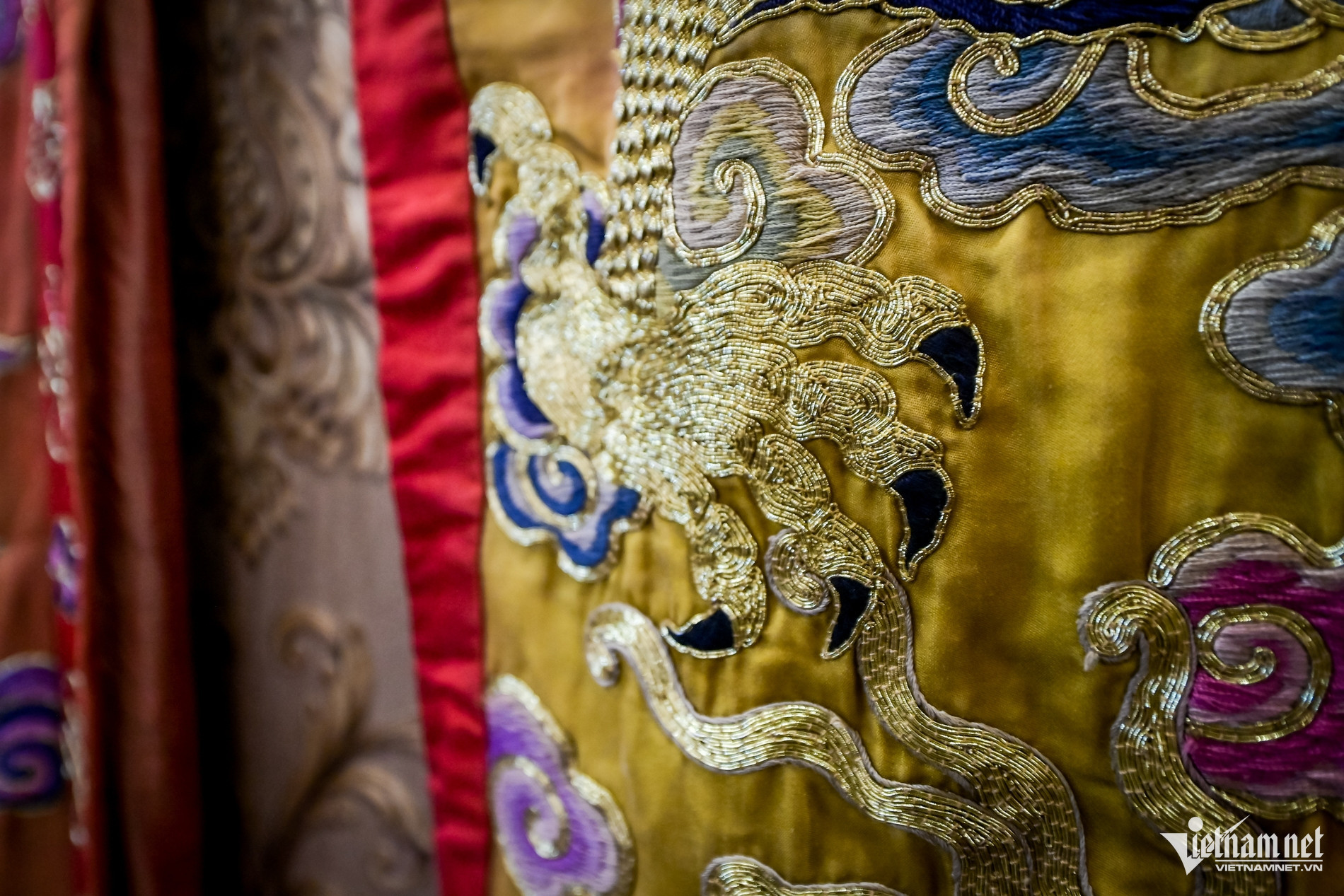
The clouds and waves on the tapestry are vividly rendered - each stroke showcasing the finesse of imperial court artists, and underscoring the solemn grandeur of the piece.
In addition to the "Cuu Long" embroidery, Quang also owns two other rare royal textiles: a pair of dragon tapestries measuring 1.8 meters each, and a pair of phoenix embroideries measuring 2.6 meters long and 0.55 meters wide. All are believed to have originated from the royal palaces in Hue.
Due to their delicate nature, the embroideries are carefully rolled and stored in protective cabinets to avoid moisture damage. They are only displayed on special occasions.
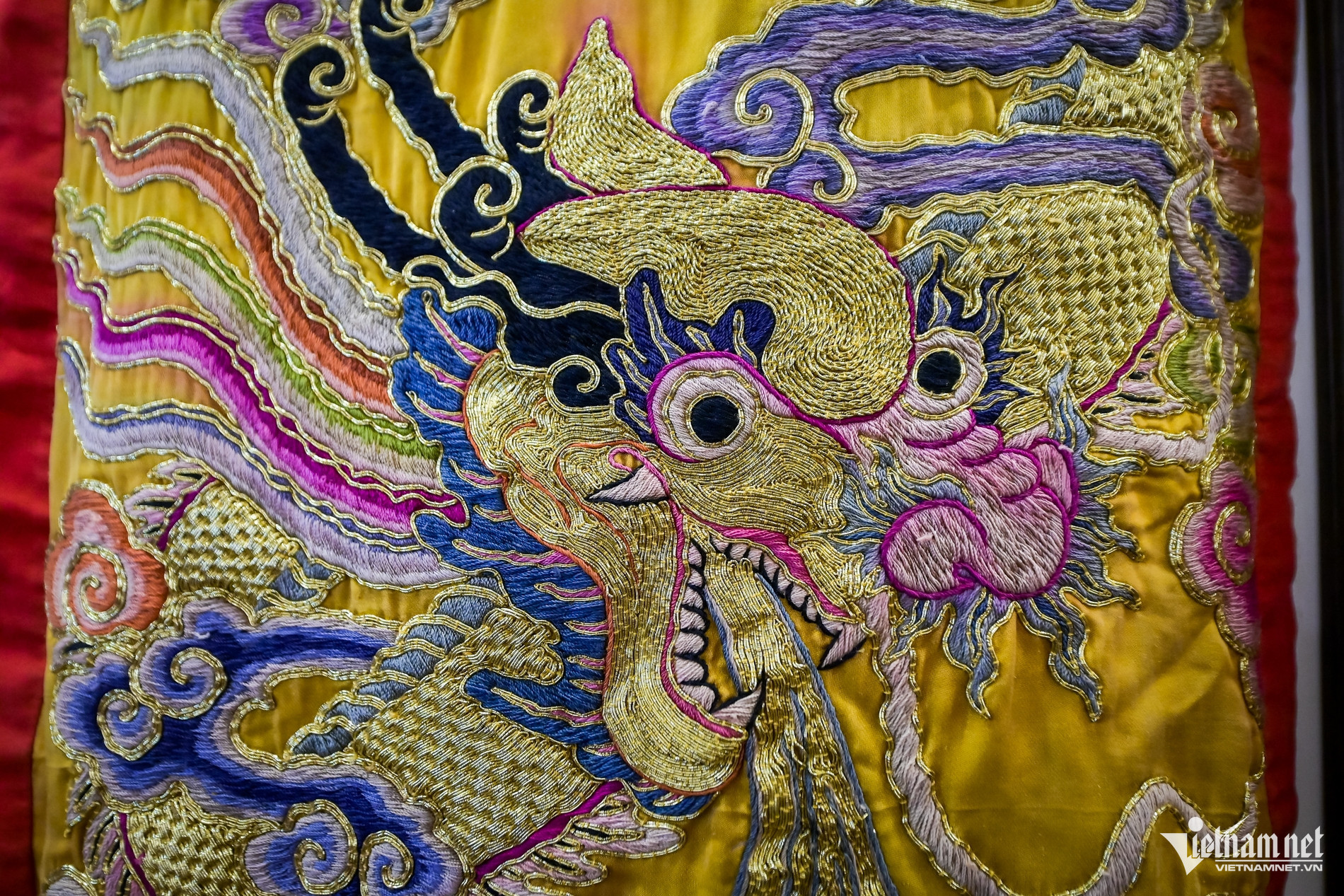
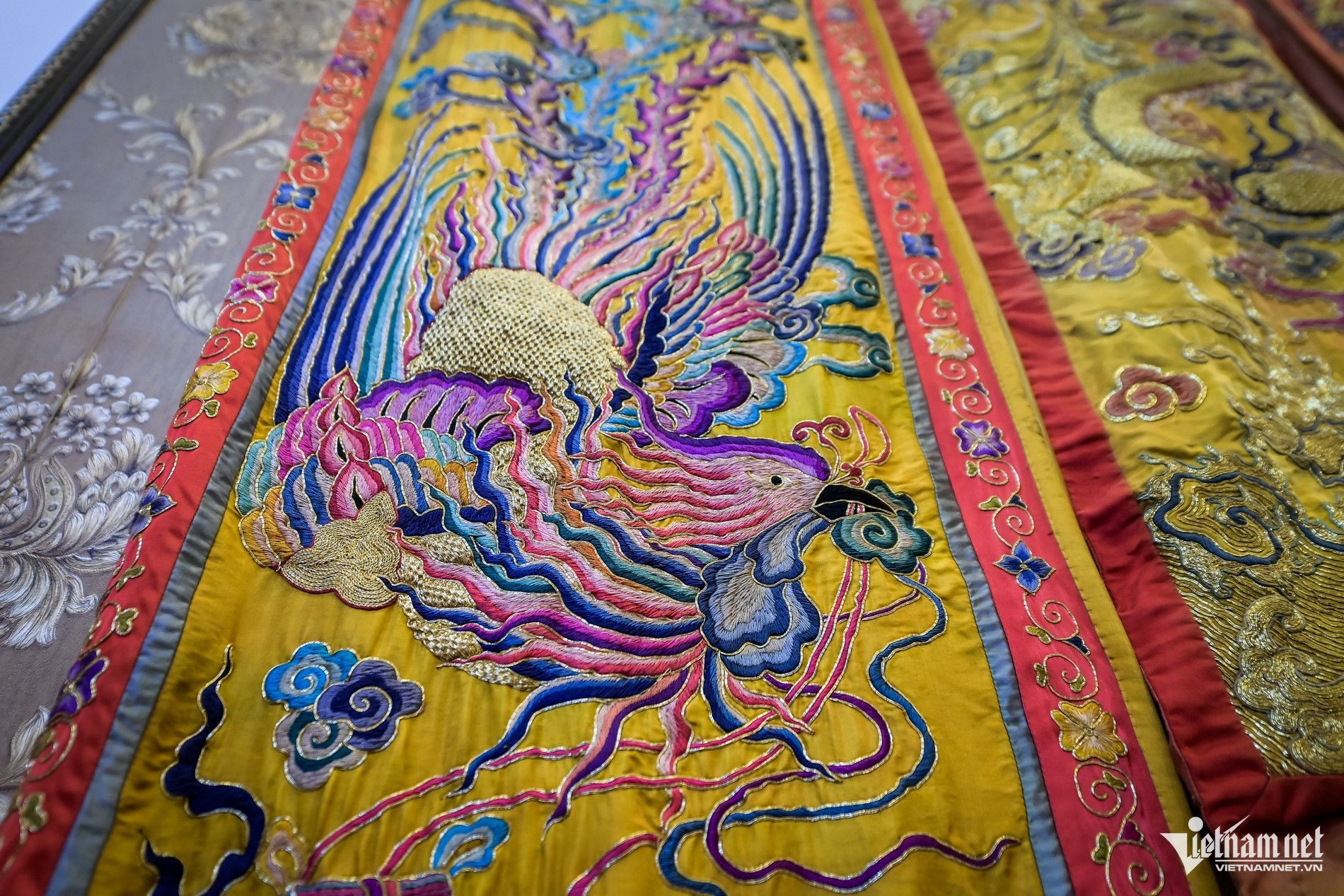
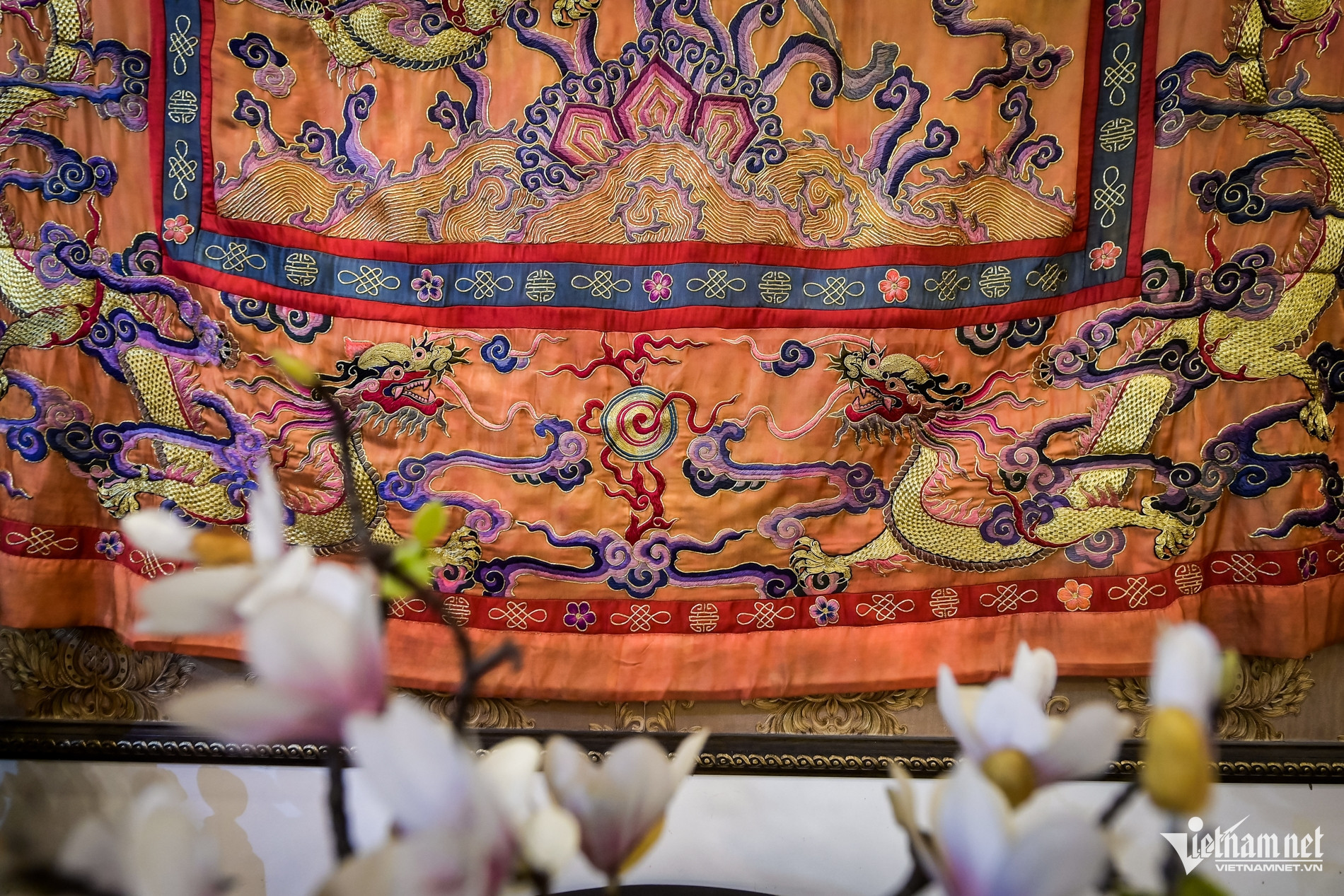
“Silk and embroidery threads are highly susceptible to mold, fading, and wear over time, which is why so few court embroideries have survived,” Quang explained. “Since acquiring these pieces, I’ve received many generous purchase offers, but I have no intention of selling. To me, their value goes far beyond money - they are living vessels of cultural and historical significance that I wish to preserve.”
According to Tran Thinh, President of the UNESCO Antique Collecting and Preservation Club in Nam Dinh, the "Cuu Long" embroidery in Quang’s collection is one of the few large-scale royal embroideries still in nearly pristine condition. He emphasizes that silk’s natural fragility makes such preservation incredibly rare.
From a seasoned collector’s perspective, Thinh estimates that the artwork’s value could reach into the billions of dong (hundreds of thousands of USD), but its true worth lies in the heritage it represents.
Trong Tung
.svg)
