 Vietnamnet.vn

 Podcast



On September 27, the International Conference on Scientific Research Associated with the Management, Conservation, and Promotion of the World Cultural and Natural Heritage of the Trang An Scenic Landscape Complex took place with the participation of Nguyen Minh Vu - Permanent Deputy Minister of Foreign Affairs and Chairman of the Vietnam National Commission for UNESCO, Hoang Dao Cuong - Deputy Minister of Culture, Sports and Tourism, along with both domestic and international experts and scientists.
Speaking at the conference, Tran Song Tung - Vice Chairman of the Ninh Binh Provincial People's Committee - emphasized: "The conference not only highlights Ninh Binh’s ongoing commitment to scientific research but also provides an opportunity to introduce the most outstanding findings from the SUNDASIA archaeological research program."
Prehistoric human remains nearly 13,000 years old uncovered

Many domestic and international delegates attended the conference.

Tran Song Tung - Vice Chairman of the Ninh Binh Provincial People's Committee.

The discovery of the “Trang An warrior” skeleton marks a major archaeological milestone.
Archaeological surveys and excavations at Thung Binh 1 Cave within the Trang An Complex have yielded major discoveries: prehistoric human remains dating back over 12,000 years, along with stratigraphic data, evidence of ancient flora and fauna, and burial practices.
Tran Song Tung asserted: "The discovery of prehistoric human remains dating back nearly 13,000 years in Trang An, alongside data on stratigraphy, ancient biodiversity, and burial customs, reinforces Trang An's status as a living museum of natural and cultural evolution. These findings provide rare scientific evidence clarifying human habitation and adaptation processes in response to environmental change, while also enriching anthropological and genetic studies."
This significant discovery of a nearly 13,000-year-old skeleton in Ninh Binh has been published in the Proceedings of the Royal Society (UK) and cited by over 500 news outlets, scientific journals, specialized blogs, and both domestic and international platforms. It has significantly elevated the global profile of Ninh Binh and Vietnam in terms of heritage and tourism.
According to Dr. Ryan John Rabett, an archaeologist at Queen’s University Belfast (UK) and Director of the Trang An Archaeological Research Project, the nearly decade-long excavation has revealed groundbreaking results.
Specifically, researchers unearthed an almost perfectly preserved human skeleton under unique stratigraphic conditions. Radiocarbon dating places the remains at the end of the Ice Age, between 12,000 and 12,500 years ago. The man, about 35 years old, had a quartz-tipped spear wound piercing his neck. The 2cm-long weapon bore signs of craftsmanship, although no other quartz tools were found in the cave, suggesting foreign technological influence.


Dr. Christopher Stimpson presents information on the excavation and findings of the "Trang An warrior" skeleton.
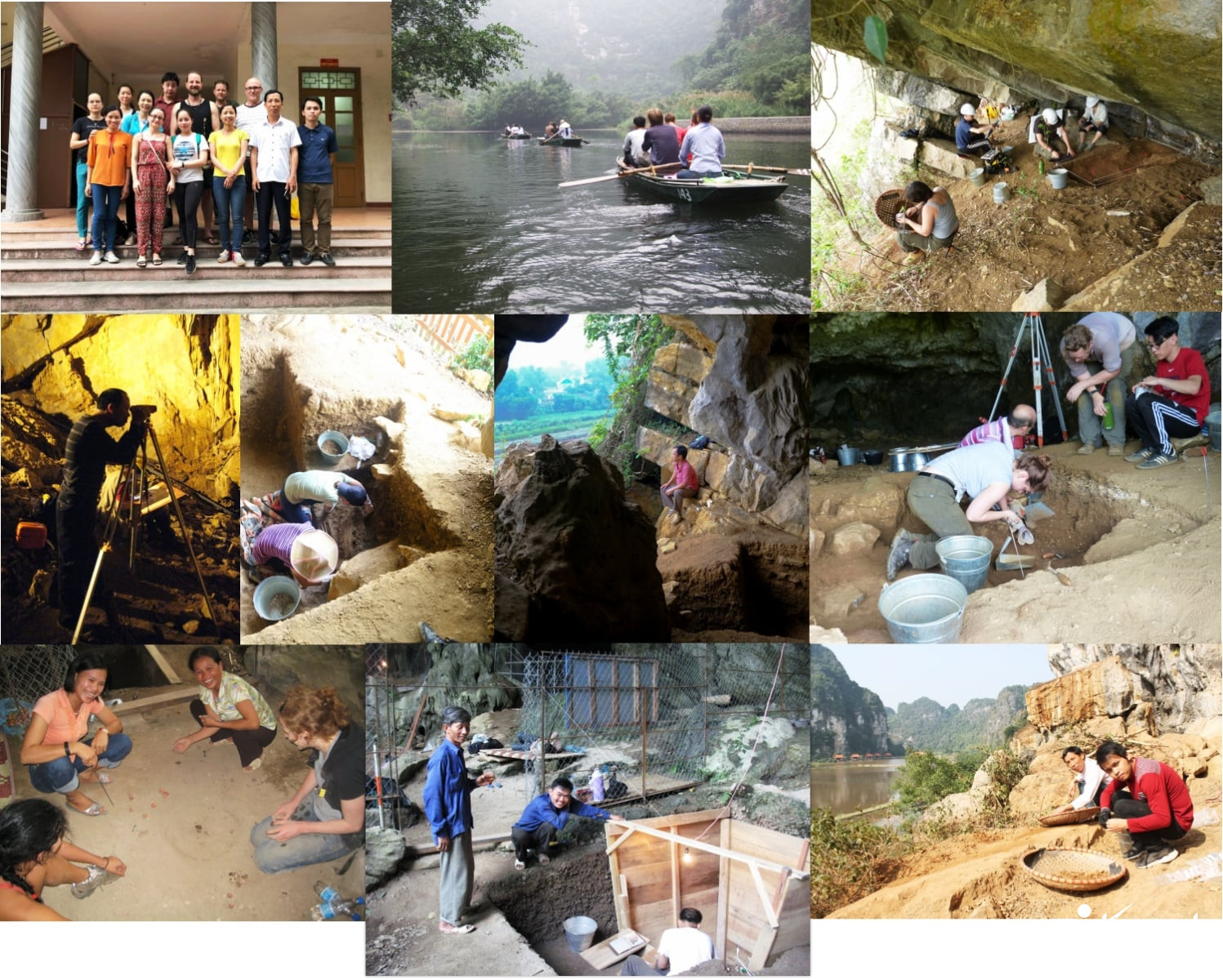
Excavation in progress at the Trang An Scenic Landscape Complex.
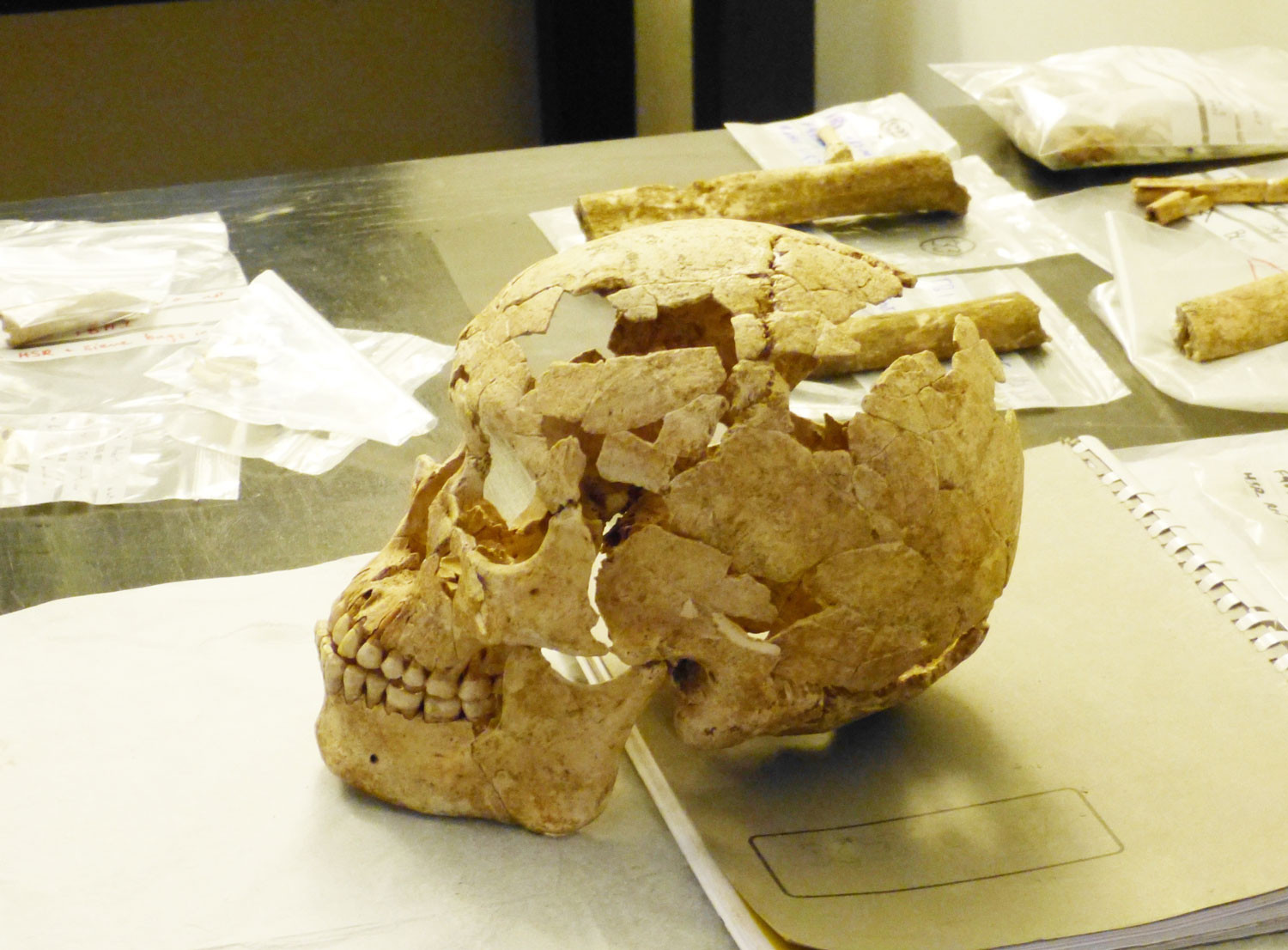
The SUNDASIA project, launched in 2016, has involved more than 100 international and Vietnamese archaeologists and experts. Excavations at seven sites have provided invaluable insight into prehistoric life and adaptation in the region. The most groundbreaking discovery remains the “Trang An warrior” skeleton, estimated to be nearly 13,000 years old, found in Thung Binh 1 Cave.
Dr. Christopher Stimpson, a fellow archaeologist from Queen’s University Belfast and member of the project, explained that excavation at Thung Binh Cave began years earlier, and in 2017, a complete right shoulder bone of a male adult was unearthed. The man stood about 1.7 meters tall and was around 35 years old. Subsequent excavations uncovered his entire skeletal structure.
Dr. Stimpson emphasized that this discovery represents the oldest known evidence of intergroup conflict among prehistoric humans in mainland Southeast Asia.
Reaffirming Trang An’s outstanding universal value
According to Jonathan Baker, UNESCO Chief Representative in Vietnam, recent research in Trang An not only enhances understanding of the long-standing relationship between humans and nature but also reaffirms Trang An’s outstanding universal value - one of the key reasons it was recognized as a World Heritage Site.
He noted that the findings enrich Trang An’s story as a dynamic cultural landscape that continues to inspire research, innovation, and sustainable development.
Experts stressed that the conference was more than an academic platform; it reflected a shared commitment to integrating science, policy, and communities to protect heritage. The presented research contributes to shaping conservation strategies, strengthening international cooperation, and elevating the role of local communities as the true custodians of heritage.
At the conference, Dr. Nguyen Viet, Director of the Southeast Asian Prehistory Center, also proposed the development of a heritage tourism product titled "Living with the prehistoric people of Trang An." This experience-based offering aims to spread awareness of Trang An’s heritage value while supporting sustainable growth.
Tran Nghi - Tinh Le
.svg)
