 Vietnamnet.vn

 Podcast



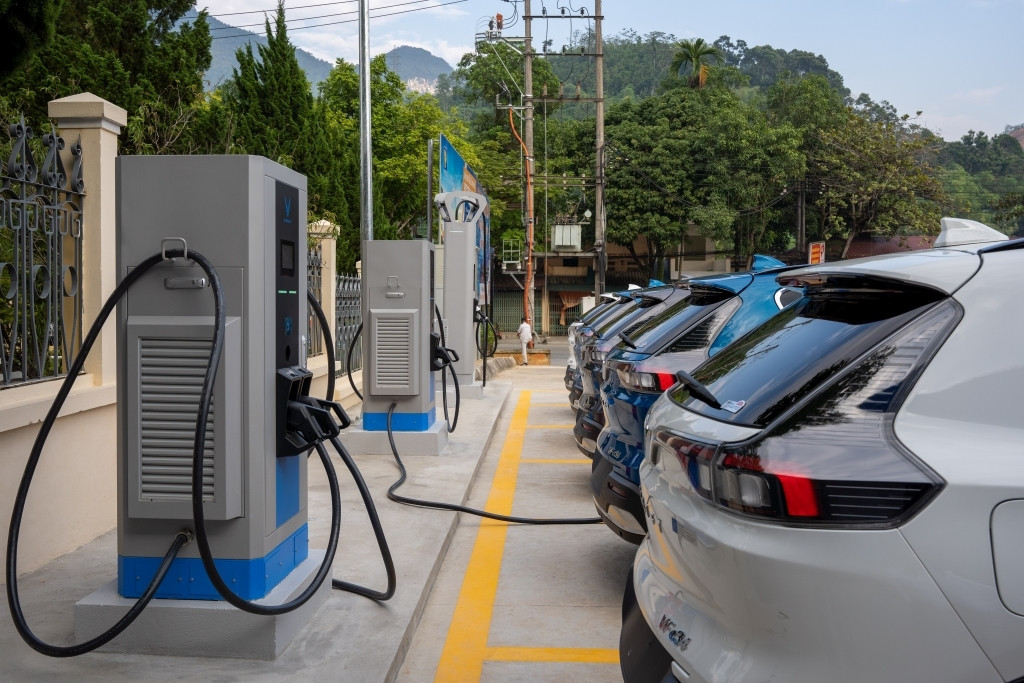
It must begin with strict emission controls while designing policies strong enough to change market behavior, said Pham Sy Thanh, Director of the China Economic and Strategic Research Center (CESS).
Citing successful practices in China, Thanh noted that the country built a green transition roadmap for transport over 20 years, not switching immediately to EVs but moving toward "gradually cleaning" the existing fleet.
From an early stage, major cities such as Beijing raised emissions standards, gradually phasing out non-compliant vehicles, especially diesel vehicles which, although accounting for a small proportion, cause significant pollution.
“Diesel vehicles account for only about 10 percent of the fleet but can emit more than 70 percent of pollutants and most of the fine dust. They focused on addressing the main sources of emissions rather than spreading efforts thinly,” Thanh said.
He said this is a clear lesson for Vietnam. If emissions are not strictly controlled, increasing the number of EVs will not deliver the expected environmental benefits.
Policies to encourage EV adoption
Thanh said another key factor behind China’s success is the development of charging infrastructure and policies to support usage costs.
In addition to subsidies for purchasing EVs, the Chinese government invested heavily in charging and battery-swapping networks, while issuing unified standards to ensure convenience for users.
Notably, many localities also regulated electricity prices for charging, making EV operating costs significantly lower than gasoline vehicles.
“If you only support vehicle purchases without making charging cheap and convenient, people will not be motivated to switch,” Thanh said.
In addition, local authorities play an important role in placing charging stations in residential areas, parking lots, shopping centers and more, making them easily accessible to users.
China’s success comes from effectively combining the “carrot and stick”: providing financial support, tax incentives, and plate licensing priority to EVs, while tightening internal combustion engine vehicles through restrictions on registration, circulation, and even bans in certain areas or during high pollution periods.
"It is the clear difference in cost and utility that has driven people to switch to EVs voluntarily, rather than relying solely on propaganda," Thanh said.
Which way for Vietnam?
Thanh suggested that Vietnam needs to build a long-term green transport transition roadmap suitable for practical conditions.
First, immediately apply strict vehicle emission standards, considering this a "lever" to push the market toward clean vehicles.
The issuance of technical regulations, especially in major cities like Hanoi and HCMC, needs to be one step ahead. When standards are tightened through registration and management systems, both citizens and businesses will be forced to adjust their behavior.
"A standard-based approach will create a clear signal for the market, helping stakeholders proactively transition instead of waiting," he explained.
Vietnam also needs to prioritize developing the charging infrastructure in an efficient manner. The placement of charging stations must be reasonable, not just increasing in number but optimizing accessibility and shortening travel time to charging points (a key factor in enhancing user experience).
It is also necessary to have appropriate electricity price policies to ensure charging costs are attractive.
Thanh proposed assigning the role of charging infrastructure to professional charging station operators to ensure consistency, safety and efficiency, especially amid increasing fire safety requirements.
In the medium term, Vietnam needs to categorize vehicles, prioritizing the transition of public transport and urban service vehicles first to create a spillover effect before expanding to private cars. At the same time, it should promote connections between transport modes and infrastructure to improve overall system efficiency.
In the long run, building a set of national standards for charging stations and EV parking lots and developing a smart transportation ecosystem is required. Thanh noted that this is a complex process involving both new and existing infrastructure, thus requiring a clear roadmap and a cautious approach.
"Green transition is not an overnight story. What matters is that policies must be synchronized, designed with reasonable priority levels, and strong enough to create momentum for the market to operate in a more sustainable direction," Thanh said.
Y Nhuy
.svg)
