 Vietnamnet.vn

 Podcast



Three-time valedictorian
In 2016, Trinh Huu Chin (born in 1998, residing in Hanoi) entered the School of Medicine and Pharmacy at Vietnam National University, Hanoi, as the top candidate on the HSA competency assessment exam.
Six years later, he graduated as the top medical student with a GPA of 3.59/4.0. In May 2026, he was honored once again for ranking first in his graduating residency class specializing in Anesthesiology and Resuscitation. He currently works at the Linh Dam Facility of Hanoi Medical University Hospital.
His achievements have earned him the affectionate nickname “the three-time top student.” However, the title itself sometimes puts him under pressure.
“I always ask myself whether I truly deserve the title. More importantly, once I enter the profession, will my knowledge be enough to deal with complicated cases? I feel a great deal of pressure,” said Trinh Huu Chin, 28, a physician and master’s degree holder.
According to Chin, ranking first does not necessarily mean someone is better than everyone else. Residency entrance exam and training involve different specialties, each with its own curriculum and examinations. Rankings are primarily based on scores, while each specialty has its own particular demands.
The pressure when a patient does not survive
During his years of study and clinical training at major hospitals including Viet Duc Hospital, the National Children's Hospital, the National Hospital of Obstetrics and Gynecology and Hanoi Heart Hospital, Chin witnessed many critically ill patients, including cases in which doctors did everything they could but were still unable to save the patients.
For a young doctor, one of the greatest concerns is encountering a situation they have never faced before and not knowing where to seek help.
“When I was a resident, we had professors and senior doctors with years of experience whom we could call for advice. But when you are standing alone in front of a patient, the pressure is enormous. At that point, I have to draw on everything I have learned, think logically and take a comprehensive view to accurately assess the patient's condition,” he said.
To this day, Chin still cannot forget a case he encountered at Viet Duc Hospital. A woman injured in a train accident was brought in for emergency treatment after suffering multiple cardiac arrests before reaching the hospital. She was taken straight to the operating room in critical condition. The anesthesiology and critical care team made every effort to save her, but her injuries were too severe and she died on the operating table.
“Witnessing the patient die on the operating table left me deeply saddened and under enormous pressure,” Chin said.
Three years of residency cannot teach you everything
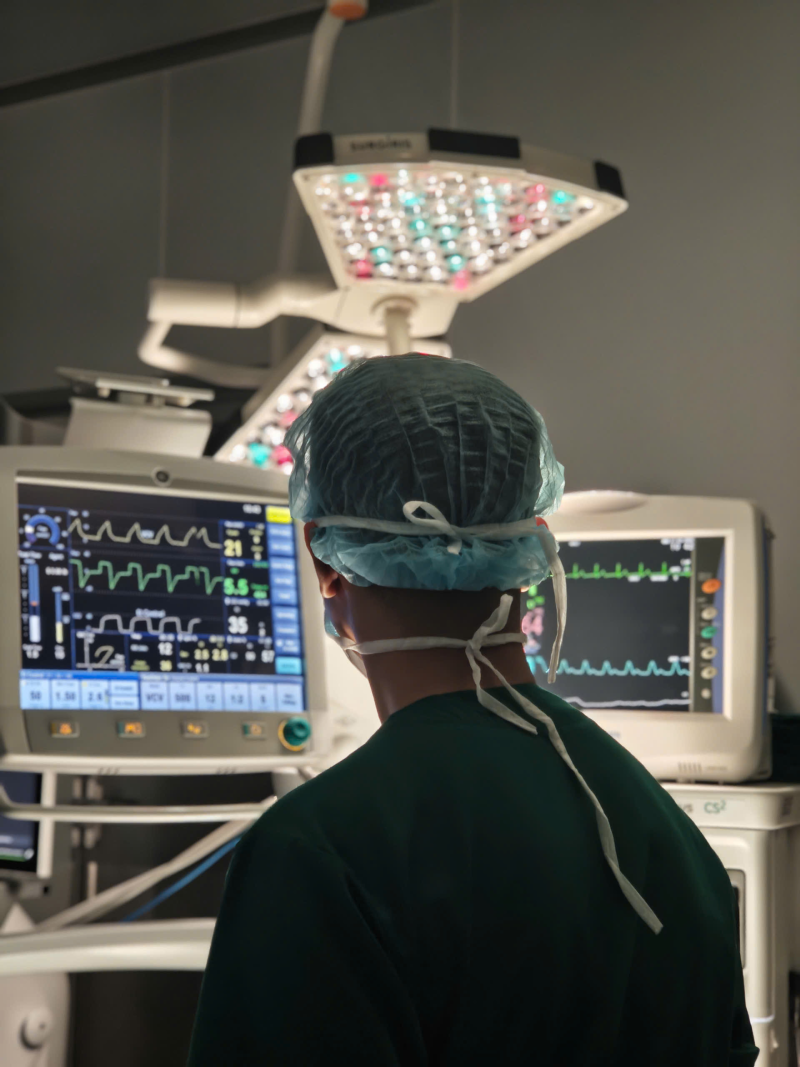
Chin chose anesthesiology and critical care before he fully understood the specialty. During medical school, his exposure to the field was mainly through surgical rotations and time spent in operating rooms.
As he had opportunities to explore the specialty more deeply, he realized that it was both broad and demanding, requiring doctors to combine knowledge of internal medicine and surgery.
For Chin, three years of residency cannot equip a doctor with every piece of knowledge in anesthesiology and critical care. However, the training provides an important foundation for entering clinical practice.
In medicine, graduation is not the end of learning. Instead, it marks the beginning of a long journey of learning from clinical experience.
Dr. Chin believes that the valedictorian title serves as a memorable milestone, but a physician's capability is judged not by exam scores, but by their ability to support patients and save lives. For the young doctor, diagnosing, managing, and saving a critically ill patient remains the true definition of success.
Phuong Thuy
.svg)
