 Vietnamnet.vn

 Podcast



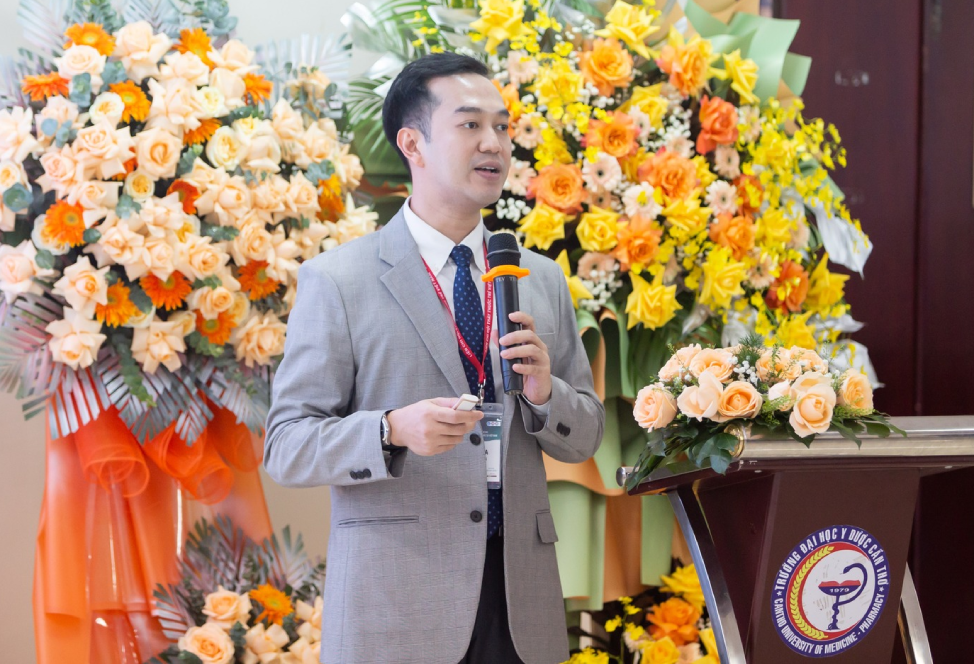
Among those recognized as professors and associate professors in medicine in 2025, Duy (born in 1987, HCMC University of Medicine and Pharmacy) was one of the two youngest faces. By his 30s, he had already achieved several notable academic and professional milestones.
Instead of choosing highly sought-after specialties such as cardiology, interventional medicine or surgery, Duy pursued a lesser-known field: allergy and clinical immunology.
Born into an academically oriented family, with a mother who was a university lecturer and a father who was an agricultural researcher, Duy grew up in an environment that valued knowledge. However, what shaped his path was not only his family background but also his curiosity about the human body and his own personal experience when he suffered from allergies.
He said that choosing clinical allergy was not a calculated strategy from the beginning but stemmed from an awareness of the gaps in the healthcare system.
“There are patients with allergies and immune disorders who have to go through many different specialties because of the lack of specialized treatment places, while this is a group of systemic diseases that affect many organs at the same time,” Duy said.
However, choosing a less popular direction also meant facing skepticism. Around 10 years ago, after completing his doctoral studies at Ajou University, he received job offers from both Korea and the US. Although they were dream opportunities, he still decided to return to Vietnam because he saw that the field remained underdeveloped at home.
During his early days back in Vietnam, he admitted feeling isolated at times. Some people believed that focusing deeply on biomedical science was disconnected from clinical realities, especially when Vietnam’s healthcare system still lacked advanced diagnostic and treatment capabilities. Differences in disease patterns and practical conditions also forced him to adjust his approach.
Nevertheless, through Duy’s connections with mentors and colleagues who shared the same interest, a professional community in allergy and immunology gradually formed, helping promote the field in HCMC and southern provinces.
The “silent burden”
According to Duy, allergies and immune disorders are still not fully recognized in Vietnam. One reason is that medical training programs do not include in-depth courses on the subject, causing knowledge to remain fragmented. In addition, the number of patients is not as large as with more common diseases, making the field a lower priority.
Modern diagnostic methods such as molecular allergen testing and advanced therapies, including biologics and desensitization treatment, remain limited due to high costs and a shortage of well-trained specialists.
However, allergies can significantly affect quality of life. They are a “silent burden” because many cases are either misdiagnosed or improperly treated, forcing patients to live with prolonged symptoms.
Another issue is inconsistent diagnosis and treatment. As information about allergies spreads widely on social media, public awareness has increased, but so has the risk of misinformation.
“Without proper professional knowledge, diagnoses can easily become excessive,” he said.
He cited many cases in which children were unnecessarily placed on overly strict diets, leading to malnutrition and affecting their development.
“Allergies are not just about rashes or runny noses. They are issues of the immune system and need to be approached scientifically,” Duy emphasized.
Staying committed
When asked what motivates him to pursue a difficult field with little glamour, Duy’s answer was simple: passion and meaning.
“When patients are able to control their illnesses, children and their families become less anxious, I feel my work has value,” he shared.
For younger colleagues, Duy believes they should not blindly follow trends or the crowd. Every specialty has its own value, and the important thing is whether it matches one’s abilities, circumstances and passion.
“Actually, the path I am taking is not necessarily opposite to the crowd but is just a 'narrow' path, like a small canal compared to a large river. Whether it is a small canal or a large river, they both have their own values," Duy said.
Phuong Thuy
.svg)
