 Vietnamnet.vn

 Podcast



On February 28, 2025, after reviewing the government's report on budgetary capacity in the context of administrative streamlining, the Politburo officially decided to waive tuition fees for all students enrolled in public education institutions from preschool through high school, effective from the 2025–2026 academic year.
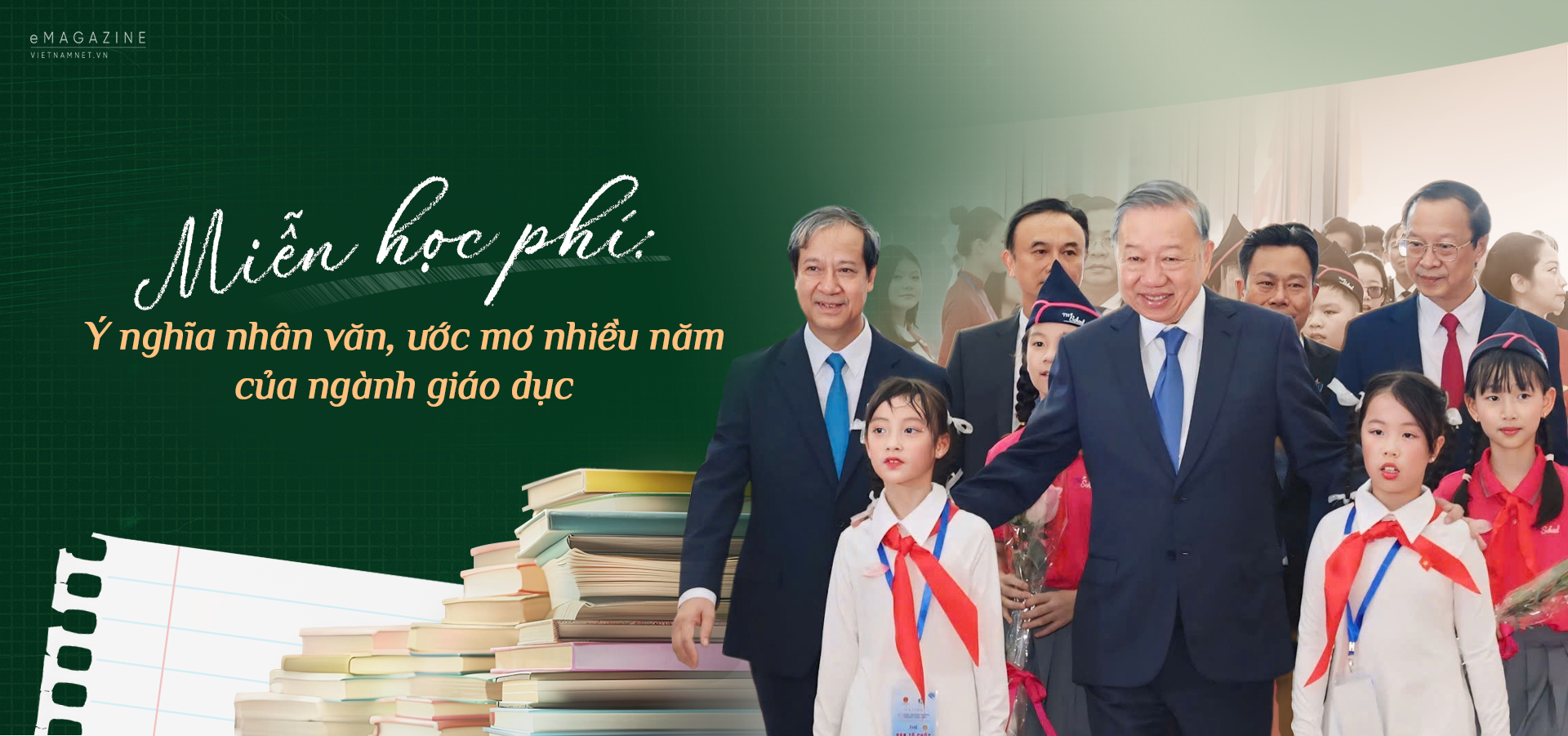
Subsequently, on June 26, 2025, the National Assembly passed a resolution on tuition exemption and financial support for preschool children and general education students. The resolution stipulates full tuition exemption for students attending public schools. For those in non-public and private institutions, the government will provide partial financial support for those following the standard education curriculum.
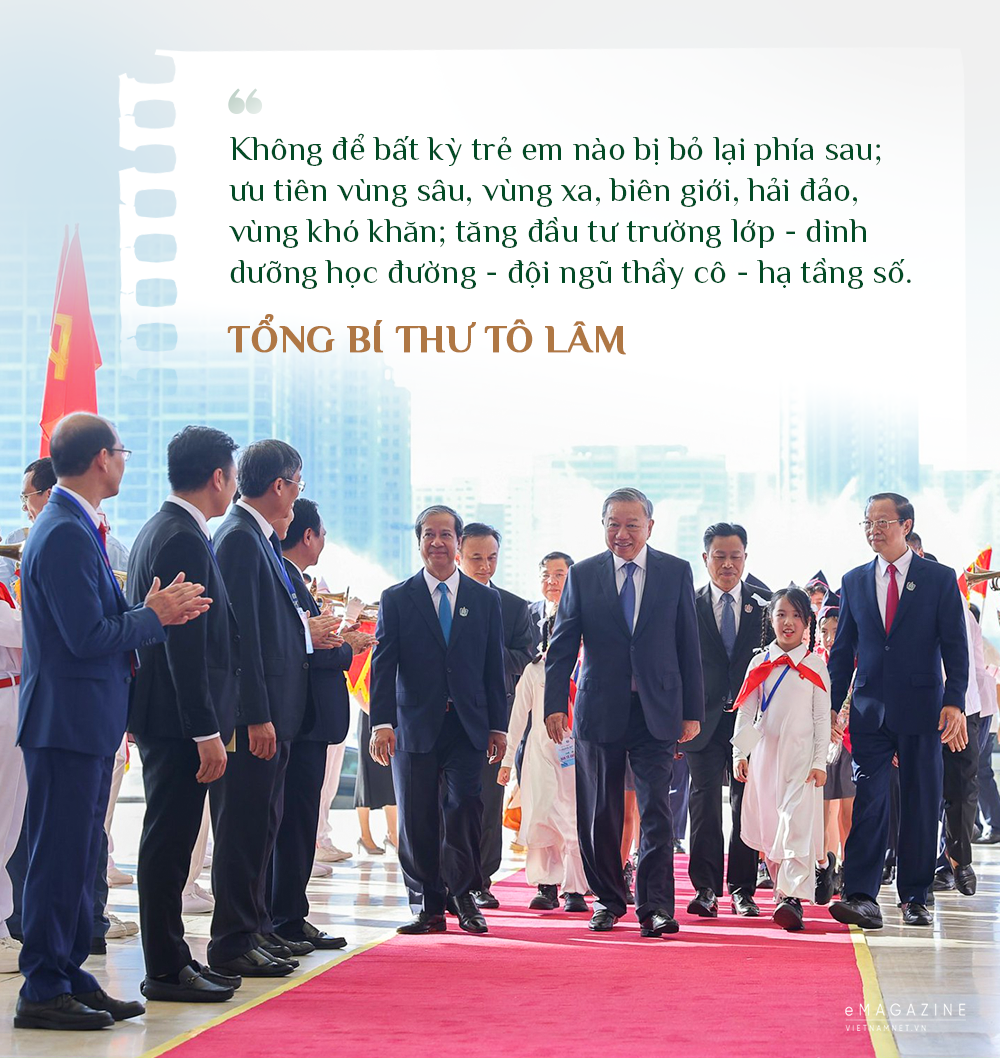
On the morning of September 5, during the opening ceremony for the 2025–2026 academic year, General Secretary To Lam emphasized that one of the key priorities for the education sector is ensuring equal access, raising the nation’s educational baseline, and leaving no child behind.
He stressed the importance of prioritizing education in remote, border, island, and underprivileged regions, while also expanding investment in schools, school nutrition programs, teacher development, and digital infrastructure.
The General Secretary reaffirmed that the recent implementation of tuition waivers for all students from preschool to high school was a significant milestone. In some areas, local authorities have also begun providing free school lunches for students attending full-day programs.
According to him, education is not only a vehicle for knowledge transmission but also a foundation for character development, physical health, and emotional growth-helping shape a generation of “talented, compassionate, and resilient” individuals capable of leading the country in a new era.
Even before the official policy was enacted, the idea of free public education had already received widespread public support, particularly among parents.
Most respondents expressed joy and saw the move as a major step forward for Vietnam’s education system-providing equal learning opportunities for all children while easing the financial burden on families, especially those with low to middle incomes.
Associate Professor Dr. Tran Thanh Nam, Vice President of the University of Education under Vietnam National University in Hanoi, shared that both as an education administrator and a parent, he sees the tuition waiver as a moment of great joy.
According to him, this decision reflects the Party and State’s forward-thinking vision and humanitarian values. It aligns with the global trend toward a knowledge-based economy and is a significant step in guaranteeing the fundamental right to education for all children.
“This policy has long been a dream of the education sector,” Dr. Nam said. “It’s an expression of deep understanding and practical care, easing financial pressure on families and encouraging more children to attend school. It will also help reduce dropout rates due to economic hardship.”
He added that the move represents a strategic step toward universalizing general education and promoting equal access-ensuring that no child is left behind.
Dr. Nguyen Tung Lam, Vice President of the Vietnam Association of Educational Psychology and Sciences, also emphasized that the tuition-free policy not only relieves families-especially low- and middle-income households-of financial stress but also contributes to building a progressive and sustainable society.
“This policy fosters an egalitarian educational system where all students-regardless of family income-have the opportunity to access quality education,” Dr. Lam said.
“In the long term, when tuition is no longer a concern, students will be able to focus more on learning and improve academic performance, helping reduce dropout rates linked to economic difficulties. This is a humanitarian and timely policy, aligned with the people’s aspirations as the country enters a new era of advancement.”
According to the Ministry of Education and Training, Vietnam currently has around 23.2 million students (excluding those enrolled in vocational training and continuing education centers). This includes 4.8 million preschool children, 8.9 million primary school students, 6.5 million lower secondary students, and 3 million upper secondary students.
The proportion of students attending non-public schools remains below 10%, mostly concentrated in major urban areas. Based on Ministry estimates, the state budget will need to allocate approximately USD 1.23 billion annually to fully implement this tuition waiver policy.
Thanh Hung
.svg)
