 Vietnamnet.vn

 Podcast



Could you please cite an example of the effectiveness of assigning tasks directly to the commune level and enabling communes to be more proactive in resolving a specific issue?
To enable grassroots levels to act clearly, beyond routine tasks that communes must handle by regulation without needing to ask, for emerging issues the province must clearly define the assignment.
For example, in preparing to build boarding schools in border areas under the Politburo’s Conclusion 81, if we merely asked commune chairpersons to apply solutions to bring these schools into operation early, they would not understand exactly what was required.
So, we need to clarify specific points. First, selecting locations associated with famous landmarks. For instance, a school in the Truong Ha area must be located on the route to Pac Bo. When visitors come to pay tribute to Uncle Ho, they can also visit Truong Ha boarding school, show concern for the students, and engage in exchanges and sharing.
Second, site selection must ensure no flooding and slopes are not overly fragmented, so that instead of spending money on foundations, infrastructure, and leveling, costs can be maximized for classrooms for the children.
Third, because Cao Bang has an extremely irregular and harsh cycle of rain, dry, and wet seasons, we do not concrete everything at all costs.
You have many times emphasized not counting the number of meetings but looking at the final product. With Cao Bang's low starting point and many specific challenges, is results-based management an obligatory choice for Cao Bang to optimize resources?
The resources that the Central Government provides to Cao Bang, such as public investment and national target programs, must be used effectively to every dong.
To reach that end, it is impossible to just sit around assigning vague tasks or holding symbolic meetings.
We must go into specifics. I say, with an investment like this, we must definitely be brave enough to spend money on what is most needed.
At this stage, for Cao Bang, that is healthcare, education, and human resource training to gradually prepare conditions to attract strategic investors. With current difficulties in infrastructure, high land access costs, and an unready workforce, setting overly ambitious goals right away is not feasible.
When moving fast and decisively, a fear of making mistakes often emerges among officials. To protect those with breakthrough and development-oriented thinking, what policies or incentives has the province applied to unlock Cao Bang’s human resources?
The general requirement is that we cannot stand still and watch other provinces move further ahead. Cao Bang’s economic scale accounts for only 0.17 percent of the national economy, the lowest among provinces. Although growth reached 7.22 percent this term, the highest in the last15 years, it still fell short of the desired 8 percent. Starting this year, growth must reach double digits, at least 10 percent.
To achieve the high growth rate, with Cao Bang’s ICOR, the total social investment, including both public and non-budget investment, would be $6.3–6.8 billion. This is a very “dreamlike” figure for Cao Bang. Securing such capital is already difficult, but using it effectively once obtained is even harder. Otherwise, all scenarios remain on paper.
Therefore, we do not have any grand solutions. We follow proper procedures, and aim to shorten timelines as much as possible.
With a high disbursement rate of 96 percent in 2025, how has the province used this fiscal tool to lead other social resources, especially for the Dong Dang–Tra Linh expressway project?
Public investment can be used to both develop infrastructure and create spillover effect. But we have only accomplished half of that equation. Recently, we have focused on decisively addressing long-standing bottlenecks in public investment that have persisted for years: slow site clearance, inadequate investment preparation, and scattered and prolonged projects, leading to low efficiency and low disbursement rates. For a poor province, having money but being unable to spend it is one of the greatest hardships.
But as you mentioned, using public investment as seed capital to attract off-budget investment is something Cao Bang has not yet achieved.
Currently, while many enterprises are established in Cao Bang, only about 62 percent operate effectively. Cao Bang remains a “white zone” for foreign direct investment. The province does not yet have a single industrial cluster. Although Cao Bang is not an industrial stronghold, industry cannot be absent from the economic structure. Agricultural products have not yet reached large-scale commodity production, despite the presence of many OCOP products and branded items.
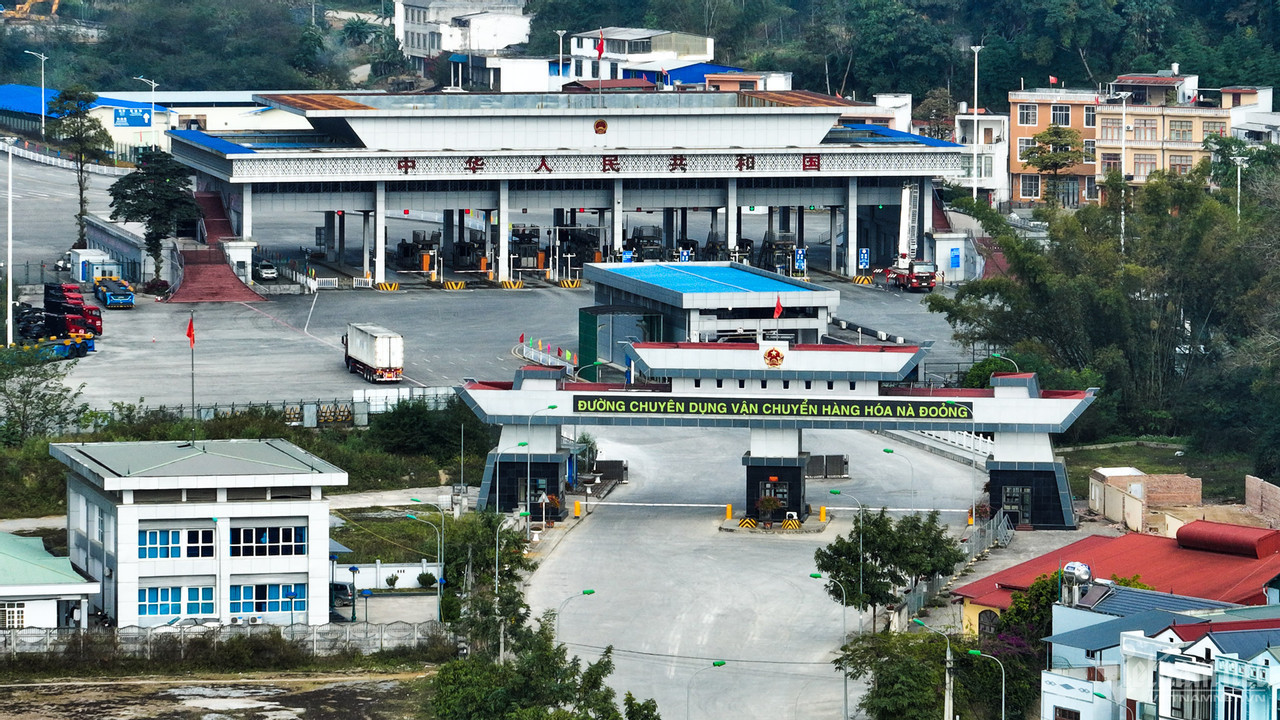
Cao Bang can absolutely perform well as a transit and connectivity hub. The challenge is that after public investment, and after continuing to invest in core infrastructure, we must have forward-looking planning and attract investment into logistics facilities, warehouses, and transit-related value chains. Only then can public investment truly be transformed into effective seed capital.
Doan Bong
.svg)
