 Vietnamnet.vn

 Podcast



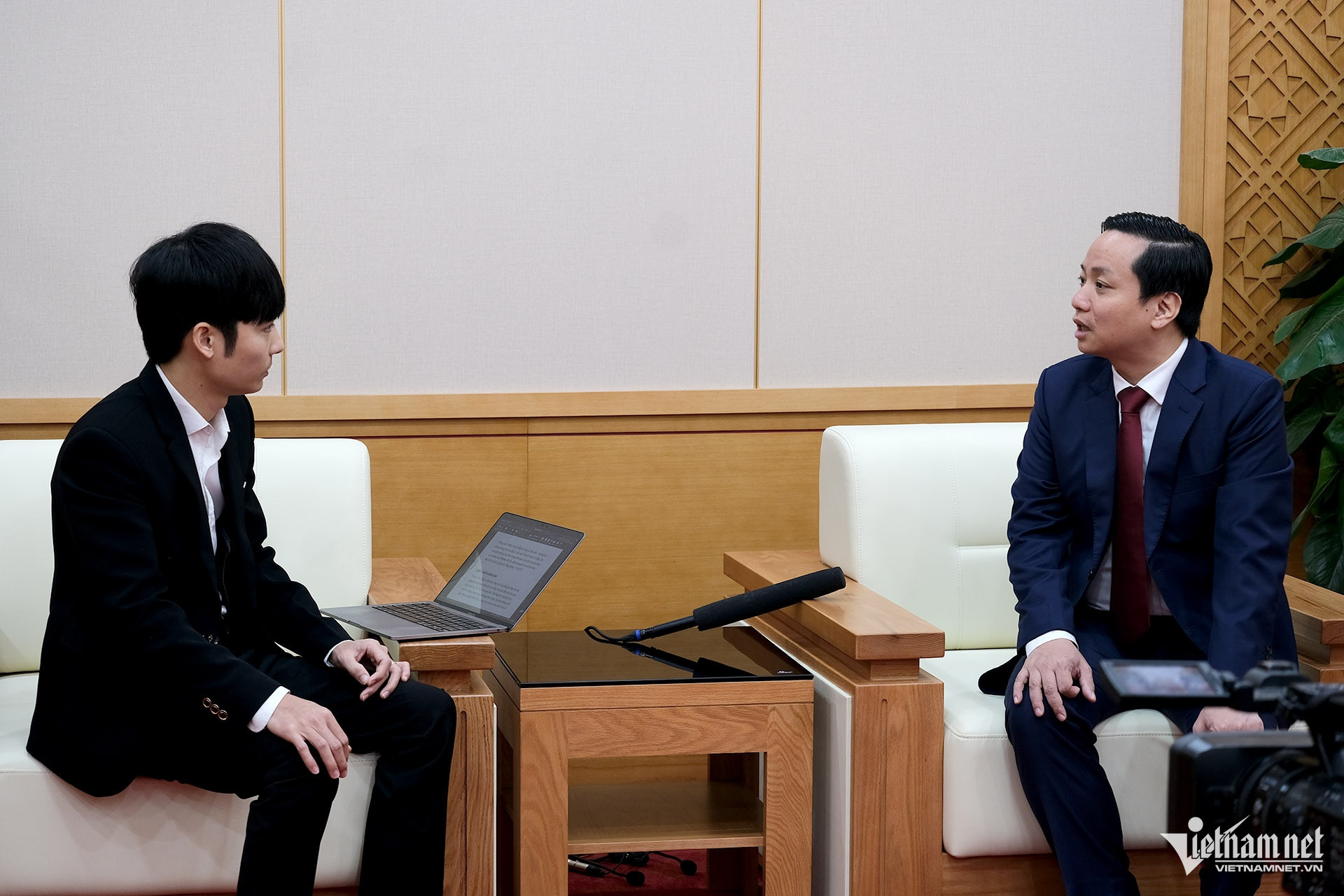
VietNamNet talked with Le Hai Hoa, Alternate Member of the Party Central Committee, Deputy Secretary of the Provincial Party Committee, and Chair of the Cao Bang Provincial People's Committee, to clarify governance views and actual changes in this locality.
In economics, time is the most expensive cost. Recently, Cao Bang made a strong decision to cut out intermediate layers. In your opinion, is this a way to minimize transaction costs and help capital flow faster? By what scale do you measure that speed?
We closely follow the instructions and reform spirit of the Central government and organize implementation in a way that best suits local conditions.
Saying that time, transactions, and intermediate layers are costly is absolutely correct. Every business, citizen, or any subject of the economy, when making investment or carrying out civil transactions, wants to fulfill procedures quickly, with fewer hassles, and simple procedures.
In Cao Bang, we strictly implement the policies and guidelines directed by the Party and the State, just as other localities do. However, we do have some differences.
First, we are not a merged province. That is an advantage because people are less shuffled, so still the same people, still the same space. But the personnel force must renew more drastically and faster. Clearly, Cao Bang must "renew itself."
To renew itself, three things are needed. One is to clarify the responsibility of the heads of all levels. We are not just urging, but must solve work together.
Two is converting time into specific measurement indicators. We do not measure by how much time has been spent solving this matter or how many meetings have been held, but how to shorten the "turnover of money."
For example, once capital is assigned and investment preparation is full, we must reach the finish line, and reach it ahead of schedule. If a business wants to invest, we must resolve administrative procedures very quickly. If a citizen has to follow procedures, they should be most convenient.
Therefore, the time cost truly must be cut. Aiming for less trouble, explaining so people understand correctly and hits the mark, and doing it right the first time is the goal.
Sir, in a previous address to the provincial People’s Council at the end of last year, you delivered the message: “Comply with regulations but ensure they fit reality.” This message represents a very delicate boundary. When decentralizing authority strongly to the grassroots level to optimize resources, how do you apply “safety valves” to control risks related to public service ethics and avoid the situation where “local customs override state law”?
Complying with regulations is a requirement and a guiding principle. What we fear is situations where people claim to follow regulations but fail to coordinate, push responsibilities away, avoid tasks, or shy away from sensitive matters. For issues that are ‘sensitive’, many officials tend not to take to play safe. This reality exists not only in Cao Bang but in many other places as well.
I believe that the main reason for inaction is fear, lack of information, and a feeling of being isolated. There are things that previously a Commune Chairman could not imagine they could decide and had to ask for opinions, but now they must do it.
One must both act according to the law and meet the practical demands of the locality, and promptly report to competent authorities when there are obstacles. Compliance with the law is still number one, but there is a series of following processes. Otherwise, we will be in a situation where everyone is right, but problems cannot be solved.
Even for myself, the chair of the Provincial People's Committee now has many expanded powers compared to before, and so does the Commune Chairman. The trend of decentralization and delegation of power is an irreversible trend. We cannot take over or do the work for others, and we cannot delay. And, especially, we must fight against what is called "discretionary power." That is the right to decide or not; to sign or not; to sign today or tomorrow, or 30 days later without issue. One task can have many people doing it, but only one person is responsible.
Doan Bong
To be continued...
.svg)
