 Vietnamnet.vn

 Podcast



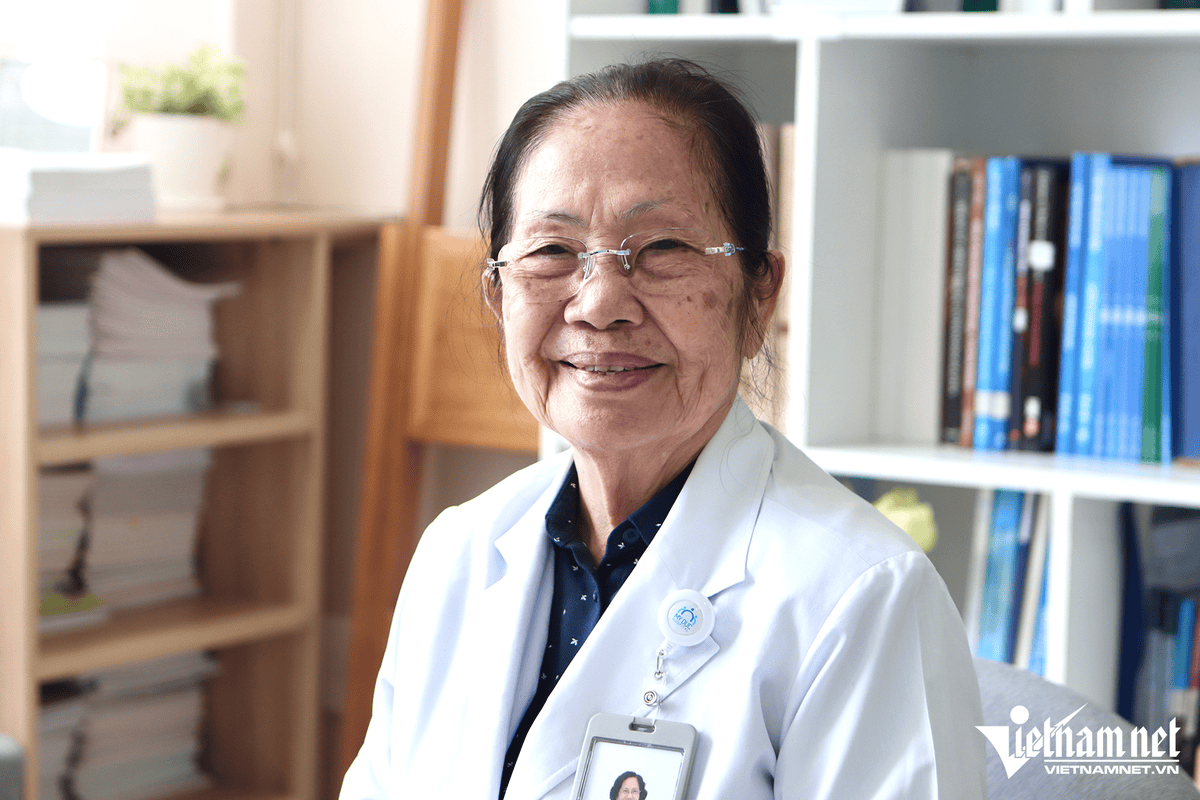
To her, staying was not a sacrifice but a debt of gratitude and belief in ordinary people working together to build HCMC.
Dr. Phuong has held numerous key positions, including Vice Chair of the 8th National Assembly, Vice Chair of the 9th National Assembly Foreign Affairs Committee, Director of the HCMC Heart Institute, and Vice President of the Vietnam Association for Victims of Agent Orange/Dioxin.
Above all, she is best known as the Director of Tu Du Obstetrics and Gynecology Hospital and the pioneer who introduced IVF techniques to Vietnam, bringing joy to countless infertile families.
Looking at HCMC today with its high-rises, wide avenues, and vibrant pace of life, Prof. Dr. Nguyen Thi Ngoc Phuong is deeply moved by the journey the city and the nation have traveled. During the interview given to VietNamNet, she frequently mentioned those who sacrificed during wartime. For her, as long as many families still do not know where their loved ones lie, the journey remains incomplete.
Living in a hospital duty room
On April 30, 1975, HCMC turned a new page. At Tu Du Hospital, the initial post-liberation days were filled with turmoil.
"Most doctors didn't come to the hospital out of fear. Some were looking for ways to leave Vietnam," Phuong recalled.
The hospital was short-staffed, but patients could not wait. Women continued to go into labor, while emergency cases still required surgery. Many of the women arriving at Tu Du at the time were poor and had not had access to prenatal care, so they often suffered complications.
At the time, Phuong had three young children. The eldest was only five, the second was four, and the youngest was just over two months old and still breastfeeding.
"I asked myself, if everyone leaves, then who will take care of patients who need surgery or emergency treatment?" she recalled.
Amid those chaotic days, she brought her children to Tu Du Hospital, asked for four meals and stayed on 24-hour duty. The four of them lived in the hospital duty room for more than a month.
It was the first in a series of choices she would later have to make between her personal life and her work, between better conditions for herself and her responsibility to patients and her homeland.
Phuong recalled periods when even surgical sutures had to be saved to the last centimeter. Doctors used forceps to tie the sutures, and after cutting them, only about one centimeter was discarded.
Blood was also in short supply. On one occasion, while performing surgery, she saw that a patient was losing a large amount of blood. Knowing that she had the same blood type, she took off her gloves, ran to the laboratory to donate blood, then returned to the operating room with the still-warm blood bag for transfusion.
"The patient was bleeding uncontrollably, but five minutes after the blood was transfused, the bleeding stopped," she recalled.
Yet what she remembers most was not the shortages, but the people who overcame them together. Doctors, nurses, midwives, workers, small-scale traders and homemakers each did their part, quietly contributing to keeping the city going and helping it move forward.
Those years shaped her view of the city's stature: it should be measured "not only by its high-rise buildings," but also by the ordinary people who quietly contribute to its development.
Turning down the chance to leave her homeland
Amid those difficult years, the young doctor found herself facing opportunities to leave Vietnam.
In 1974, her husband went to France for further training and began procedures to sponsor her and their four-member family to join him. She was already holding her passport, and the children had received the necessary vaccinations to meet the requirements for departure. All that remained was to set a date for the journey.
However, a lecture at the university changed her mind.
Box: Nearly 60 years in the profession, she wants to pass down to young doctors what cannot be found in textbooks. No longer operating directly, she still stands beside the operating table, stepping in whenever a technique needs correction. She believes that if experience is not passed down, it dies with the person who holds it.
To her, dedication is not something grand. It can simply mean doing one’s job well, treating others with kindness, helping save a patient’s life, passing on experience to the youth, or contributing a small part to making the city better each day.
Ngan Anh - Phuoc Sang
.svg)
