 Vietnamnet.vn

 Podcast


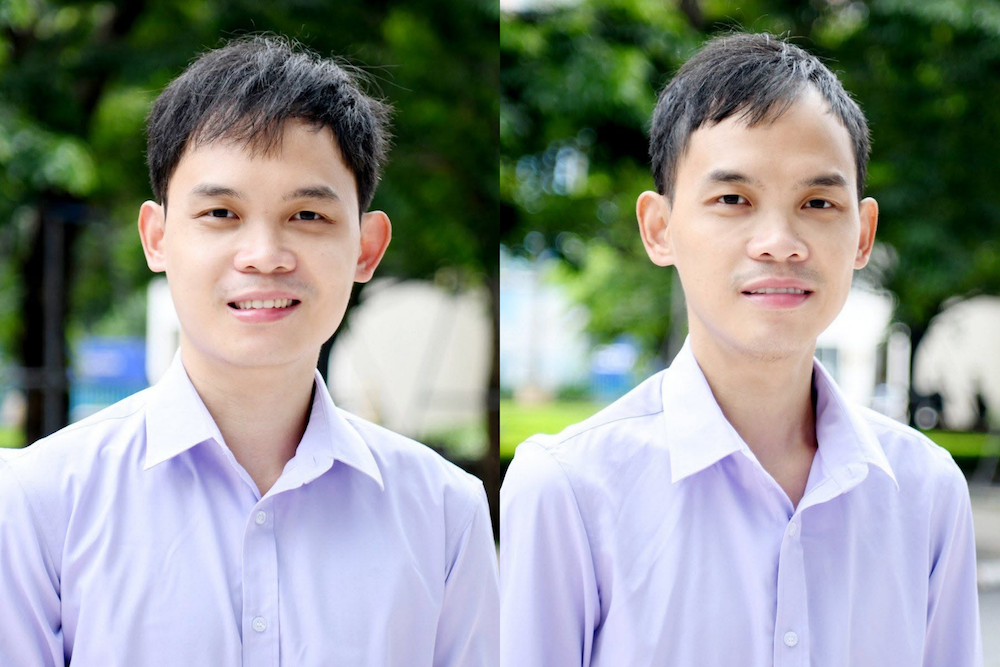
Hung Viet and Hung Thang both graduated from Hanoi University of Science and Technology (HUST), studied abroad in Germany, and returned to Vietnam to become lecturers at National Economics University (NEU).
Three generations at HUST
Nguyen Hung Viet and Nguyen Hung Thang (born in 1991) were born into a family with a strong tradition in science and engineering. Their maternal grandfather was a second-cohort student at HUST at just 16 years old and was later retained as a lecturer in the Faculty of Mathematics and Informatics.
Their father and twin uncle followed in his footsteps, enrolling as Radio Engineering students at the school in 1977.
By the time it came to Viet and Thang's generation, both chose to study at the same institution. “Through the stories told by previous generations, taking the entrance exam for this university felt like a natural choice for both of us,” Viet shared.
At the time, Information Technology (IT) and Electronics and Telecommunications were two highly sought-after majors with the highest admission cut-off scores at the university. Viet chose to study IT, while Thang pursued Electronics and Telecommunications.
Despite being in different majors, they supported each other in their studies. According to Viet, their family never pressured them to achieve identical results. Having a peer of the same age helped both of them share many aspects of life.
After graduating from university, Viet moved to Germany in 2015 to pursue a Master's degree in AI and Robotics at the Technical University of Munich. Meanwhile, Thang started working in Vietnam.
During his time in Germany, Viet often shared with his younger brother the potential of AI and information technology. At that time, AI was not yet widespread in Vietnam, and Vietnamese-language materials on the subject were quite limited.
Stories from his older brother prompted Thang to take a serious interest in the field. About 2.5 years after Viet left for Germany, Thang decided to go abroad to pursue a Master's degree in Computer Science at Bauhaus University Weimar.
With an older brother paving the way, Thang received a lot of support throughout his studies. Viet shared his experiences, helped his brother adapt to the new environment, and provided financial assistance.
“Following in his footsteps helped me avoid some of the difficulties that those before me went through. Viet had experience, so he helped me a lot. By the second year, I was able to balance studying and working to gain experience,” Thang recalled.
Returning to Vietnam, becoming lecturers
After 10 years of living and working in Germany, the two began considering a return to Vietnam. Viet contemplated moving back out of a desire to share AI knowledge with Vietnamese learners.
Having previously faced difficulties finding learning materials in this field, Viet created a YouTube channel in 2022 to share content on AI, machine learning, and deep learning. Unexpectedly, his posts garnered significant interest.
Encouraged by many people to open online classes, Viet decided to try his hand at a new venture. Interacting with young people, he realized that he wanted to dedicate himself to teaching. This became a key factor in his decision to return to Vietnam, despite having a job and a relatively good income in Germany.
The turning point came when the two brothers were invited as guest speakers to a panel discussion hosted by the Faculty of Information Technology at National Economics University. Impressed by the dynamic students, their solid foundation of knowledge, and the working environment at the department, both began exploring faculty recruitment opportunities.
In August 2025, Viet and Thang submitted their applications, and both were accepted.
“To date, after a year of working at National Economics University, I feel that returning was the right decision,” Viet shared.
According to him, their experience working for enterprises in Germany gives them a practical perspective when teaching. As a result, both can share real-world insights to help students better understand how to apply theoretical knowledge in practice.
Working in the same department as twin brothers occasionally leads to amusing situations. Because they often wear similar clothing, students frequently mistake one for the other.
Although they lecture in the same department and share a common technical foundation, the brothers aim to develop in their own directions.
Viet plans to focus on programming, machine learning, and AI in a structured, in-depth manner for those seeking advanced knowledge. Meanwhile, Thang aims to make AI knowledge more accessible to a broader audience, helping learners easily grasp and apply it in practice.
Thuy Nga

