 Vietnamnet.vn

 Podcast


Two exhibitions, Quoc Tu Giam Thang Long and Founders of Traditional Crafts and Distinguished Vietnamese Scholars, have opened in Hanoi to commemorate the 950th anniversary of Quoc Tu Giam (1076-2026) and celebrate Vietnamese Culture Day on November 24.
Organized by the Temple of Literature - Quoc Tu Giam Cultural and Scientific Activities Center, the exhibitions aim to connect historical heritage with contemporary audiences through archival materials, artworks and creative installations.
Celebrating 950 years of Vietnam's educational heritage
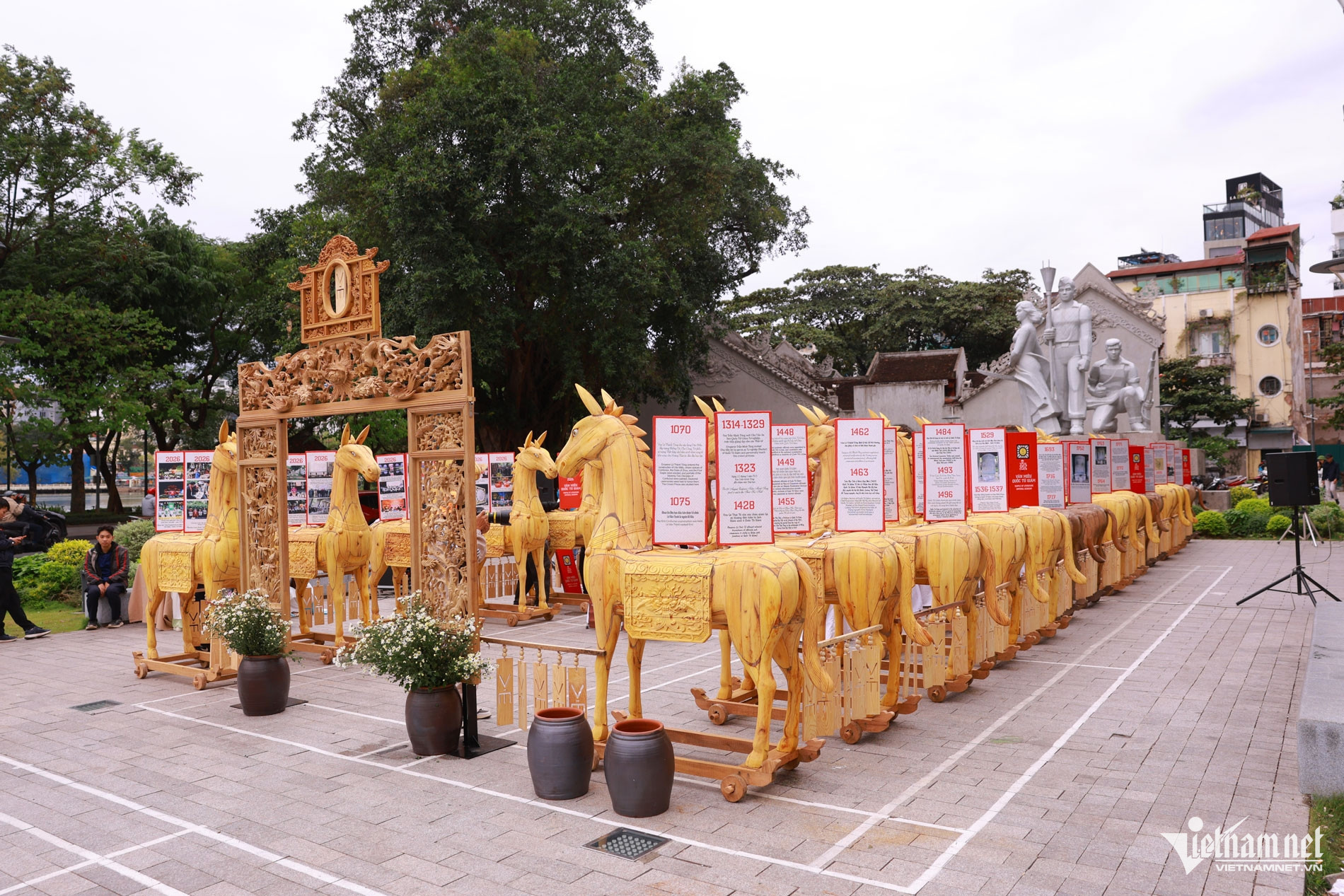
According to Pham Tuan Long, Director of the Hanoi Department of Culture, Sports and Tourism, the Quoc Tu Giam Thang Long exhibition introduces visitors to the institution's 950-year history while highlighting the enduring values of Vietnam's educational traditions.
The exhibition is being held at Ba Kieu Temple near Hoan Kiem Lake, a location chosen to make cultural heritage more accessible to the public.
Rather than confining history to traditional heritage sites, the organizers hope to bring it into everyday urban life, allowing residents and visitors to engage with the past in a more immediate and meaningful way.
One of the exhibition's highlights is an installation featuring wooden horse sculptures crafted by artisans from the traditional craft village of Y Yen.
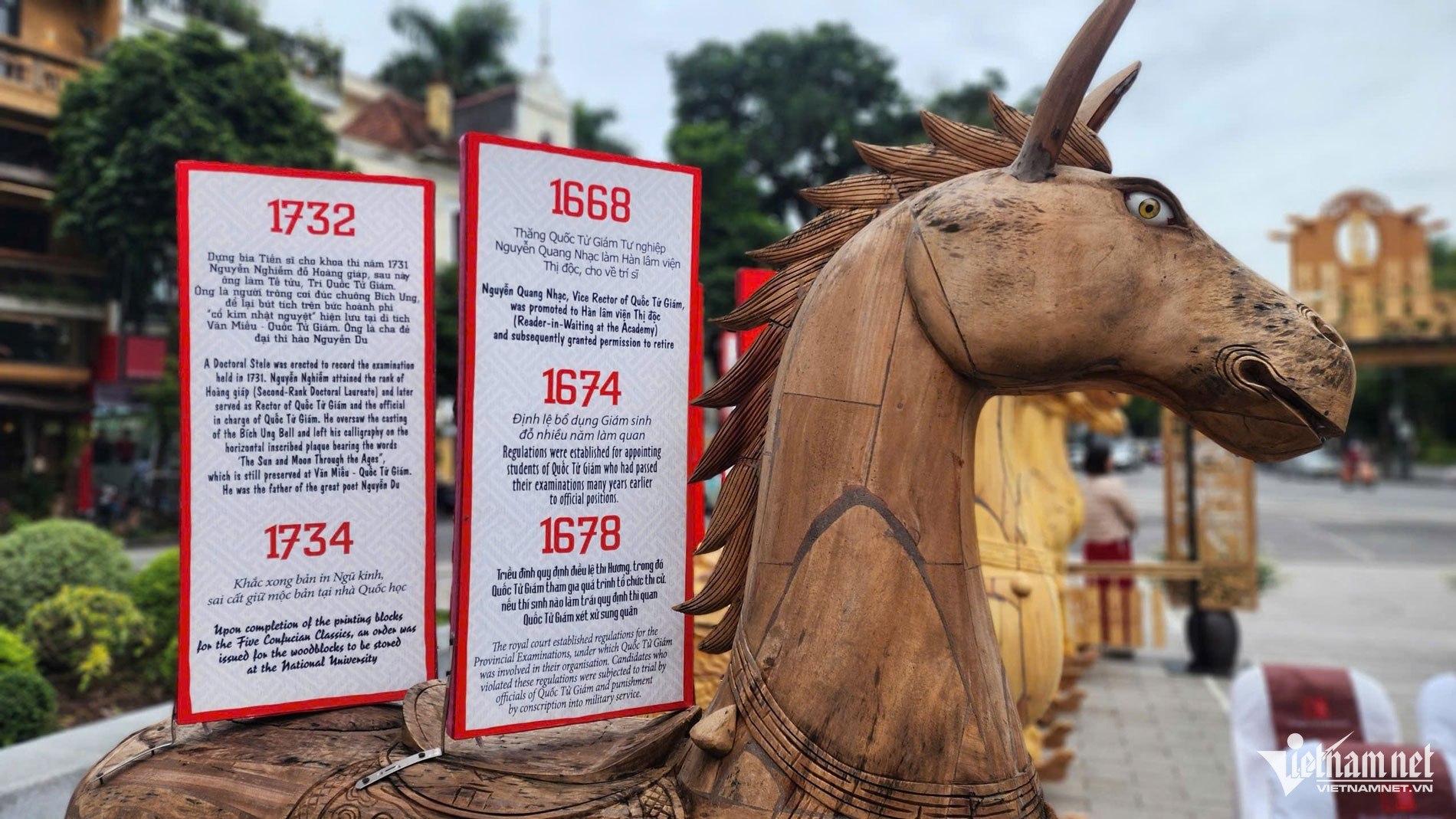
The horse is associated with vinh quy bai to, the traditional ceremony honoring successful scholars returning to their hometowns after achieving academic distinction.
It symbolizes educational achievement, personal success, family pride and respect for one's roots.
By incorporating this imagery into contemporary artistic installations, the exhibition creates a dialogue between tradition and innovation, historical values and modern artistic expression.
Through its displays, the exhibition traces the development of Quoc Tu Giam from its establishment in 1076 to its status as a symbol of Vietnamese education and scholarship.
Over nearly a millennium, the institution has embodied the values of benevolence, righteousness, propriety, wisdom and trustworthiness, alongside Vietnam's longstanding respect for learning and talented individuals.
These principles continue to be preserved, passed down and promoted in contemporary Vietnamese society.
Honoring scholars who helped shape traditional crafts
The second exhibition, Founders of Traditional Crafts and Distinguished Vietnamese Scholars, forms part of the Hanoi Creative Design Festival 2026.
It runs until December 5 at the Front Hall of the Thai Hoc area within the Temple of Literature - Quoc Tu Giam Special National Monument.
The exhibition explores the contributions of eight doctoral scholars whose names are inscribed on the stone stelae at the Temple of Literature and who are associated with traditional Vietnamese crafts.
They include Luong Nhu Hoc, linked to woodblock printing; Pham Don Le, associated with mat weaving; Tran Lu, known for traditional lacquer craftsmanship; Nguyen Quang Tan, associated with oil pressing; Phung Khac Khoan, linked to fine fabric weaving; Le Cong Hanh, associated with embroidery; Nguyen Thoi Trung, connected with leather tanning; and Nguyen Chinh, associated with tin plating.
The exhibition also highlights Dang Huy Tru, a Confucian scholar who played an important role in introducing and developing photography in Vietnam.
Each craft is presented through a combination of historical documents, artistic works and creative practices by contemporary artisans and artists.
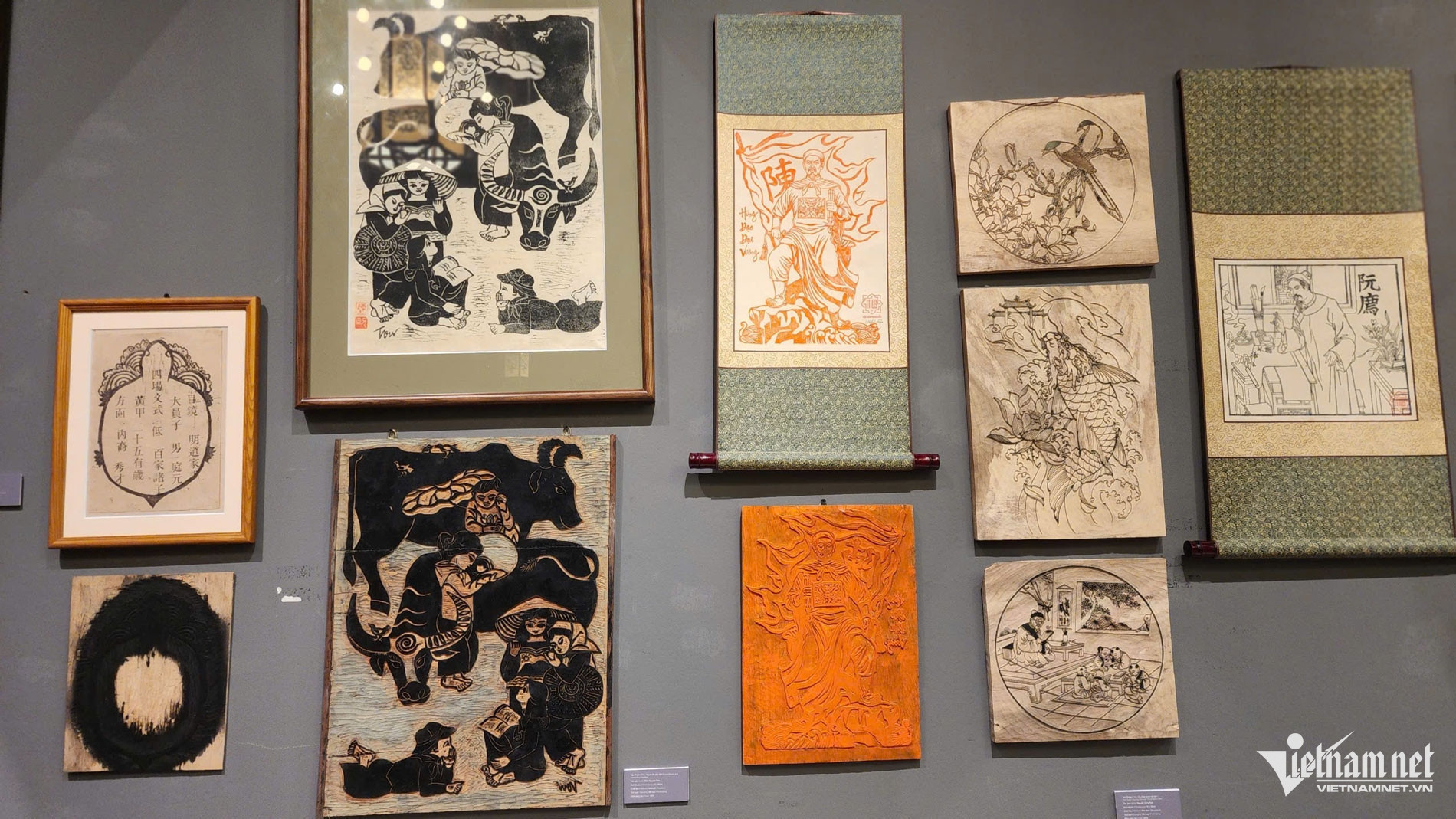
The woodblock printing tradition associated with Luong Nhu Hoc is represented through woodblock prints and woodcut artworks created by artisans from Thanh Lieu Village and other artists.
The mat-weaving tradition associated with Pham Don Le is recreated through an installation by artist Vu Xuan Dong, combined with demonstrations and craftsmanship from artisans of Nga Son's sedge mat-weaving village in Thanh Hoa Province.
Traditional lacquer craftsmanship, associated with Tran Lu, is presented through artworks employing Vietnamese lacquer and gold-gilding techniques.
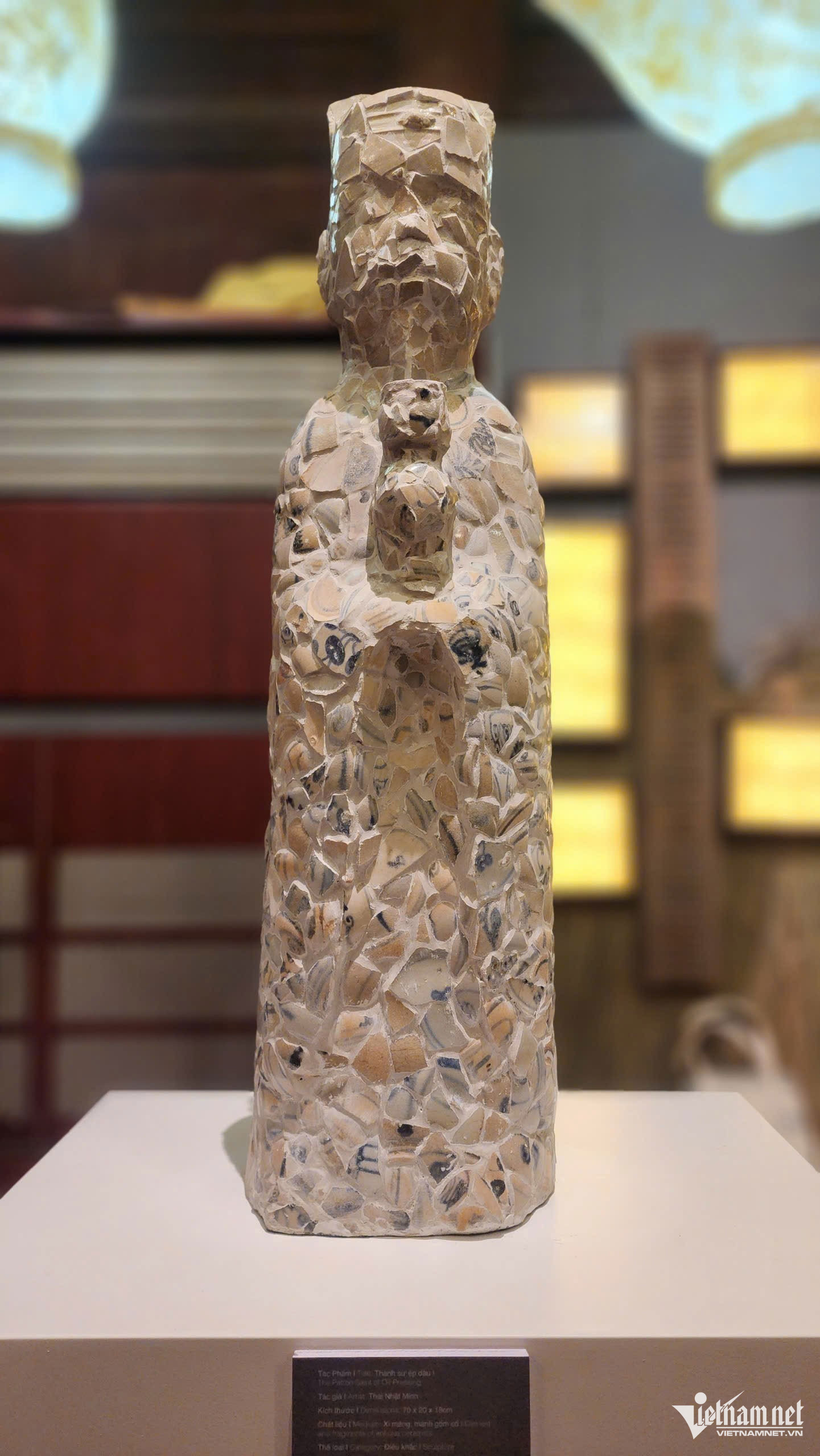
Meanwhile, the oil-pressing craft linked to Nguyen Quang Tan is explored through sculptures and other artistic creations.
Other exhibition spaces feature fine fabric weaving, embroidery, shoemaking and tin plating, showcasing contemporary interpretations of traditional materials and techniques.
Displays range from woven textiles and silk paintings to embroidered artworks, sculptures and design pieces.
A particularly notable section focuses on Dang Huy Tru and the history of photography in Vietnam.
The exhibition connects the early development of photography with contemporary photographic practices through works by artists, photographers and students specializing in the field.
This approach not only introduces visitors to the origins of photography in Vietnam but also highlights how the art form continues to evolve through new generations of creative practitioners.
Together, the two exhibitions offer visitors an opportunity to explore the relationship between education, craftsmanship and cultural identity, demonstrating how historical traditions can inspire contemporary creativity.
Tinh Le

