 Vietnamnet.vn

 Podcast



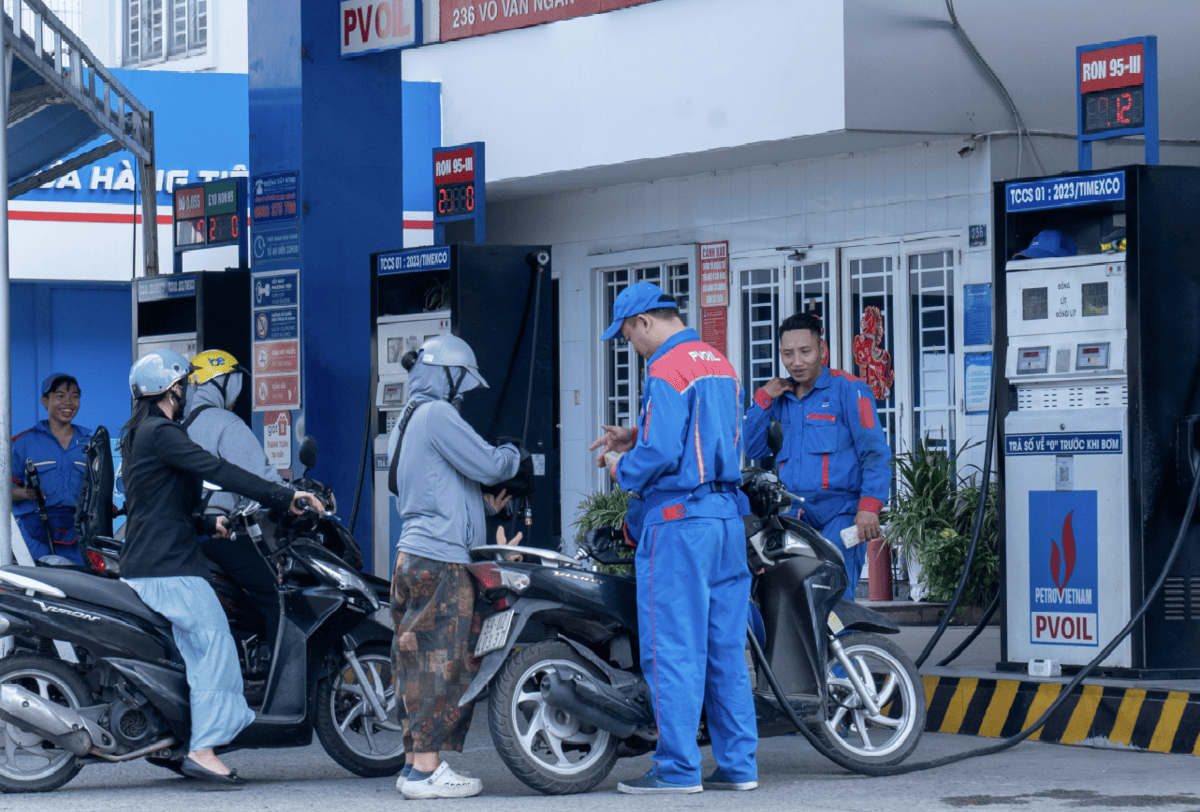
Amid unpredictable global energy market fluctuations, the NSRP announced that it is maintaining maximum operations and ensuring supply through May.
According to NSRP, in mid-March the company received its latest crude oil shipment from Kuwait. Shortly after, geopolitical developments in the Strait of Hormuz affected the schedule of subsequent shipments.
In response to tightening supply conditions, NSRP took measures to secure additional crude sources and arranged alternatives, ensuring stable operations in the coming period. As a result, Nghi Son Refinery has been operating at maximum capacity throughout March and has secured enough crude oil to maintain operations at optimal capacity until the end of May to meet domestic demand.
At the same time, NSRP continues to seek additional crude oil and input materials to further increase operating capacity when conditions allow.
Vietnam National Industry & Energy Group (PetroVietnam) said it has implemented solutions and flexible management in production and business operations. The group and its subsidiaries have been working closely with partners to diversify crude oil sources, petroleum products and blending materials.
As a result, fuel production and supply for the economy have remained stable without disruption.
Dung Quat Refinery is operating at 120 percent of its nameplate capacity to increase domestic supply, while remaining ready to support Nghi Son Refinery if needed.
In the first quarter of 2026, PetroVietnam’s fuel output (excluding Nghi Son Refinery) is estimated to have increased by 8.4 percent year-on-year, exceeding its internal plan by nearly 11 percent.
Crude oil production in the same period is estimated at 2.63 million tons, surpassing the plan by 10.4 percent and rising 10.2 percent compared to the first quarter of 2025.
Vietnam Oil Corporation (PVOIL) has also increased import volumes and launched additional tenders beyond its initial plan. Fuel supply across its network of more than 900 retail outlets has remained uninterrupted.
According to the Customs Department, in just the past 2.5 months, Vietnam imported 5.5 million tons of petroleum products and crude oil, up by 0.6 million tons compared to the same period in 2025.
Notably, the acceleration of fuel imports has taken place amid escalating tensions in the Middle East, contributing to stabilizing domestic supply.
Prime Minister Pham Minh Chinh has instructed ministries, agencies, localities and enterprises to closely monitor the situation and address fuel-related issues.
He stressed that fuel supply shortages must not occur, production and business activities must not be disrupted, and social stability must be maintained.
Fuel trading must remain transparent, with strict prohibition of hoarding, price manipulation and speculation that could disrupt the market. Authorities are tasked with combating cross-border smuggling and strictly handling violations.
The Ministry of Industry and Trade has been directed to ensure crude oil imports for upcoming months, monitor and forecast domestic and global fuel markets, and develop response scenarios.
The ministry is also required to direct PetroVietnam and related units to maintain safe and stable refinery operations, optimize capacity, increase output and avoid exporting raw materials; as well as ensure adequate domestic fuel supply and accelerate the rollout of biofuel policies under Resolution 36.
Chinh has assigned the ministry to urgently work with international partners to begin construction of a strategic fuel reserve in Nghi Son (Thanh Hoa), following recent discussions with foreign leaders.
The Ministry of Finance is tasked with coordinating closely on fuel price management in line with daily market developments and legal regulations, and expediting amendments to Decree 80 on petroleum business under a streamlined process.
It is also assigned to study and propose extending Decree 72/2026 until the end of June 2026, given complex global developments and transportation challenges affecting fuel supply.
In the long term, the Prime Minister emphasized the need to enhance Vietnam’s energy self-reliance through diversifying supply sources, restructuring fuel distribution systems, strengthening national reserves, and promoting energy transition and efficient energy use.
Earlier, on behalf of the Politburo, Standing Member of the Secretariat Tran Cam Tu signed Conclusion No. 14 on ensuring stable fuel supply and pricing.
Tran Chung
.svg)
