 Vietnamnet.vn

 Podcast



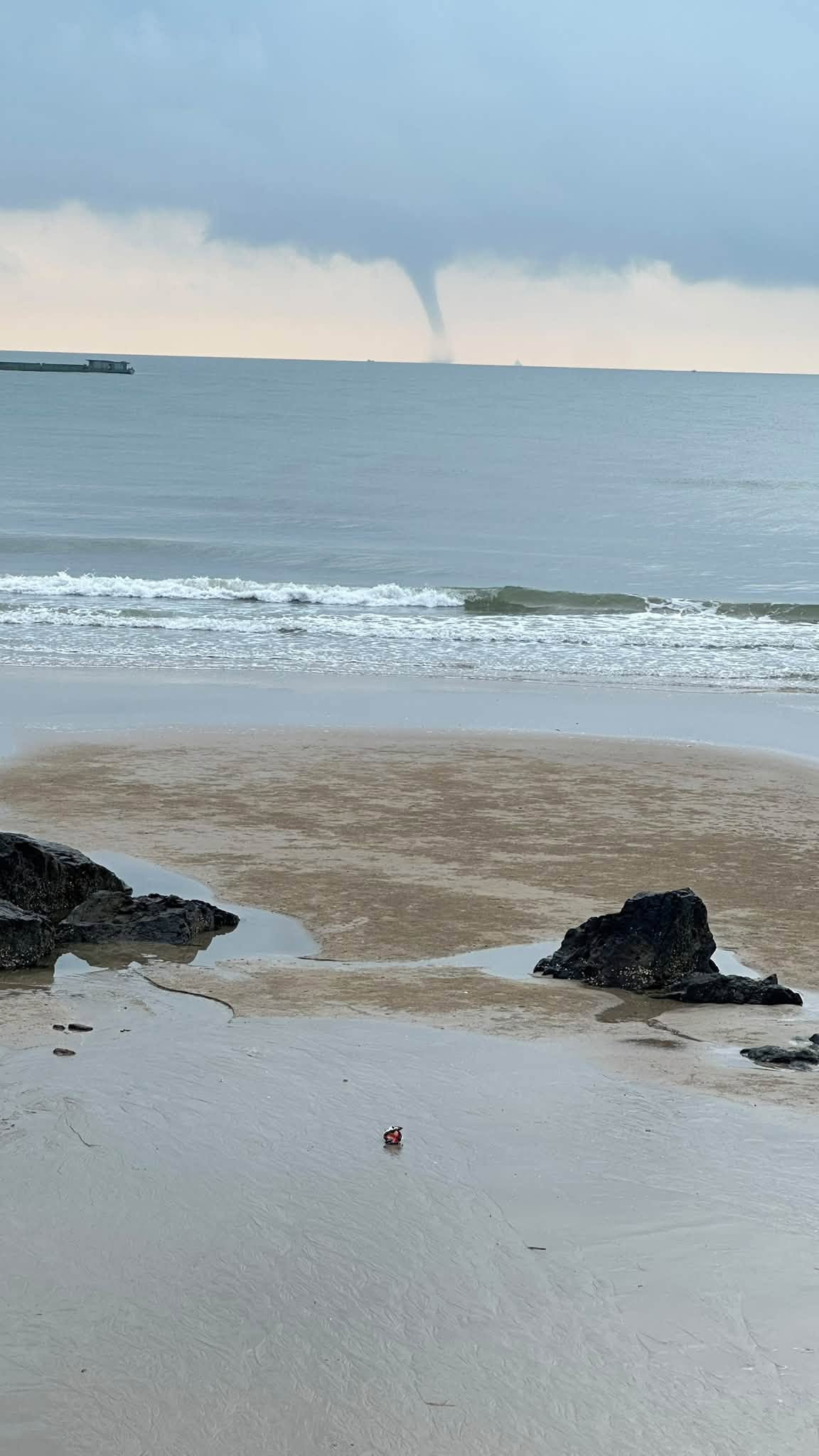
Early on Sept. 25, residents and tourists walking along Bai Sau, or Back Beach, opposite Hon Ba Islet, were surprised to see two swirling columns stretching from the clouds to the sea.
The first waterspout appeared at around 7 a.m. and lasted for more than 30 minutes before dissipating.
Just minutes later, a smaller waterspout formed nearby. There were few boats in the area at the time, and no damage was reported.
Thanh Ban, a resident of Vung Tau Ward, witnessed the phenomenon while taking his child to school.
“The first column was very large and clearly visible. It lasted for more than 30 minutes before weakening and gradually disappearing,” he said. “But only a few minutes later, a second waterspout appeared not far away. It was smaller, but it was spinning quite strongly.”
Hoang Mai, a tourist from Ho Chi Minh City, also witnessed the scene.
“There were very few boats out at sea at the time,” she said. “When people saw the waterspout swirling offshore, many stood watching out of curiosity while filming this unusual moment on their phones.”
Another large waterspout had appeared in the same waters on the afternoon of Sept. 20, lasting about 20 minutes near an area frequented by cargo vessels.
Waterspouts typically form during strong thunderstorms, particularly during seasonal transitions or when tropical convergence zones and low-pressure troughs combine with high humidity.
Meteorologists note that waterspouts generally affect relatively small areas and can form and move rapidly, making their precise timing and location difficult to forecast.
Although their paths may be only tens to several hundred meters wide, their winds can be powerful enough to overturn boats or damage buildings and trees if they move ashore.
Meteorologists therefore advise fishermen and vessel operators to remain particularly vigilant. If they see storm clouds developing in the distance, vessels should change course early and avoid the affected area to reduce risks.
Tuan Kiet
.svg)
