 Vietnamnet.vn

 Podcast



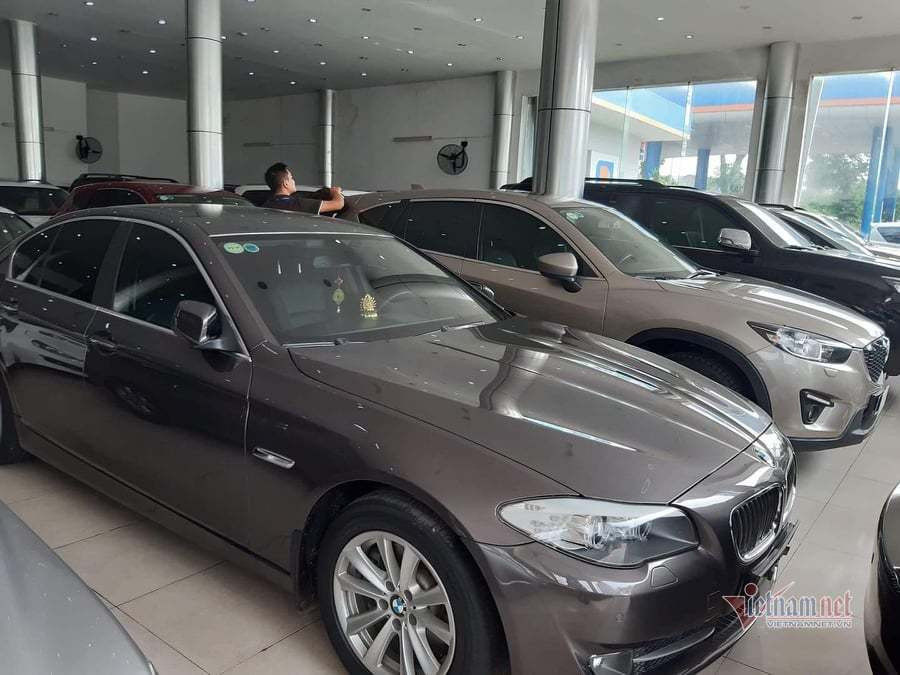
The used car market is experiencing one of its quietest periods since the beginning of the year. Even though prices for numerous car models have been adjusted downward, even plummeting by tens of millions of VND compared to the same period last year, purchasing power shows no signs of recovery.
Along Nguyen Van Cu, one of the primary streets concentrated with used car showrooms in Hanoi, the volume of displayed vehicles remains dense, but the crowds of customers have thinned out. Many sellers noted that foot traffic to their stores has dropped significantly over the past month, plunging business operations into difficulties.
Buyers hesitate, cars sit idle
Hoang Luong, a used car dealer in Hanoi, said the market began slowing down at the end of the first quarter, but the situation has become more pronounced in recent weeks.
"For nearly a month now, the volume of customers has dropped quite sharply. Compared to the same period last year, sales volume might have decreased by 30-40 percent. Previously, weekends saw a continuous stream of customers checking out cars, but now, many days only bring a few visitors who take a quick look and leave to consider further," Luong said.
Although used car prices have decreased significantly, buyers maintain a highly cautious mindset, he said. Quite a few customers have visited to inspect a car multiple times without deciding to finalize the payment.
A salon owner on Nguyen Van Cu street (Hanoi) indicated that B-segment sedan models (2020-2022) are currently listed for VND20-40 million lower than at the beginning of the year. Several popular SUV models like the used Hyundai Creta, Kia Seltos, or Toyota Corolla Cross have also dropped by VND30-70 million.
"However, lowering prices does not automatically mean selling the car. Customers nowadays weigh their options very carefully. They usually compare used cars with new ones that are receiving registration fee support or direct discounts from manufacturers. The narrowing price gap between new and used cars prompts many to wait a bit longer," this owner said.
According to businesses, in a context where many families prioritize essential spending, purchasing an automobile is often deferred.
In addition, recent hikes in fuel prices have also impacted consumer psychology. Some clients worry that vehicle operating costs will escalate, particularly for models with large-displacement engines.
Hoang Luong added that recent debates surrounding the transition to E10 gasoline have also induced a wait-and-see attitude among used car buyers.
"Many customers ask very thoroughly about the capability of older models to run on E10 gasoline. Although the vast majority of cars manufactured within the last 15 years can handle this fuel type, conflicting information on social media has made many people anxious. They want to wait for the market to stabilize before deciding to buy a car," he said.
Sellers restrict new inventory
The prolonged decline in purchasing power has forced many showrooms to alter their business methods.
According to Hoang Luong, stores used to buy cars from individual owners or auction sources to resell. However, this activity has now been restricted substantially.
"When the market was good, an imported car would sell within just a few weeks. Now, there are vehicles sitting in the lot for two to three months that still haven't found a buyer. If we continue to hold too many cars, it will trigger numerous expenses like bank loan interest, rent, periodic maintenance, and vehicle value depreciation," he explained.
Consequently, many car dealers have pivoted to accepting vehicles on a consignment basis instead of spending capital to buy them outright as before.
"The rate of consignment cars currently accounts for about 70-80 percent of the inventory at the shop. This model helps reduce risks for the seller, while customers gain access to a wider variety of models without the showroom having to lock up too much capital in inventory," Luong said.
Nguyen Cuong, the owner of a used luxury car showroom on Tran Thai Tong street (Hanoi), confirmed that the consignment trend is becoming increasingly prevalent across the used car market.
"Business is dead slow; many people are hesitant right now and don't dare resolve to buy a used car, especially gasoline-powered ones,” he said.
Hoang Hiep
.svg)
