 Vietnamnet.vn

 Podcast



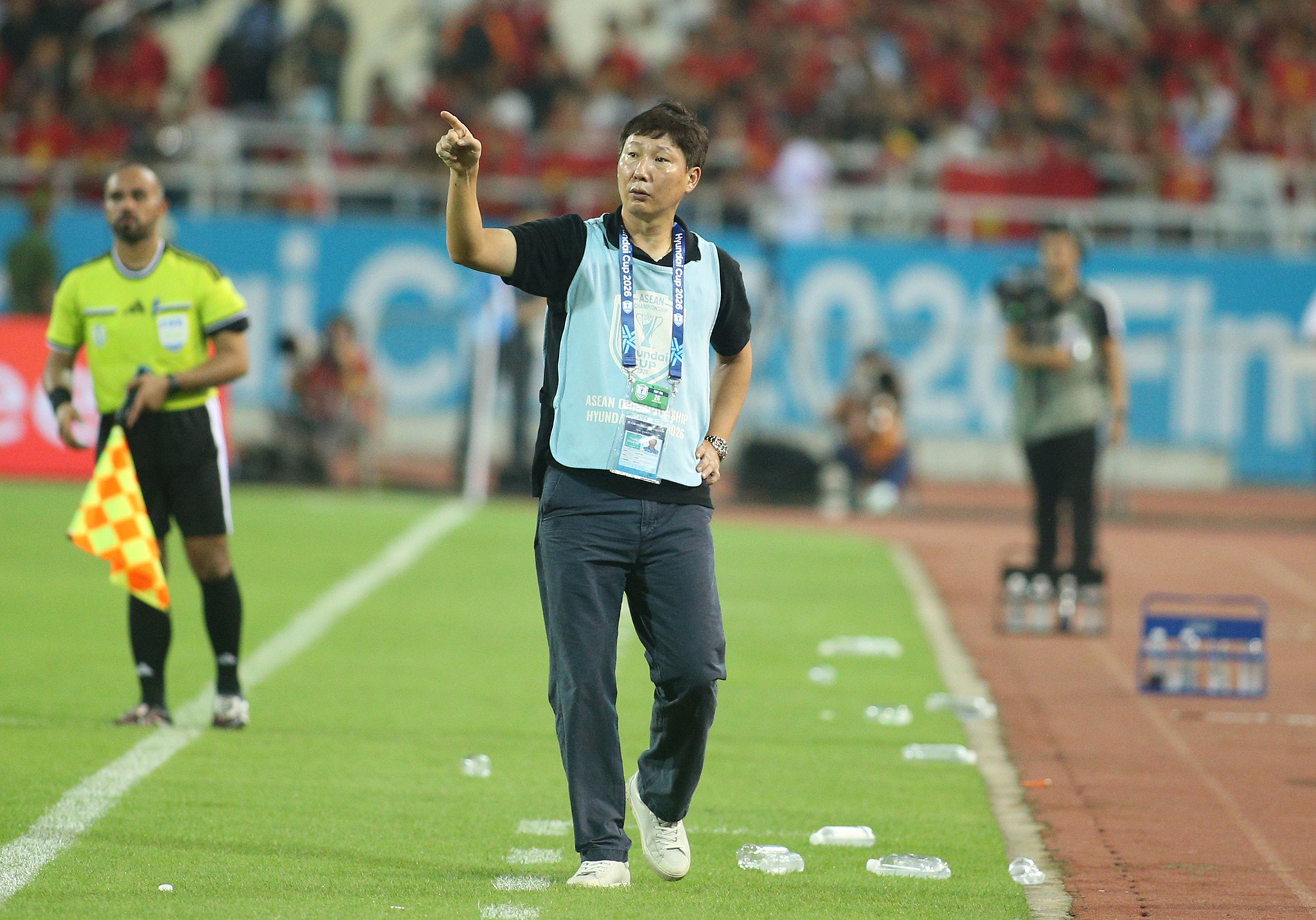
Vietnam head into the new season in a stronger position following their ASEAN Cup triumph, but that does not mean Kim Sang Sik’s team is already the finished product.
The national side still needs more players capable of genuinely competing for places, particularly in positions where the current options have yet to inspire complete confidence if Vietnam are to set their sights beyond success at regional competitions.
A highly competitive domestic season can help established internationals maintain their form while creating opportunities for new names to break through. That is particularly important for Vietnam’s U23 players, relatively few of whom have so far earned Kim’s full confidence at senior national team level.
The case of Hoang Duc is also worth watching. The midfielder’s decision to extend his contract with Ninh Binh until 2030 not only underlines the former imperial capital club’s faith in the Vietnam vice-captain, but also signals its determination to remain firmly in the title race alongside ambitious rivals such as Hanoi Police FC, Ho Chi Minh City Police FC, Hanoi FC and Nam Dinh.
A league featuring several clubs with serious ambitions can only provide a stronger foundation for the national team. That is one of the main reasons Kim Sang Sik will be watching the 2026/27 season with such anticipation.
Waiting for an ASEAN Cup boost
There is another expectation surrounding the new season, one perhaps discussed less often but equally worth watching: whether the momentum generated by Vietnam’s ASEAN Cup triumph can carry over into the V-League.
Vietnamese football has just enjoyed a successful tournament that generated enormous interest among supporters. With the V-League returning, there is reason to hope stadium attendances can improve compared with previous seasons.
More importantly, Vietnamese football needs the V-League to produce a new generation of stars.
The players behind Vietnam’s memorable run in Changzhou in 2018 remain important figures for both the national team and their clubs.
Yet it is increasingly clear that not all of them have been able to maintain the same form and hunger they showed in their early years. If Vietnam are to sustain success over the longer term, fresh talent emerging from the V-League is no longer simply desirable - it is essential.
The new season, therefore, needs to offer more than an exciting title race between ambitious clubs. It must also become a stage where players capable of succeeding the previous generation can emerge.
That is not an expectation that can be fulfilled in a single season. Still, the 2026/27 V-League can be viewed as the starting point of a new cycle for Vietnamese football, one in which the momentum of an ASEAN Cup triumph is transformed into greater public interest, stronger investment and, ultimately, a new wave of talent after years in which too few players have emerged with the quality required to represent Vietnam.
Duy Nguyen
.svg)
