Vietnam is set to swiftly establish a national artificial intelligence (AI) supercomputing center and a shared open AI data platform, as part of its strategy to strengthen core AI infrastructure.
On October 29, the Ministry of Science and Technology of Vietnam and South Korea’s Ministry of Science and ICT co-hosted the Vietnam-Korea Digital Forum under the theme “From sector-specific AI to inclusive AI: A co-created future for Korea and Vietnam.”
According to Choi Young Sam, South Korea’s Ambassador to Vietnam, the two countries have established a solid foundation of cooperation in various sectors, and the time is ripe to expand this partnership into digital technologies.
To realize this ambition, both countries must work together to develop essential digital infrastructure, such as next-generation networks and AI data centers.
They must also focus on nurturing outstanding students into professional talents who can drive innovation, while investing in and fostering startups capable of leading future breakthroughs.
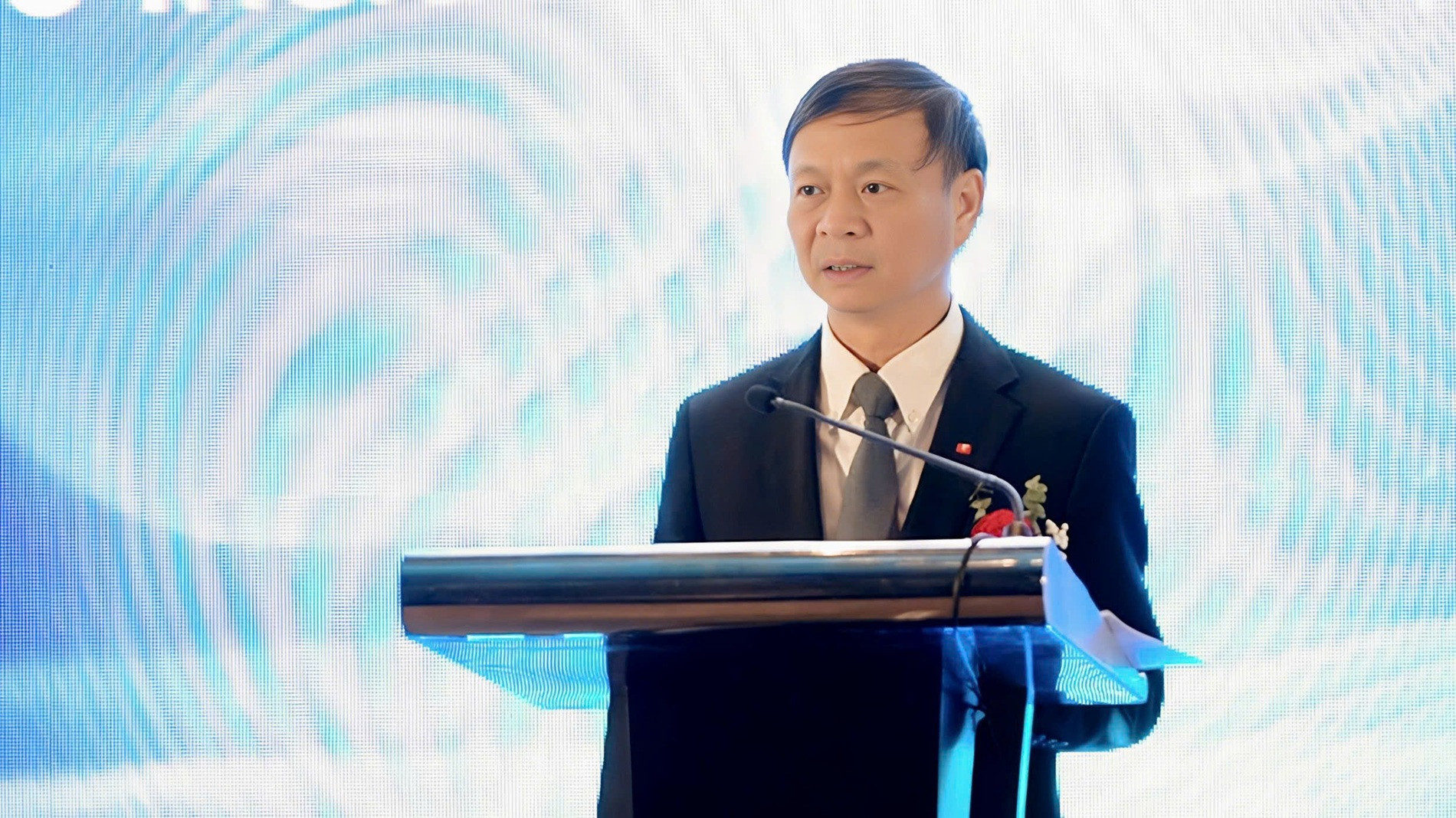
Speaking at the event, Deputy Minister of Science and Technology Hoang Minh outlined Vietnam’s strategic direction and policies for AI development.
He emphasized the urgent need for a robust AI infrastructure, including the rapid development of a national AI supercomputing center and a shared open data repository to support the ecosystem.
Deputy Minister Hoang Minh presents Vietnam’s AI development strategy at the forum. Photo: Hai Danh
Vietnam’s acceleration in AI is supported by its growing computing infrastructure, digital data ecosystems, domestic tech enterprises, research institutions, and AI-focused startups.
The country is also pursuing an open AI strategy, promoting the use of AI across enterprises, government agencies, and key sectors.
This approach aims to foster the growth of “Make in Vietnam” AI businesses.
“The National Technology Innovation Fund (NATIF) under the Ministry of Science and Technology will allocate a significant portion of funding to support AI applications, including vouchers for small and medium enterprises using Vietnamese AI solutions,” said Deputy Minister Hoang Minh.
“The domestic market will serve as the cradle for nurturing Vietnam’s AI enterprises.”
By the end of 2024, 80% of businesses and 88% of knowledge workers in Vietnam had already adopted AI, indicating unprecedented adoption levels.
In government agencies, where workloads have surged compared to five years ago, AI implementation is now essential rather than optional.
Vietnam has set bold goals for AI development.
By 2030, the country aims to rank in the top 3 in ASEAN and the top 20 globally.
By 2045, Vietnam plans to be among the world’s top 10 AI powers, with at least 10 “Make in Vietnam” AI brands, 50,000 AI engineers and experts, two national high-performance computing centers, and 100% of civil servants using AI-powered virtual assistants.
Outlining five strategic pillars - infrastructure, data, applications, human resources, and finance - Ho Duc Thang, Director of the National Institute of Digital Technology and Transformation under the Ministry of Science and Technology, stressed that Vietnam will not compete directly with global tech giants.
Instead, it will focus on mastering core technologies tailored to Vietnam’s specific needs and contexts.
For example, developing large language models dedicated to the Vietnamese language and culture to preserve national identity.
He also invited South Korean businesses to invest in Vietnam’s digital infrastructure and AI data centers, develop AI solutions tailored to the local market, and partner with Vietnamese institutes and universities to train 50,000 AI engineers.
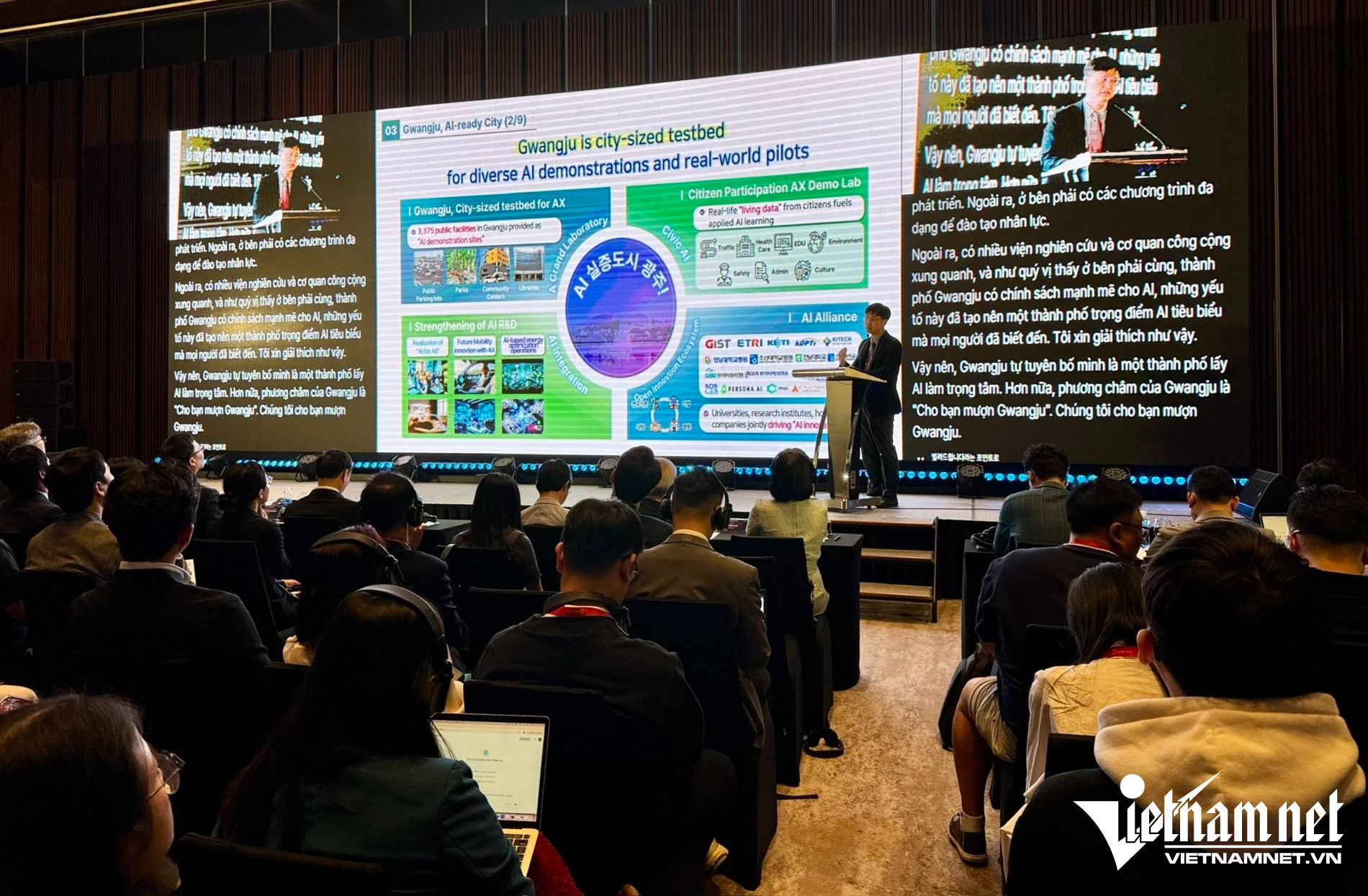
Overview of the Vietnam-Korea Digital Forum on October 29. Photo: Du Lam
The forum’s theme, “From vertical AI to inclusive AI – Opening a shared future,” clearly reflects the digital collaboration path that Vietnam and South Korea are pursuing.
South Korea is currently advancing a dual AI strategy: vertical AI focused on industrial applications, and inclusive AI centered around human needs.
Meanwhile, Vietnam is emerging as an AI innovation hub in Southeast Asia, thanks to its rapidly growing digital economy and dynamic, young workforce.
Park Yoon Kyu, Director of the National IT Industry Promotion Agency (NIPA) of South Korea, reaffirmed the agency’s commitment to working closely with key institutions to accelerate digital growth across all areas, including AI, data, startups, and talent exchange between South Korea and Vietnam.
 Vietnamnet.vn

 Podcast



.svg)
