 Vietnamnet.vn

 Podcast



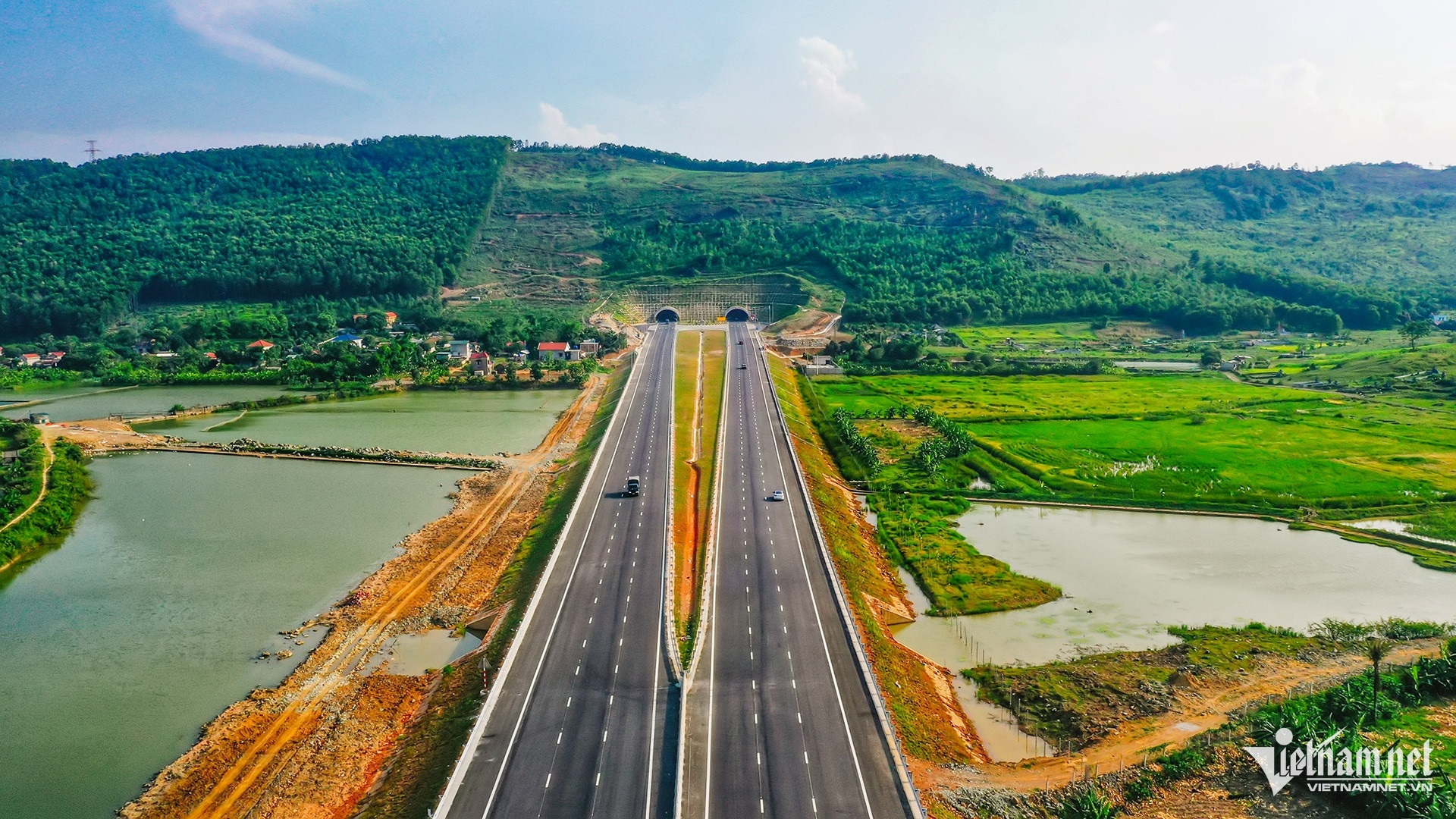
On the morning of July 23, the Vietnam Road Administration under the Ministry of Construction held a conference to announce adjustments to the road network master plan for 2021-2030, with a vision to 2050.
Under the Ministry of Construction's decision approving the revised plan, the expressway network will comprise 46 routes with a combined length of about 10,106 km. The national highway system will consist of 136 routes totaling about 26,340 km.
The revised plan adds five new expressways while adjusting the scope, scale and investment schedules of several other routes. The scope of 12 national highways will also be adjusted, while 36 national highways will be transferred to local authorities for management.
Along the north-south axis, the eastern North-South Expressway is planned to run from Huu Nghi border gate in Lang Son to Dat Mui in Ca Mau, covering about 2,158 km with four to 12 lanes.
The western North-South Expressway will connect An Tuong ward in Tuyen Quang with Chau Thanh commune in An Giang. It will span about 1,249 km and have four to six lanes.
In addition to these two longitudinal corridors, northern Vietnam will have 15 expressways totaling about 2,842 km. The central and Central Highlands regions will have 14 routes spanning about 1,746 km, while the southern region will have 10 routes totaling about 1,385 km.
The urban ring road system will include three routes around Hanoi with a combined length of about 427 km and two around Ho Chi Minh City totaling about 299 km.
Five new expressways added
The five newly added routes are the Northern Mountainous Ring Road, Northern Midlands Ring Road, Ha Tinh - Cau Treo, Hue - A Luoi, and Phan Thiet - Bao Loc - Gia Nghia - Bu Prang expressways.
Notably, the Northern Mountainous Ring Road will stretch about 327 km, connecting Ta Lung border gate in Cao Bang through Lang Son, Thai Nguyen, Tuyen Quang and Lao Cai to Son La.
The four-lane route is scheduled for investment after 2030.
The Northern Midlands Ring Road will be about 378 km long, linking Tan Thanh border gate in Lang Son with Son La.
The route will consist of three sections. The Lang Son - Thai Nguyen section is designated for investment both before and after 2030, while the remaining sections are scheduled for investment after 2030.
The Ha Tinh - Cau Treo Expressway will span about 85 km and have four to six lanes, while the Hue - A Luoi Expressway will be about 45 km long with four lanes.
The Phan Thiet - Bao Loc - Gia Nghia - Bu Prang Expressway will cover about 141 km and have four lanes.
The revised plan also changes the investment schedules for several important routes.
The Ngoc Hoi - Gia Nghia section of the western North-South Expressway will span about 355 km with six lanes and is designated for investment both before and after 2030.
The Bao Ha - Lai Chau Expressway, about 163 km long with four lanes, is expected to be developed before 2030.
Investment schedules have also been adjusted for the Noi Bai - Bac Ninh - Ha Long, Vung Ang - Cha Lo, Phu Yen - Dak Lak, Nha Trang - Lien Khuong and Ho Chi Minh City - Vinh Long - Can Tho - Ca Mau routes.
Localities allowed to accelerate investment before 2030
Speaking at the conference, Nguyen Thanh Hoai, Deputy Director General of the Vietnam Road Administration, said the road network master plan provides a basis for managing and mobilizing resources for infrastructure development, strengthening regional connectivity and linking economic centers, urban areas, border gates, seaports, railway stations and airports.
One notable provision in the revised decision allows local authorities to proactively invest before 2030 in routes otherwise scheduled for development after that date, provided they can balance and allocate the necessary resources and assume responsibility for investment efficiency.
According to Hoai, the provision will enable localities to take a more proactive approach to infrastructure development while promoting stronger regional connectivity.
The Vietnam Road Administration has asked local authorities to review and update their planning, strictly manage land reserves and road safety corridors, determine investment priorities and effectively mobilize funding sources for key projects.
For the 36 national highways to be transferred to local management, relevant agencies will coordinate the handover, reception and subsequent management in accordance with regulations, ensuring continuous, safe traffic operations as well as uninterrupted road maintenance.
Vu Diep
.svg)
