 Vietnamnet.vn

 Podcast



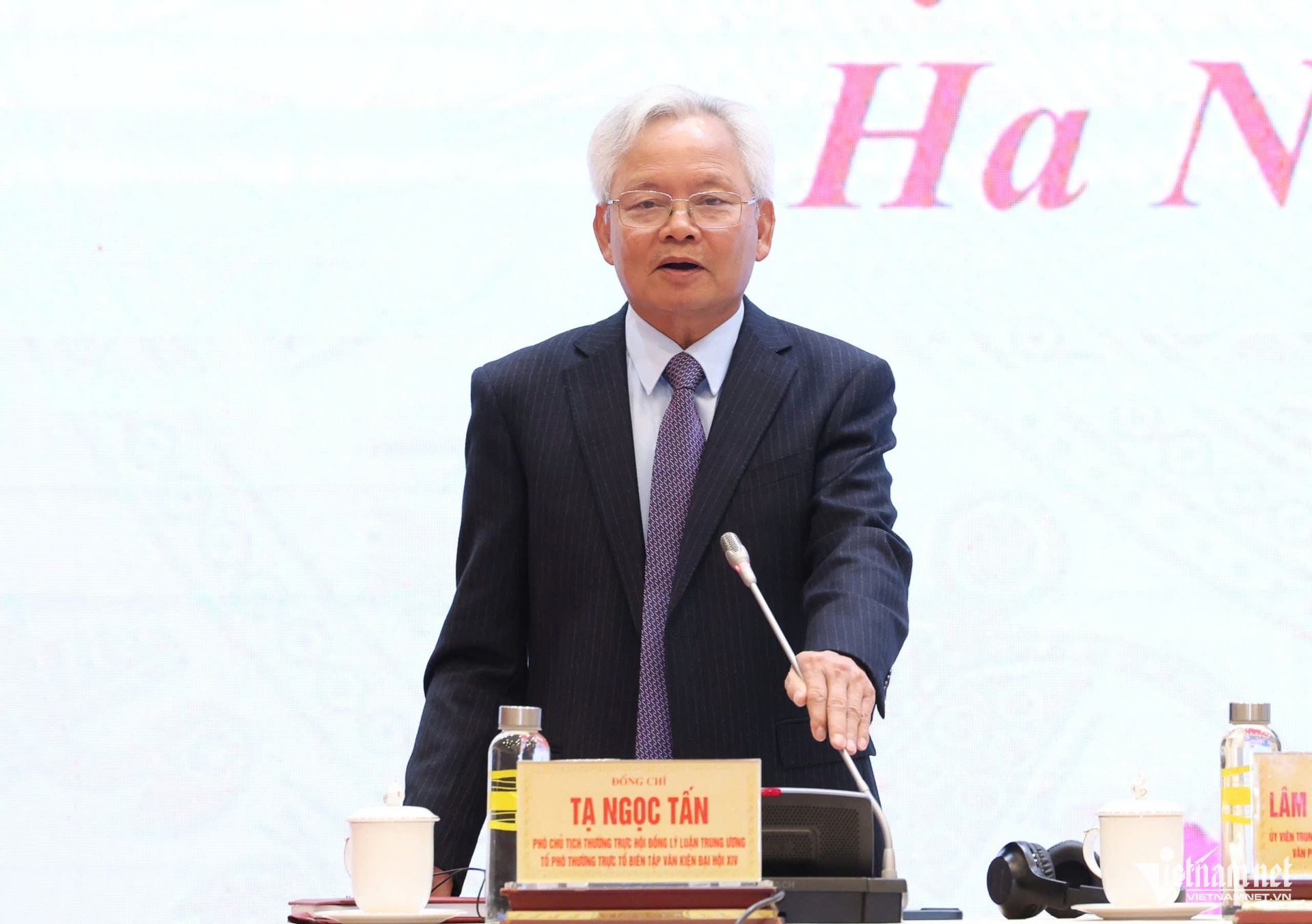
The Central Commission for Communication and Education, together with relevant agencies, held a press conference to announce the draft political documents for public consultation ahead of the Party’s 14th National Congress on October 15.
Professor Ta Ngoc Tan, Standing Vice Chairman of the Central Theoretical Council, highlighted several notable innovations in this draft. For the first time, all core policy reports have been consolidated into a single political report.
Previously, separate reports on political strategy, socio-economic development, and Party-building efforts were prepared. Now, these have been integrated, with remaining content moved to appendices.
The goal is to ensure clarity and consistency in the Party’s direction, while making it easier for the public, officials, and Party members to access and implement a unified document.
The report is titled: “Under the glorious Party flag, united in will and action to achieve national development goals by 2030; pursuing strategic autonomy, resilience, and confidence to thrive in the nation’s new era of growth for peace, independence, democracy, prosperity, civilization, happiness, and socialism.”
According to Professor Tan, the overarching theme of the political report remains consistent: national independence must go hand in hand with socialism. This strategic direction is affirmed as unchanged and unwavering.
Private sector identified as key growth driver
The new draft addresses global and domestic challenges with focused solutions. It emphasizes two landmark milestones: by 2030, marking 100 years since the Party's founding, Vietnam aims to become a modern, upper-middle-income developing country; and by 2045, the 100th anniversary of the country’s founding, it aims to achieve high-income developed status with a socialist orientation.
One of the most striking new proposals is the per capita GDP target of approximately USD 8,500 by 2030.
This goal is grounded in the philosophy of strategic autonomy, resilience, and confidence, aiming to elevate the nation's status in the global order.
The report underscores the dual mission of pursuing economic growth and safeguarding national identity and independence - framed around peace, democracy, prosperity, and socialism.
Professor Tan added that the political report also reiterates Vietnam’s unwavering commitment to Marxism-Leninism, the goal of building socialism, and the continued renewal process as part of the Party’s ideological foundation.
It outlines the Party’s core responsibilities in the coming years, with a new emphasis on environmental sustainability as a central pillar of socio-economic development. Furthermore, diplomacy and international integration are identified as permanent priorities.
The guiding philosophy of the report is clear: “Economic development and environmental protection are central; Party-building is crucial; cultural and human development are foundational; national defense and security, as well as foreign affairs and international integration, are vital and continuous.”
Additionally, the report proposes a new growth model driven by science, technology, innovation, and digital transformation, with the private sector playing a critical role.
Key development targets for 2026–2030
Economy: Vietnam aims for an average annual GDP growth rate of at least 10% between 2026 and 2030. By 2030, per capita GDP is targeted to reach approximately USD 8,500. The processing and manufacturing industry is expected to account for 28% of GDP, while the digital economy is projected to contribute 30%. Total factor productivity (TFP) should contribute over 55% to economic growth, and labor productivity is expected to grow by 8.5% annually. Energy consumption per unit of GDP should decrease by 1–1.5% each year. Urbanization is projected to exceed 50%.
Society: The Human Development Index (HDI) is targeted to reach approximately 0.78. The average life expectancy is set to reach 75.5 years, with at least 68 years of healthy living. Agricultural labor should fall below 20% of the total workforce. The proportion of formally trained workers with diplomas or certifications is expected to reach 35–40%. The multidimensional poverty rate is to decrease by 1–1.5 percentage points annually.
Environment: Forest coverage is to be maintained at 42%. Wastewater treatment and reuse in major river basins should reach 65–70%. Greenhouse gas emissions are to be reduced by 8–9%. Compliance with environmental standards is expected at 98–100% among businesses. Marine and coastal conservation zones should cover at least 6% of the country’s maritime territory.
Thu Hang
.svg)
