 Vietnamnet.vn

 Podcast



The conflict between the US-Israel alliance and Iran has disrupted several international flight routes and sharply increased aviation fuel prices, raising concerns over potential supply shortages for Vietnam’s aviation sector from April.
Fuel price surge hits airline operations
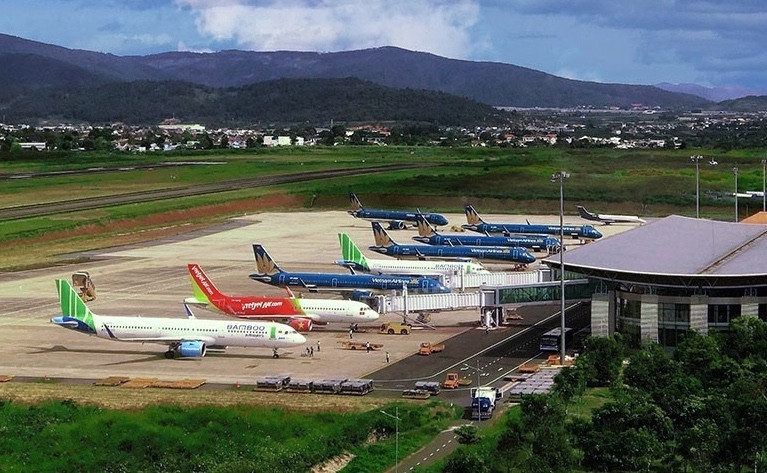
According to a recent report from the Civil Aviation Authority of Vietnam, the military conflict between the US-Israel alliance and Iran that erupted on February 28, 2026 has forced several Middle Eastern countries to close or restrict their airspace, including Iran, Iraq, Kuwait, Qatar, the United Arab Emirates and Israel.
Major airports in Dubai, Abu Dhabi and Doha were forced to temporarily suspend operations.
As a result, flight routes connecting Europe and Asia through the Gulf region have been heavily disrupted, forcing many international airlines to cancel or adjust their operations.
In Vietnam, the impact has already been visible. Airlines including Qatar Airways, Emirates and Etihad Airways - which operate routes to Hanoi, Ho Chi Minh City and Da Nang - have canceled or adjusted 98 flights between February 28 and March 10, affecting around 20,000 passengers.
With Vietnam’s aviation market currently experiencing strong growth, these disruptions are expected to create significant challenges for the sector in the coming period.
Military tensions in the Middle East have also effectively shut down the Strait of Hormuz, a key maritime route transporting more than 20 percent of global oil supply. As a result, Brent crude prices quickly rose from around US$65-70 per barrel to US$92.6 per barrel on March 6.
Notably, the price of Jet A-1 aviation fuel in the Singapore market surged dramatically. While prices in January and February ranged between US$83 and US$89 per barrel, they jumped to US$231.42 per barrel in early March - an increase of roughly 160 percent within just a few trading days.
Currently, Jet A-1 prices remain around US$160 per barrel and are forecast to stay near US$170 per barrel throughout March.
In addition, the premium surcharge applied to aviation fuel has increased sharply, rising from US$1-2 per barrel to more than US$18-21 per barrel, significantly raising airlines’ fuel expenses.
According to the International Air Transport Association (IATA), if Jet A-1 prices reach US$200 per barrel, airline operating costs could increase by more than 70 percent.
Risk of flight reductions
Beyond rising prices, aviation fuel supply is also facing the risk of shortages.
Several countries in the region have restricted or halted exports of refined petroleum products to ensure domestic supply. Thailand has even imposed a ban on exporting certain petrochemical products, while China has also limited aviation fuel exports.
Vietnam currently imports about 70 percent of its aviation fuel demand, with more than 60 percent sourced from Thailand and China.
According to fuel suppliers such as Skypec and Petrolimex Aviation, current supply is only sufficient to meet airline demand until the end of March 2026 under existing contracts.
However, partners in Singapore, Thailand and China are delaying deliveries and may even invoke force majeure clauses to terminate contracts. As a result, the risk of aviation fuel shortages from early April is considered increasingly real.
Fuel suppliers are now seeking alternative sources from South Korea, Brunei, India or Japan, though securing supply in the current market conditions is proving extremely difficult.
Fuel currently accounts for about 35-40 percent of airlines’ total operating costs.
According to reports from Vietnam Airlines, VietJet Air and other carriers, if Jet A-1 prices remain between US$200 and US$230 per barrel, Vietnam Airlines’ operating costs could increase by 50-60 percent each month, while Sun Phu Quoc could see costs rise by around 30 percent.
For VietJet Air, operating costs could increase by around VND2,000 billion per month (US$81 million).
The sharp increase in fuel prices means many routes risk becoming loss-making. Airlines are therefore reviewing flight schedules and may adjust route structures or frequencies starting in April to reduce fuel consumption.
In addition, the need to reroute flights to avoid closed airspace is increasing flight times, further raising fuel and operational costs.
Emergency support solutions
In response to the situation, the Civil Aviation Authority has proposed that the government and relevant ministries consider several urgent support measures for the aviation sector.
These include a proposal to waive 100 percent of the environmental protection tax on aviation fuel until the end of May 2026, reduce value-added tax on aviation fuel and consider adjusting the domestic airfare price ceiling if necessary.
The authority also proposed allowing airlines to apply flexible fuel surcharges on domestic air tickets depending on actual fuel price movements.
In addition, airport operators are encouraged to consider reducing or deferring service fees for airlines, similar to support policies implemented during the Covid-19 pandemic.
According to the Civil Aviation Authority, if the conflict in the Middle East continues, the global aviation industry - including Vietnam - will face significant challenges in the coming months, particularly as travel demand continues to rise following the tourism recovery.
Vu Diep
.svg)
