 Vietnamnet.vn

 Podcast



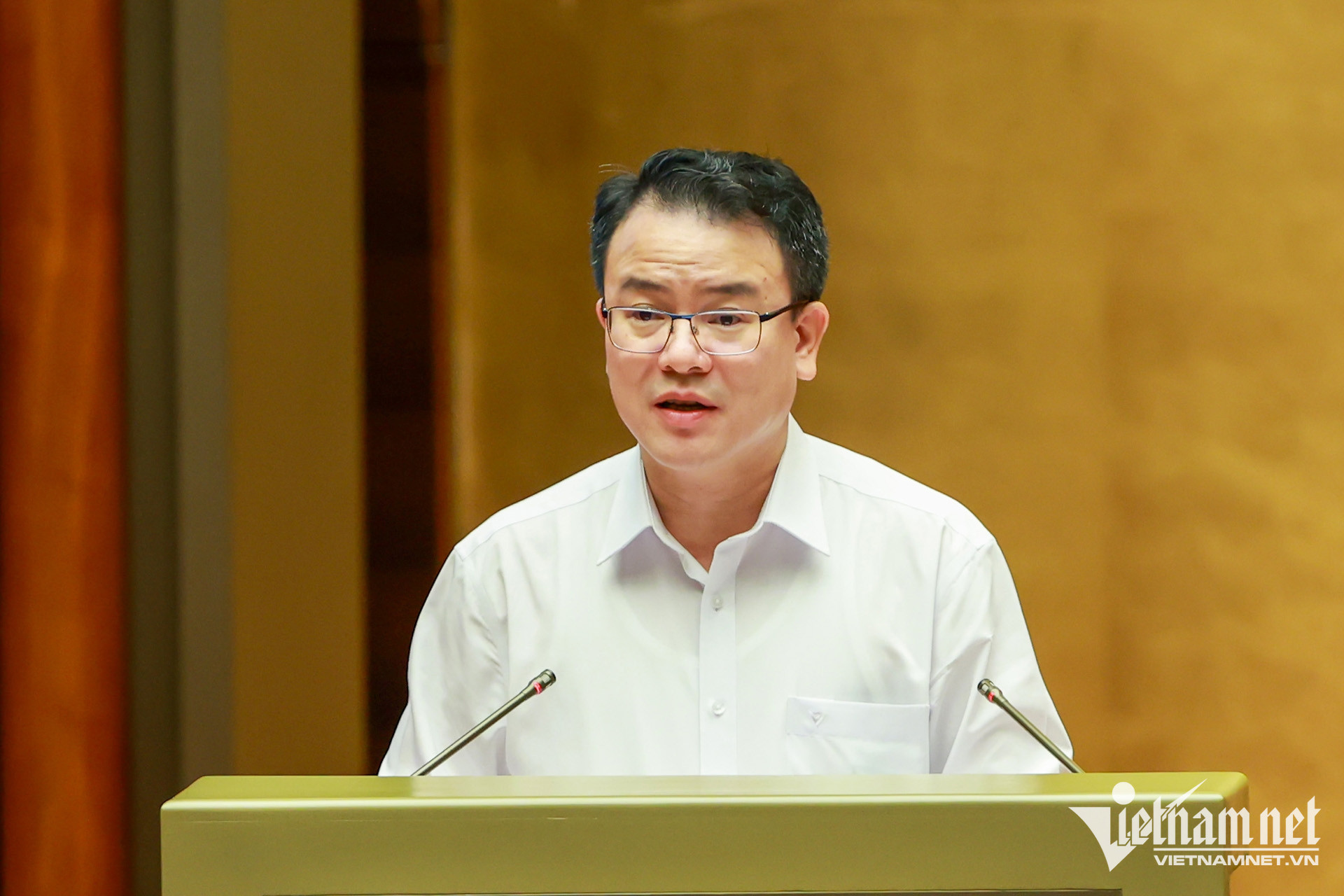
The Ministry of Finance has reduced around 3,600 organizational units from the central to local levels, equivalent to about 37%, while also significantly cutting the number of public service units and staffing positions in line with the Party's restructuring policy.
Regarding administrative reform, the ministry has reduced or simplified 82.84% of administrative procedures and 38.29% of business conditions, while cutting administrative compliance costs by 52.24% and processing time by 53.88%.
On ensuring financial and budgetary resources, Tran Quoc Phuong said the ministry had proactively advised competent authorities on balancing the central budget to fully and promptly finance retirement and severance policies for public officials and civil servants under Government Decree No. 178, while also providing approximately VND128 trillion (US$4.9 billion) to local governments implementing the reorganization of provincial- and commune-level administrative units.
In the 2026 state budget estimate, the ministry also proposed increasing balancing transfers to local governments by 3%, equivalent to nearly VND7 trillion (about US$267 million), giving local authorities additional resources to carry out key tasks and continue implementing related reforms.
Regarding government offices and public assets, all ministries, agencies and local authorities affected by the restructuring have secured office space for operations. Local governments have ensured that every commune has at least one official vehicle, while 10 of the country's 34 provincial-level administrations have already provided two official vehicles for each commune in accordance with state standards. All newly established communes have also been equipped with the necessary office equipment and machinery.
At the same time, the Ministry of Finance has led the drafting of a government resolution introducing special mechanisms and policies to accelerate the handling and utilization of surplus public buildings and land created through the administrative restructuring process under simplified procedures.
Despite these achievements, Tran Quoc Phuong acknowledged that implementation has faced several challenges, particularly because progress and execution quality vary across localities and agencies. Implementation capacity and operational conditions at the grassroots level remain limited, especially in remote and mountainous areas, requiring additional time for improvement.
Looking ahead, the Ministry of Finance will continue refining the legal framework to align with the new organizational model while ensuring effective decentralization, clearer divisions of authority among different levels of government and more efficient mobilization of national resources.
The ministry will also continue streamlining its organizational structure to make it leaner, more effective and more efficient in line with directives from the Party and the Government.
Alongside expanding decentralization based on implementation capacity at the grassroots level, the ministry will strengthen inspection and supervision to promptly detect and resolve emerging issues.
Tran Quoc Phuong also stressed the importance of ensuring sufficient financial resources for the operation of the three-tier government model, improving the budget allocation mechanism to make it more transparent and efficient, and strictly applying the principle that assigning expenditure responsibilities to commune-level authorities must always be accompanied by adequate financial resources.
Tran Thuong
.svg)
