 Vietnamnet.vn

 Podcast


Minister of Ethnic and Religious Affairs Nguyen Dinh Khang presented the appointment decision to Bui Quoc Thang at a ceremony in Hanoi on November 13, urging the center to strengthen cooperation and effectively implement the ministry's digital transformation agenda.
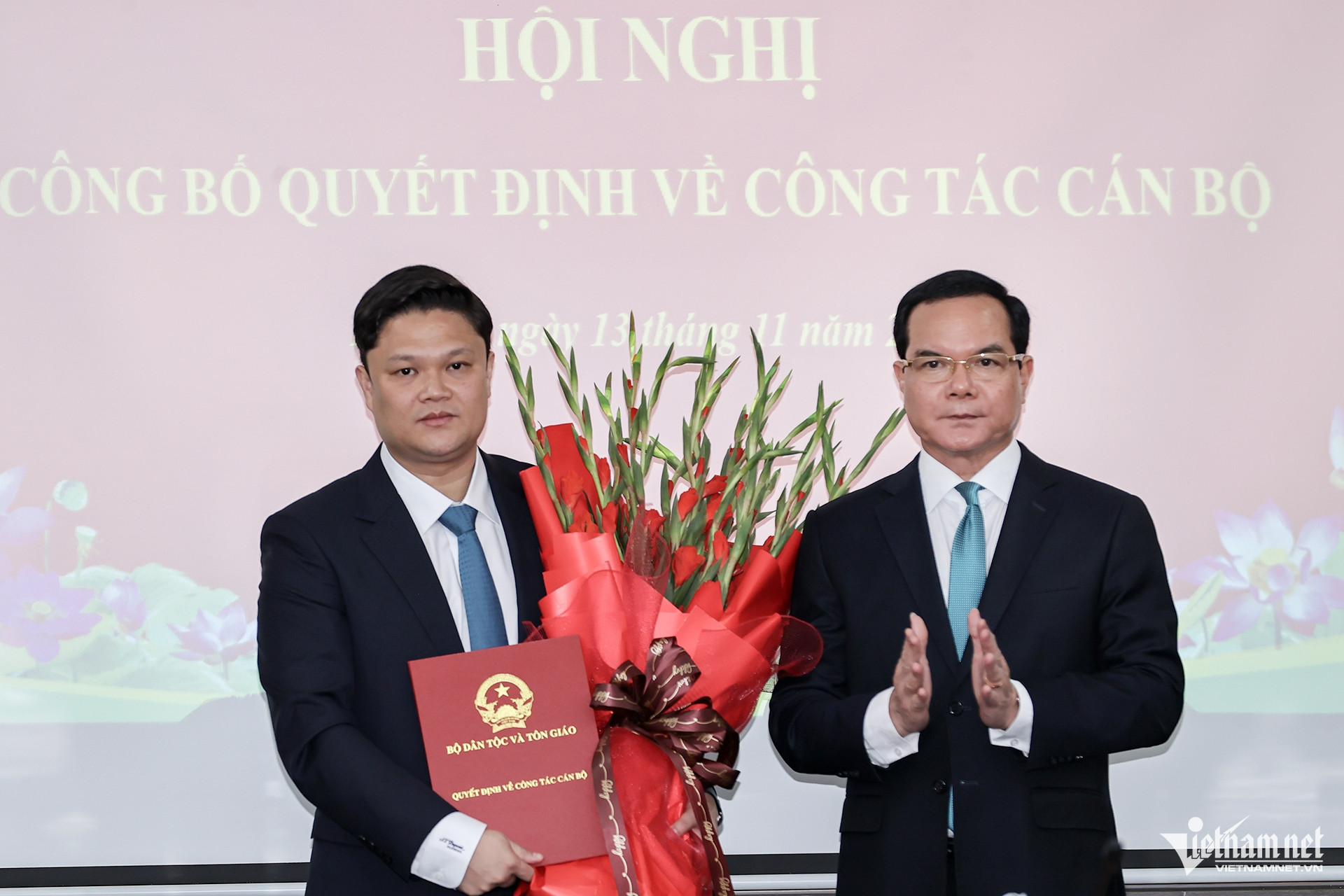
Khang, a member of the Party Central Committee and Secretary of the ministry's Party Committee, chaired the ceremony, which was also attended by Deputy Minister Nguyen Hai Trung, Standing Deputy Secretary of the ministry's Party Committee Cam Van Thanh, and representatives of affiliated departments and agencies.
At the event, a representative of the Department of Personnel and Organization announced the minister's decision appointing the director of the Digital Transformation Center.
Under Decision No. 939/QD-BDTTG, dated November 10, 2026, Bui Quoc Thang, previously Acting Director of the center, was officially appointed its director for a five-year term beginning November 10.
Presenting the decision, Minister Khang said the appointment recognized the efforts and contributions of both Thang and the center's staff.
He described Thang as a young official who had worked in several units and demonstrated dedication in carrying out his responsibilities.
The achievements recorded by the center, he said, reflected not only Thang's personal efforts but also the collective contributions of its employees.
Khang noted that the ministry had established the Digital Transformation Center early in its implementation of the national digital transformation policy.
Since its establishment, the center has made effective contributions to the ministry's operations and to the broader management of ethnic and religious affairs.
Digital government requires a digitally skilled civil service
Outlining priorities for the coming period, Khang emphasized that digital transformation is a central component of Vietnam's national development.
For state management agencies, he said, building digital government requires a workforce equipped with the necessary digital capabilities.
The Ministry of Ethnic and Religious Affairs oversees two important areas of governance, both of which face particular challenges in applying science, technology, innovation and digital transformation.
These challenges stem partly from differences in educational backgrounds, technological capabilities and awareness among the communities and groups affected by the ministry's policies.
Against this backdrop, Khang called on every official and employee of the Digital Transformation Center to recognize their responsibilities in advancing digital transformation.
He placed particular emphasis on developing comprehensive databases across the ministry's areas of responsibility to support management, administration and policymaking.
The minister also urged the center's staff to maintain unity, strengthen coordination and focus on fulfilling their assigned tasks.
Addressing the newly appointed director, Khang encouraged Thang to remain receptive to feedback, listen to colleagues and foster a cooperative and motivated working environment.
He stressed the importance of mobilizing the collective strengths of the center's officials and employees to deliver effective results.
New director pledges to strengthen cooperation and fulfill responsibilities
Speaking after receiving the appointment decision, Thang expressed his commitment to implementing the minister's instructions.
He said the guidance would be incorporated into his personal work plan and the center's operational priorities in the coming period.
Thang also expressed hope for continued support and direction from the ministry's Party Committee and leadership.
He pledged to work closely with the center's staff, promote solidarity and make every effort to successfully complete the tasks entrusted to the unit.
Hoang Quy

