 Vietnamnet.vn

 Podcast



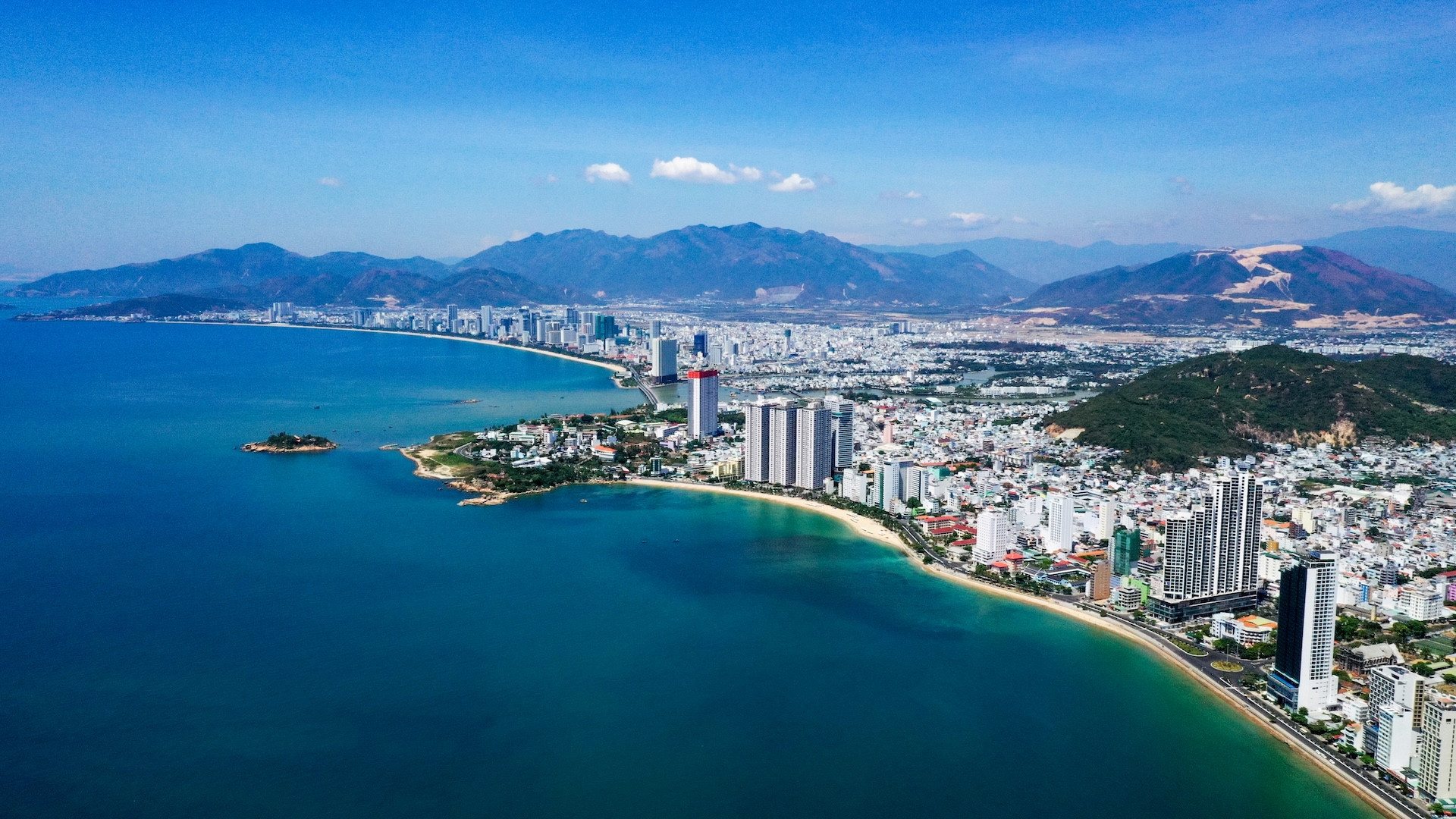
Roughly one-third of global maritime trade passes through these waters, presenting Vietnam with a unique opportunity.
First, offshore renewable energy. With superior wind speed conditions, the World Bank assesses that Vietnam's offshore wind potential could reach up to 600 GW. Norway and the Netherlands turned the harsh North Sea into a "money-printing machine" from wind power.
More importantly, developing offshore wind power is not just about selling electricity. It brings along a giant supporting industrial ecosystem: from engineering design, ocean geological foundation assessment, and foundation and turbine fabrication, to submarine cable laying and maintenance services. This is the room to form a completely new marine mechanical engineering industry.
Second, logistics chains and international transit port systems. Modern maritime transport trends require large-capacity ultra-large container vessels and Green Shipping Corridors. Instead of building small ports adjacent to each other, Vietnam needs to concentrate resources to develop international-stature mega transit ports like Lach Huyen in the North, the Cai Mep - Thi Vai cluster, and the planned Can Gio mega port in the South.
Port infrastructure must be linked with digital transformation, using automation in loading and unloading to reduce yard storage time, thereby cooling down logistics costs that currently account for too high a proportion in product costs.
Third, high-tech industrial marine aquaculture. As wild fish stocks decline, Norway's salmon farming industry offers valuable lessons. They take giant cages with ultra-durable material structures capable of withstanding big storms out into open seas (offshore aquaculture), applying automation technology in feed and water environment management.
In Vietnam, it is necessary to end the primitive nearshore cage aquaculture, which is easily flattened by natural disasters and causes environmental pollution. Applying strict structural safety and environmental monitoring standards for deep-sea aquaculture will create new billion-dollar aquatic corporations.
Digital maps, AI, and maritime "Soft Power"
The 21st century marks the rise of ocean technology. National competitive advantage is no longer measured by who extracts more raw resources, but by who possesses a larger capacity to understand and govern the ocean.
The close guidance on approaching the sea with a science-technology and innovation mindset, bringing AI and digital ocean maps into marine governance, is a breakthrough orientation.
To have correct planning, there must be accurate data. We need to establish a real-time oceanographic monitoring network, updating indexes on currents, environment, and seabed topography.
When fully digitalized, the national database on marine resources will eliminate ambiguity in investment licensing, helping accurately forecast resource movements and natural disaster risk scenarios. A transparent, precise data system is the core foundation for a smart, modern marine administration.
Strong sea for prosperous, peaceful nation
Finally, in modern development thinking, economy and sovereignty have never been two separate categories. Lam noted very clearly: All planning and development strategies at sea must serve the requirement of protecting sovereignty, sovereign rights, and improve defense capacity early and from afar.
Each oil rig, each wind turbine rising in the middle of the open sea, each modern fishing logistics anchorage, and each steel-hulled ship heading to sea along with satellite communication systems—all are living sovereignty milestones.
Developing a strong marine economy is precisely a form of "civilianizing" the ocean, creating solid material and infrastructural capacity to protect national interests early and from afar. The regular, effective presence of civilian economic activities at sea is the most peaceful, flexible, yet resolute method of protecting sovereignty.
After nearly eight years, Resolution 36 has completed its historical mission. Amid the rapid variations of world geopolitics, climate change, and the digital technology era, drafting a new resolution with a higher generalization is not only an internal requirement but a command of the times.
Entering a new development phase with the goal of becoming a developed nation by 2045, Vietnam needs a new approach. If Resolution 36 focused on developing marine economic sectors, the new resolution aims to govern and promote the national marine development space as a strategic driver for growth.
That change begins with a radical renewal in perception, transforming the sea from a single extraction sector into a strategic development space and a new growth driver.
When governance mindsets surpass the limits of administrative boundaries, when science and technology become the guiding compass, and when ocean data is used as an invaluable asset, Vietnam will not only reach out to the open ocean but truly create the shape of a strong maritime nation, confident in the era of the nation's rise.
To Van Truong
.svg)
