 Vietnamnet.vn

 Podcast



Speaking during a discussion session held on Monday afternoon as part of the 11th National Congress of the Vietnam Fatherland Front, Vo Si Tuan, former director of the Institute of Oceanography and representative of Khanh Hoa delegation, contributed several recommendations regarding Action Program No. 7 on reforming operational methods, streamlining organizational structures and improving the effectiveness of specialized agencies and personnel.
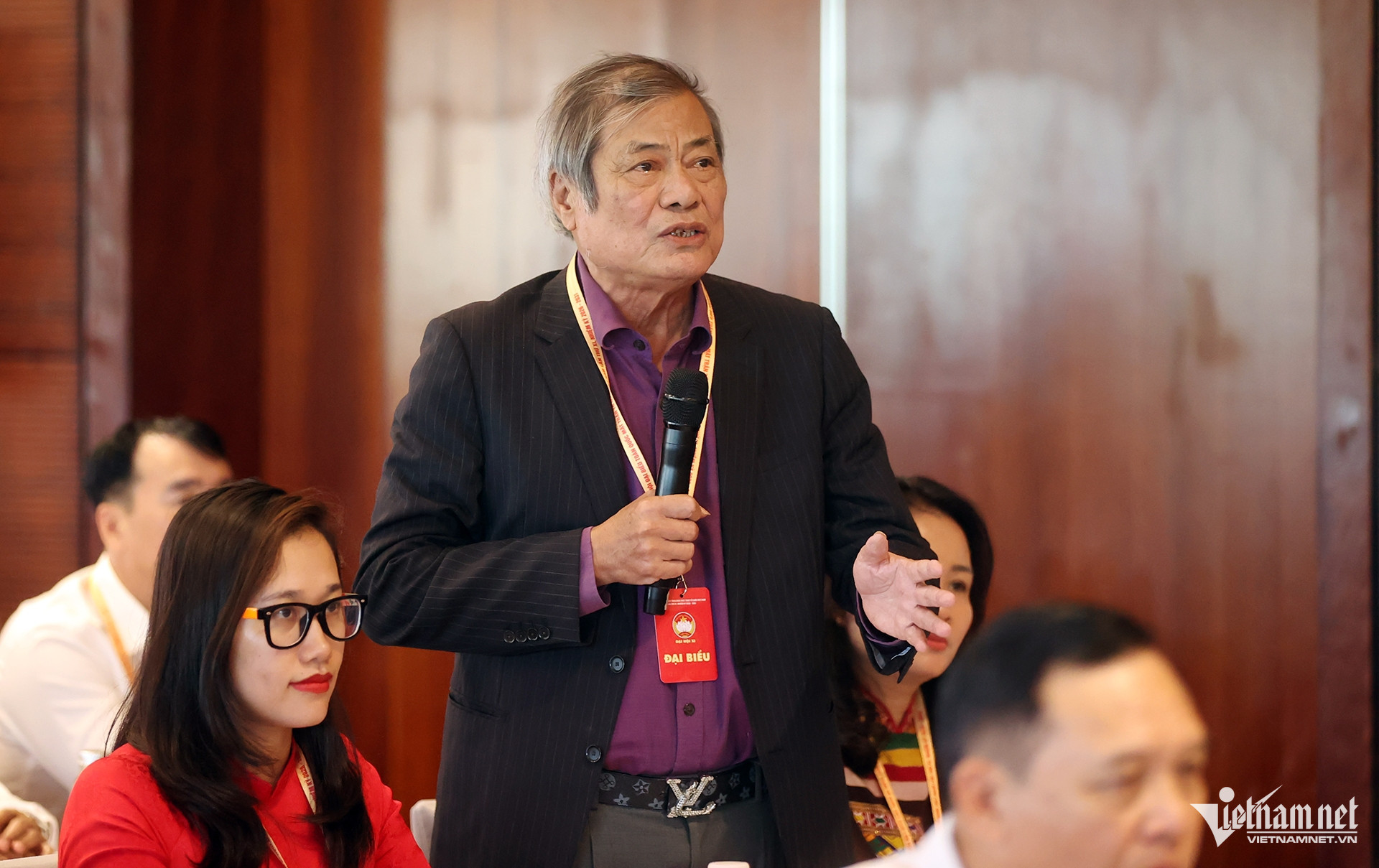
According to Vo Si Tuan, the Vietnam Fatherland Front should play a more significant role in promoting the application of science and technology for economic development and social governance.
He urged the Presidium to provide clearer orientation so the newly elected Standing Committee and Central Committee could implement the program effectively, rather than viewing it solely as a digital transformation initiative.
Tuan noted that the application of science and technology in the marine economy remains limited.
“As someone who works in the marine sector, I want to present a clearer picture of science and technology in the marine economy,” he said.
“There are areas where we have developed very successfully. For example, in oil and gas, our science and technology capabilities have reached world-class standards, but that sector is managed by large corporations.”
“Meanwhile, fisheries and marine farming activities among local people remain largely small-scale, spontaneous and fragmented, making it extremely difficult to apply high technology.”
He cited the reality that tens of thousands of marine farming households still rely on scattered floating cage models that are highly vulnerable to disease outbreaks, natural disasters and climate change.
Following Typhoon Yagi alone, losses from marine farming in Van Don district in Quang Ninh province exceeded VND2 trillion ($78.6 million).
According to Vo Si Tuan, the development of high-tech marine farming requires stronger cooperation between businesses, scientists and local communities.
He said this is precisely the role the Vietnam Fatherland Front could take on by connecting scientific associations, professional organizations, businesses and residents to help build a modern industrial-scale marine farming sector.
Vo Si Tuan added that Vietnam already has strategies and policies for marine farming development through 2030 with a vision toward 2045, but implementation remains slow due to weak coordination among stakeholders.
“We cannot continue going out to sea with everyone doing things their own way,” he said.
He also stressed that not all Fatherland Front officials possess deep expertise in science and technology.
Therefore, he said the organization must “know how to use people” by maximizing the role of scientists and experts rather than expecting officials themselves to master every field.
Based on those realities, he proposed selecting several localities to pilot science and technology applications in high-tech marine farming, with the Vietnam Fatherland Front taking the lead in connecting businesses, scientists and local communities.
According to him, successful pilot models with tangible results would help affirm the Front’s role in promoting marine economic development.
Vo Si Tuan also noted that issues related to seas and islands remain underrepresented in the current political report.
Although maritime policies and strategies are frequently mentioned, he said concrete action programs remain vague and should receive greater attention in the coming years.
At the conclusion of the discussion, conference moderators described Vo Si Tuan’s comments as highly relevant, particularly his distinction between science and technology applications and digital transformation, while also acknowledging his proposal to develop marine economic models based on advanced technology.
Improving the quality of grassroots officials
Alongside discussions on science and technology in the marine economy, Nguyen Quang Huan, representing the Vietnam Private Entrepreneurs Association, focused on reforming the operational methods of the Vietnam Fatherland Front and improving the quality of grassroots officials.
Nguyen Quang Huan said he was particularly interested in the requirement to build a contingent of Front officials who remain close to the people and work alongside local communities.
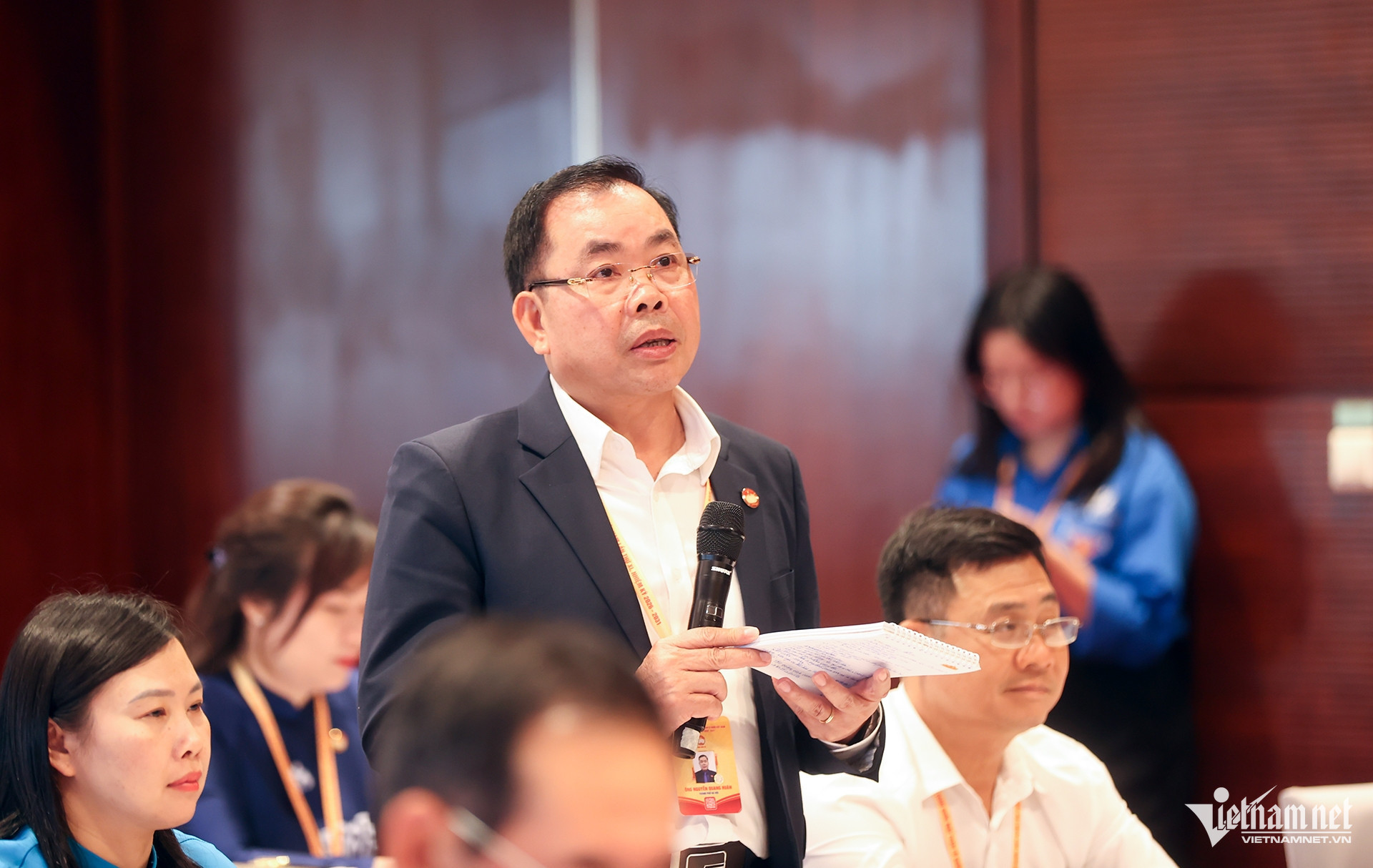
According to him, as local government structures transition from a three-tier system to a two-tier model, management responsibilities will become broader and demands on grassroots Front officials will increase significantly.
As a result, besides professional expertise, officials should receive greater training in communication, public engagement and policy explanation skills.
Huan said many prolonged complaints and disputes stem from people not fully understanding legal regulations, rather than from a lack of policy or failure by authorities to act.
He argued that if Front officials possessed sufficient knowledge and proactively engaged with residents directly, many disputes could be resolved early before escalating into long-term complaints.
Using concerns surrounding telecommunications transmission stations located near residential areas as an example, Huan said many negative public reactions could be eased if people received proper scientific explanations.
He therefore proposed stronger training in communication skills, public mobilization and policy outreach for grassroots Front officials, while also promoting a spirit of dedication and responsibility in public service.
Thanh Hue
.svg)
