 Vietnamnet.vn

 Podcast



From an urgent mandate to a race to organize data
The effort began with a push to accelerate the development of databases covering ethnic minority and religious affairs.
At a June 30, 2026 meeting on developing sector-specific databases, Minister of Ethnic and Religious Affairs Nguyen Dinh Khang called for simultaneous work on legal frameworks, data, software and platforms, and system connectivity. He set a target of completing version 1.0 of the ethnic and religious databases before Sept. 20.
A day later, a 100-day acceleration plan was launched.''
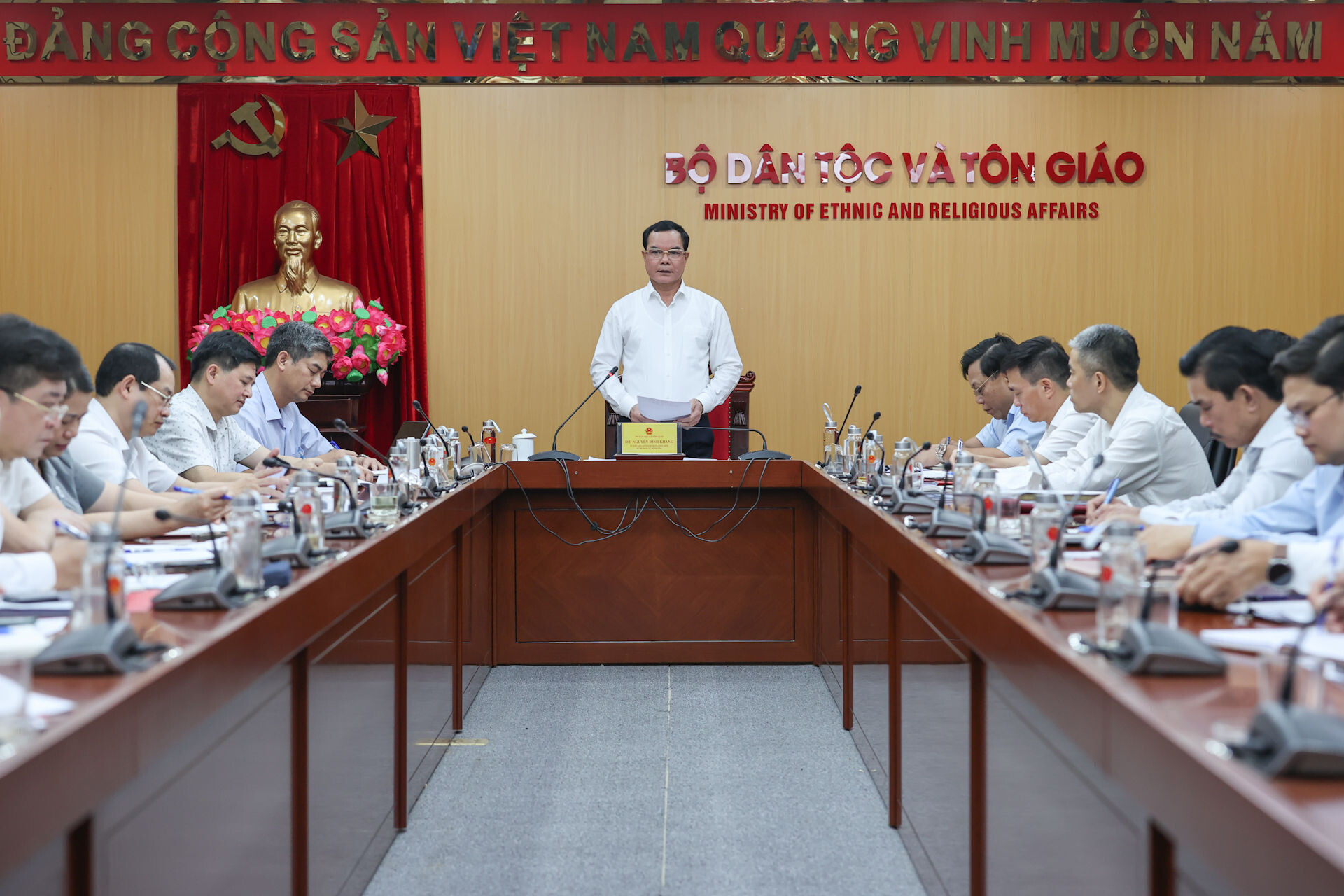
Sept. 20 might have appeared to be simply another deadline on a project schedule. Reaching it, however, required the ministry to tackle several challenges at once: defining data categories, assigning responsibilities, building the platform, collecting information from central and local authorities, reviewing and verifying records, cleaning and standardizing data, and ultimately connecting it to the country's national data infrastructure.
For the ethnic affairs database, the workload comprised 15 categories containing 2,236 information fields. They cover a wide range of areas, including information on ethnic minority groups; officials and respected community figures; outstanding ethnic minority students, university students and young people; the classification of ethnic minority and mountainous areas; science and technology; education and training; gender equality; and ethnic minority women and children.
For the religious affairs database, the ministry also gradually established a list of data categories, basic information groups and individual information fields for version 1.0. This laid the foundation for moving away from fragmented information management toward a unified data structure.
But defining what information should be included was only the beginning.
Solving the hardest part of the 100-day push
A software system can be built relatively quickly. Creating a trustworthy database is a different challenge.
Data on ethnic and religious affairs has accumulated over many years, from multiple sources and at different levels of government. The same information may have been stored in different formats, while place names, administrative units, statistical methods and updating procedures may also have changed over time.
The most difficult task during the 100-day campaign was therefore not entering information. It was determining which data was accurate, what needed correcting, which records had sufficient supporting evidence and who would ultimately be responsible for their accuracy.
That was why Permanent Deputy Minister of Ethnic and Religious Affairs Nguyen Hoai Anh required the ethnic affairs database to meet six criteria: accurate, complete, clean, live, consistent and shared.
Rather than pursuing a high number of records, he called for a clear classification of information fields that already contained data, those for which information could not yet be collected, and those requiring additional legal foundations or statistical reporting mechanisms.
The approach reflects an important shift: a database should not simply be a repository containing as much information as possible. It must become a reliable source of data for government management.
By Sept. 28, the ethnic data collection platform had introduced data-creation functions for 12 of its 15 categories, with data already being generated or entered in 11 of them.
Profiles covering the characteristics of all 53 ethnic minority groups had been updated. Data identifying ethnic minority and mountainous areas covered 15 provinces, 1,514 communes and 34,084 villages, including 13,205 classified as facing particularly difficult conditions.
Data on respected community figures also advanced significantly, with 19 of 34 localities updating 2,360 records.
The figures demonstrate a clear acceleration in data creation. More importantly, information is gradually being transformed from scattered records into structured datasets that can be shared.
The people behind the data
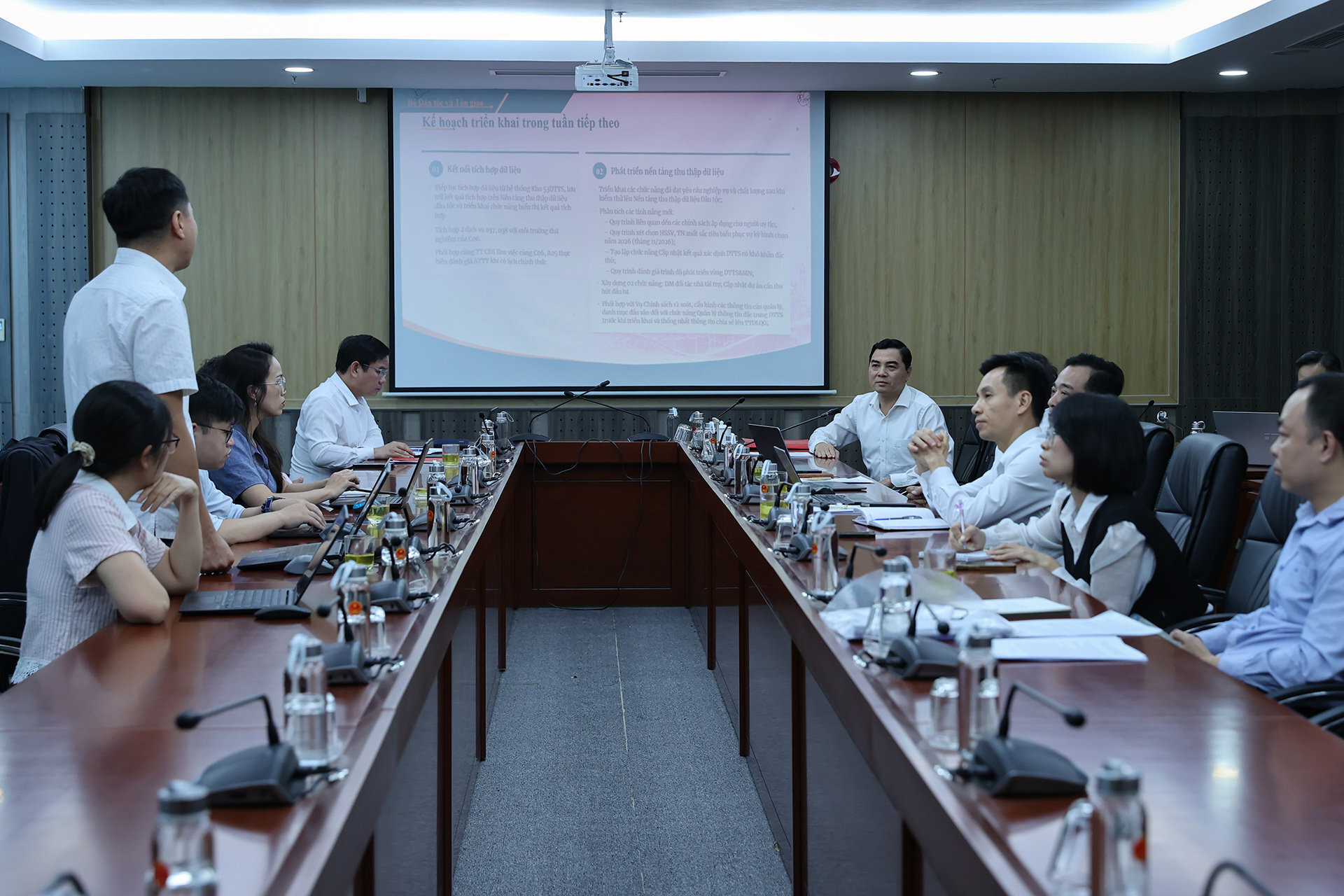
A national-level database cannot be created by technology teams alone.
At the central level, the Digital Transformation Center under the Ministry of Ethnic and Religious Affairs is responsible for the platform, its management and operation, and its connectivity. Specialized units within the ministry are responsible for content, professional criteria and data quality.
At the local level, authorities must review information that has historically been stored in different ways, cross-check it against actual conditions, update the system and take responsibility for its accuracy.
Much of this work is invisible on the interface of a digital system, yet it determines the quality of the entire database.
For ethnic affairs, Nguyen Hoai Anh required forms, procedures and guidance materials to be simple, specific, easy to understand and practical to use.
Manual data entry should be minimized, while the system should support bulk imports and include mechanisms for identifying duplicate or inaccurate records. It is also being designed to support permission-based searches and queries, with artificial intelligence eventually used to assist in data review and analysis.
For religious affairs, the same principle applies: data must be closely tied to real-world management needs.
The ministry's issuance of data categories, basic information groups and individual fields for version 1.0 of the religious affairs database marked an important step toward standardizing both the data structure and responsibility for keeping it updated.
Deputy Minister Nguyen Hai Trung emphasized the scope of the data, responsibility for its creation, methods of accessing it and the effectiveness of its use. Each database must clearly define what information is collected, how it is created, who is responsible for updating it and how it can be accessed.
A notable element of this approach is that the databases are not being built merely to complete a technology project.
Their effectiveness is expected to be assessed through practical use, including how frequently the data is accessed, how many people use it and how effectively it supports state management.
The underlying principle is that database development should begin with a management problem, with technology serving as the solution rather than the starting point.
When sectoral data enters national infrastructure
If the first 100 days focused on creating the data, Sept. 20 marked the beginning of a different stage: connecting it to Vietnam's shared national infrastructure.
According to the ministry, the ethnic and religious affairs databases were officially connected to the National Data Center on Sept. 20, 2026, ahead of the committed deadline.
Following the connection, the ministry continued creating, standardizing, cleaning, verifying, updating and maintaining "live" data, while gradually expanding its sharing and use.
The distinction is significant.
Simply saying that a database has been completed would mean little more than that a government agency now has another information system. Connecting it to the National Data Center places that specialized information within a broader architecture where it can potentially be exchanged and shared with other data systems under established regulations, standards and information-security requirements.
In other words, the project is moving from merely "having data" to making that data capable of being connected, shared and used across Vietnam's national data ecosystem.
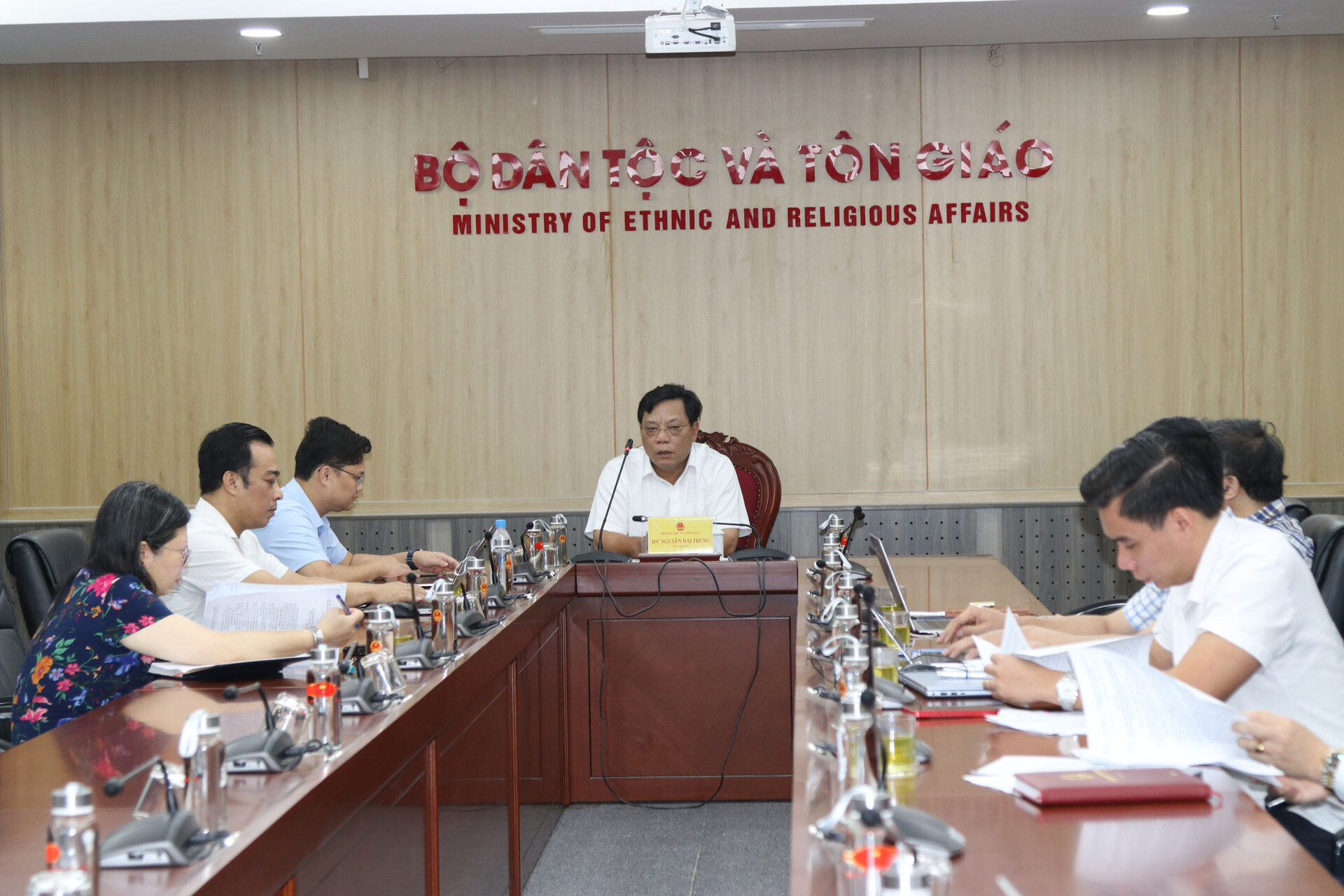
That transition became clearer following a Sept. 29 meeting, when the Ministry of Ethnic and Religious Affairs confirmed that two groups of information from the ethnic affairs database and a religious classification dataset had been connected and shared with the National Data Center.
The two ethnic affairs datasets cover the characteristics of Vietnam's 53 ethnic minority groups and the classification of ethnic minority and mountainous areas. On the religious side, the religious classification dataset has been synchronized.
These are the first three datasets to be shared, while the remaining groups continue to be created, verified and connected as they become ready.
Connectivity, therefore, is not the final step of the campaign. Instead, it introduces a higher standard: data must be good enough to move between different systems while remaining accurate, consistent and secure.
This is also why, after establishing the connection, the ministry must continue working with specialized units under the Ministry of Public Security to assess information security and prepare for data cross-checking against the national population database and VNeID, Vietnam's national digital identity platform.
From a 100-day campaign to a continuous flow of data
One indication that the project has entered a new phase is the change in direction following the Sept. 20 milestone.
On Sept. 29, Permanent Deputy Minister Nguyen Hoai Anh instructed units not to wait until every dataset was completed. Instead, they were told to adopt a rolling approach: once a data group is ready, it should immediately be checked, digitally signed and transferred.
The target is to complete data transfers before Nov. 20, 2026.
This differs from the traditional mindset of completing a project and then treating the task as finished.
Ethnic and religious affairs data will continue to be supplemented, updated, verified and cleaned. Incomplete datasets will continue to be developed, while those already connected will be used, cross-checked and made available for wider sharing.
That is because data only retains its value when it remains "live."
The broader task is to bring information once scattered across different systems and levels of government into a common structure and gradually connect it to the country's national data infrastructure.
That, in turn, raises a larger question: how can ethnic and religious affairs data be integrated into government direction and administration, support policy analysis, help authorities accurately identify target groups, locations and needs, reduce manual reporting and improve the quality of policy advice?
Vietnam's ethnic and religious affairs sector is moving from the stage of "building the foundation" to operating a continuous flow of data.
The ultimate value of that flow will be measured not by the number of records it contains, but by whether the data enables the government to make faster, more accurate decisions that better reflect conditions on the ground.
Hoang Quy
.svg)
