 Vietnamnet.vn

 Podcast



At a meeting on September 29, Permanent Deputy Minister Nguyen Hoai Anh called for the remaining data groups to be completed according to weekly milestones, with all data transfers to be finished before November 20, 2026.

Data on all 53 ethnic minority groups updated
According to a report by the Digital Transformation Center, data on the characteristics of Vietnam’s 53 ethnic minority groups and data identifying ethnic minority and mountainous areas have been digitally signed, approved and connected to the National Data Center.
The Government Committee for Religious Affairs has also synchronized its religious category data.
These constitute the first three data groups from the two specialized databases. Other groups will continue to be created, authenticated and shared as they become ready.

The ethnic data collection platform has introduced data creation functions for 12 of its 15 groups, with data already entered or being entered into 11 of them.
As of September 28, the platform had fully updated all 53 profiles covering the characteristics of Vietnam’s 53 ethnic minority groups.
Data on designated areas currently cover 15 provinces and 1,514 communes in ethnic minority and mountainous regions, as well as 34,084 villages in these areas, including 13,205 classified as facing particularly difficult conditions.
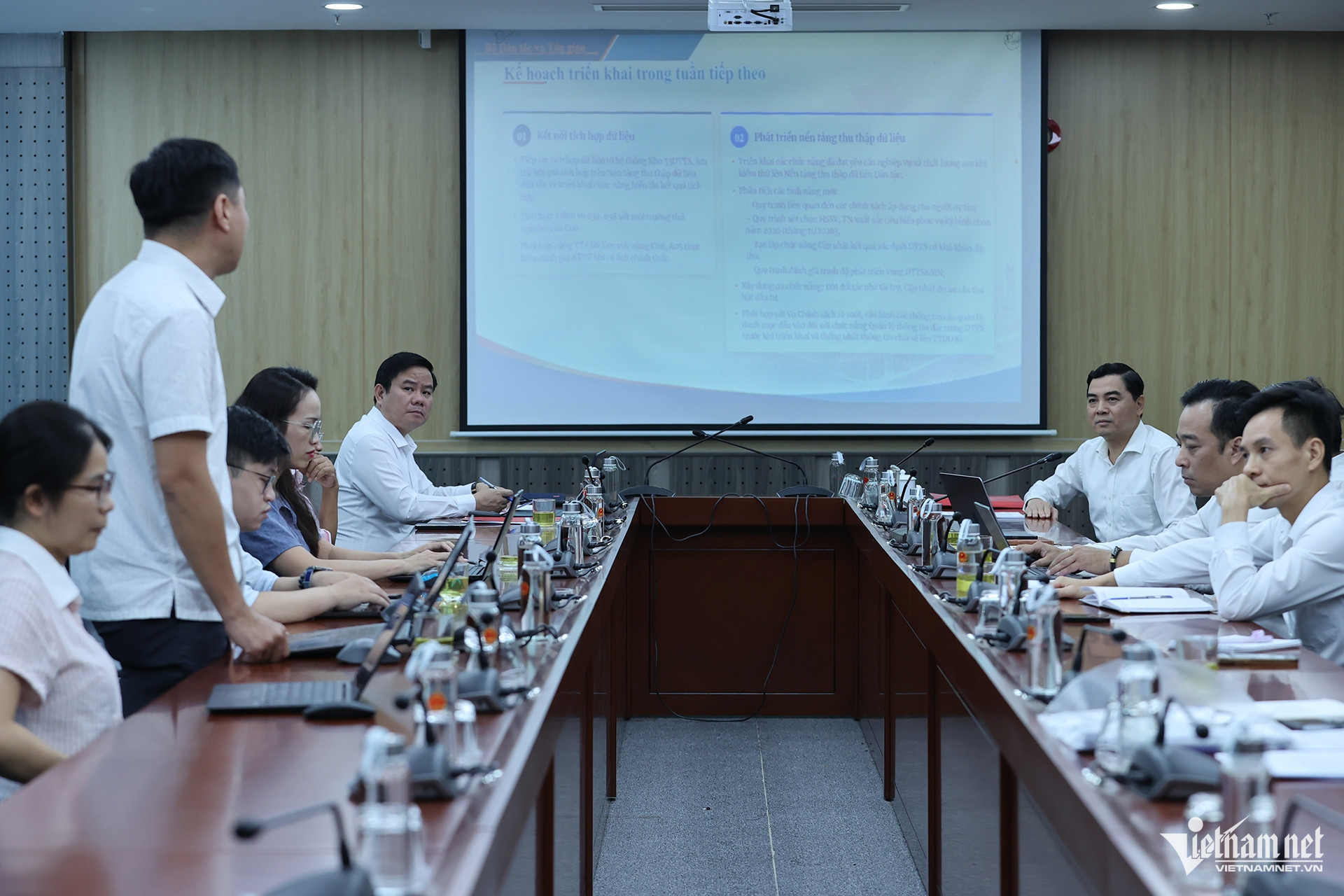
Relevant units are continuing to review data quality, complete missing functions and assist local authorities with data entry and digital signing.
Connecting and cross-checking the information against the national population database and VNeID will require coordination with the Ministry of Public Security’s C06 and A05 departments to assess information security before the systems officially go into operation.
Data transfer to be completed before November 20
Deputy Minister Nguyen Hoai Anh asked relevant units to urgently coordinate with the Ministry of Public Security’s specialized departments, including A05 and C06, to complete information security assessments and bring data groups that have already been tested into official operation as soon as possible.

For the remaining data groups, the deputy minister called for a rolling implementation process, with specific milestones established for each week.
Once a data group is completed, it should immediately be checked, digitally signed and transferred rather than being held until the end of the overall process.
The Department of Policy was instructed to proactively carry out work within its responsibilities, urge departments and units under the ministry to accelerate implementation, and coordinate with provincial Departments of Ethnic and Religious Affairs to speed up progress at the local level.
For geographic information system, or GIS, data, the deputy minister asked the Digital Transformation Center and FPT to study the use of maps at a scale of 1:25,000, incorporate them into the relevant documentation and conduct valuation procedures in accordance with regulations.
The Department of Policy, Digital Transformation Center and FPT were instructed to review their weekly milestones and complete the transfer of data to the Ministry of Public Security before November 20, 2026, leaving sufficient time for coordination before the systems are officially put into operation.
The deputy minister will continue receiving progress reports to ensure that difficulties and obstacles can be addressed promptly.
Tuan Ninh
.svg)
