 Vietnamnet.vn

 Podcast





After a recent administrative restructuring, Vietnam has 22 cities and provinces along its land borders, comprising 248 communes. These areas, hindered by rugged terrain, poor transport links, and limited economic resources, suffer from a chronic shortage of educational infrastructure.
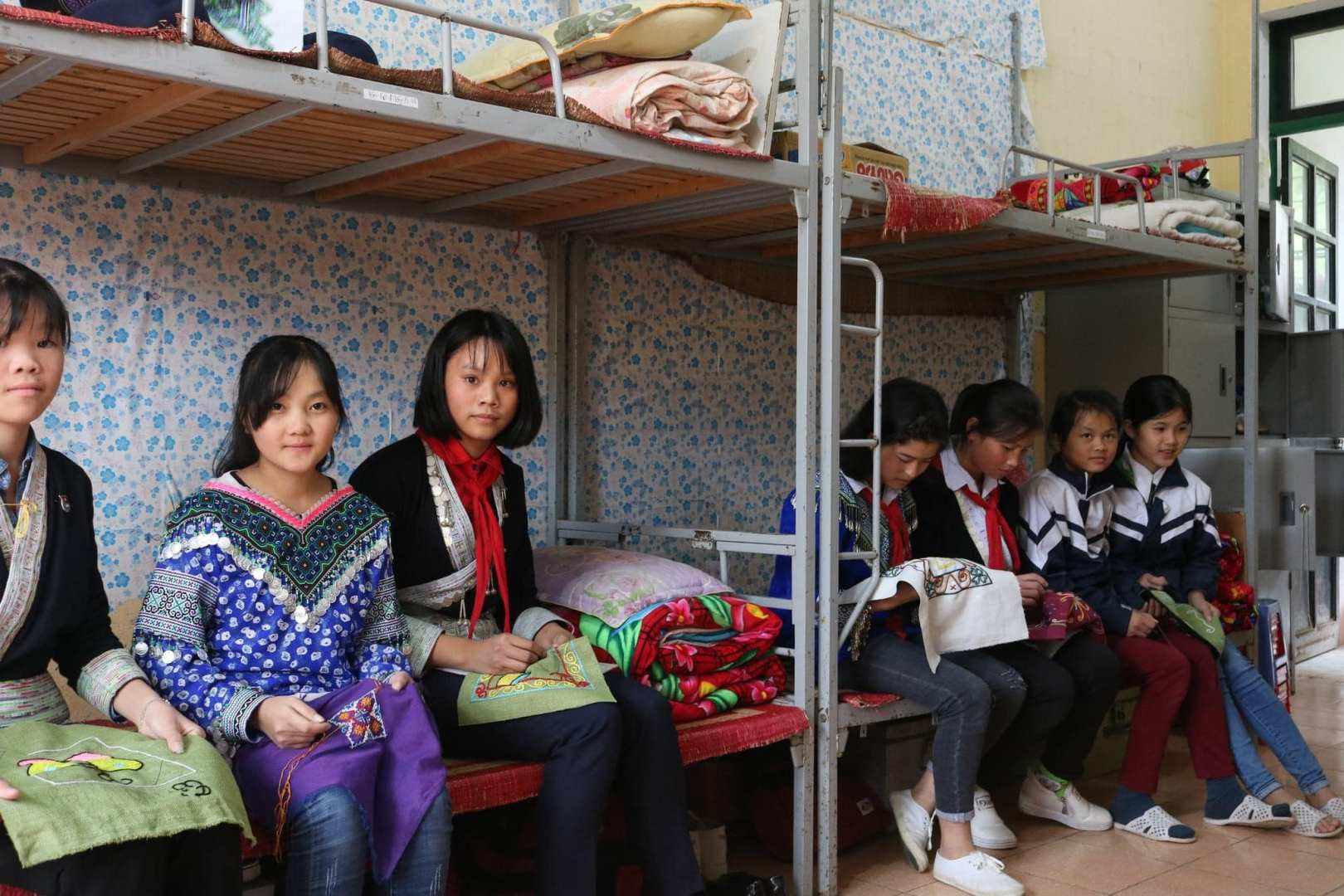
Local data painted a stark picture: 956 general schools serve over 625,000 students across these communes, with 332,000 needing boarding or semi-boarding facilities. Yet, only 59,000 are currently accommodated in 22 boarding and 160 semi-boarding schools, using the State subsidies averaging 23 million VND (920 USD) a year per boarder and 16 million VDB per semi-boarder.
That leaves 273,000 students, nearly 44%, without boarding access, forcing many to trek through forests, mountain passes, and flood-prone areas to attend classes. These gruelling journeys not only disrupt learning but can turn deadly during storm season, when flooding transforms paths into hazards.
 |
 |
 |
 |
 |
~ 59,000 students are currently accommodated in 22 boarding and 160 semi-boarding schools |
 |
 |

In response, the Politburo’s July 18 directive approved the construction of inter-level boarding schools, spanning primary and secondary education, across all 248 border communes.
This is a linchpin of the Party and State’s broader socio-economic development and ethnic policy, designed to boost education, cultivate local talent, and build a pipeline of officials from ethnic and border communities to strengthen national defence-security.

The first phase, launched this year, targets 100 schools to be built or upgraded by August 30, 2026, as test cases for completing all 248 within the next 2-3 years. These facilities will adhere to rigorous technical and safety standards, offering adequate infrastructure to academic learning, physical growth, cultural activities, and safe living conditions.
Swift action, coordinated efforts

On July 27, Prime Minister Pham Minh Chinh chaired a meeting to start the campaign, calling it a major, strategic policy that requires bold action. He set a firm deadline of August 30, 2026, for the first 100 schools to be fully operational, with a review planned to fine-tune the rollout of subsequent phases.
To ensure success, he reiterated the principle of ensuring clear roles, tasks, timelines, deliverables, and authority, calling for coordinated efforts from ministries, the army, the Vietnam Fatherland Front, and mass organisations.


That same morning, ground was broken in Si Pa Phin commune, Dien Bien province, for the first school under the policy. .
Other provinces like Quang Nam, Nghe An, Lao Cai, and Ha Giang are moving fast, hammering out land plans, assessing needs, and lining up teachers and designs.


A continuation of humanitarian models
At the ceremony in Dien Bien, Party General Secretary To Lam underscored the Party’s unwavering view of education as a top national priority and key driver of sustainable development.


This campaign builds on existing efforts, such as the Border Guard Command’s programmes to help children attend school and promote child adoption.
Since 2016, the border guards have assisted tens of thousands of disadvantaged students in remote and ethnic areas with tuition, school supplies, healthcare, and mentorship.


In Dak Lak province, border guard stations have adopted hundreds of children, some living and studying on-site. In Lao Cai’s Bat Xat, the Y Ty border guards not only bring children to school but also run literacy classes for parents and teach Vietnamese to elderly villagers.
Elsewhere, urban-rural partnerships such as the “Sister School” model are gaining traction, linking city schools with border facilities for resource and knowledge sharing. The Vietnam Fatherland Front and various mass organisations have launched fundraising drives and programmes, like “Together to School”. These meaningful acts, whether tangible or symbolic, reflect a heartfelt commitment to the country’s future.
More than a construction project, the campaign is a powerful expression of Vietnam’s political resolve and profound humane spirit, ensuring that children in its remotest corners have access to education, and no one is left behind on the nation’s development path./. VNA
.svg)
