 Vietnamnet.vn

 Podcast



This is not only a matter of political determination but also a strong expectation from the business community for a transparent, secure, and open business environment that plays a crucial role in the country’s overall socio-economic growth.
Positive reforms
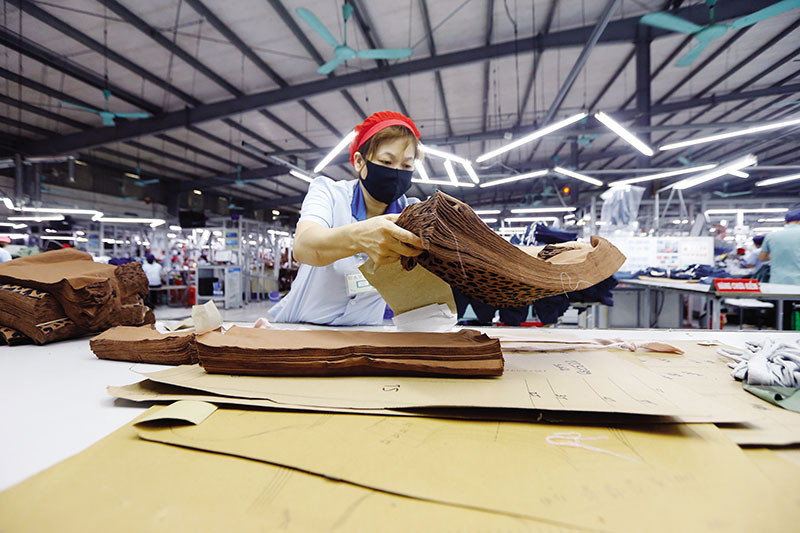
According to assessments by reputable international ranking organizations, Vietnam’s business environment has made significant strides on global indexes, thanks to effective reforms in administrative procedures, policy transparency, and legal stability.
These efforts have helped businesses maintain stable operations, confidently expand their scale, and attract foreign investment, all contributing to sustainable economic growth.
However, to truly transform the business environment into a reliable “launchpad” for enterprises, the government, ministries, sectors, and local authorities must continue to take bold actions to establish a firm foundation for Vietnam’s future economic growth.
Once a small business rooted in a traditional craft village, Thanh Dong Company Limited has now emerged as one of Bac Ninh Province’s leading firms in producing high-quality copper products for the electricity and automation industries, with an annual output exceeding 36,000 tons.
Director Tran Van Hai recalled the company’s early days: “Back then, due to the lack of brand recognition and limited capabilities, Thanh Dong only did subcontracting work for international partners. But thanks to the local government’s aggressive administrative reforms - especially in land, construction, environment, and investment licensing - as well as support for business connections, we were able to overcome market challenges and gradually enhance our capacity. Today, Thanh Dong is a strategic partner of global electronic giants like Foxconn, Luxshare, Powertech, Seojin, and Johnson, and has become deeply integrated into global supply chains.”
Similarly, Nguyen Thi Mong Hoai, Deputy Director of Hoa Tho Garment Factory in Quang Ngai, praised the province’s active support of the textile industry, which faces numerous challenges such as high imported material costs, strict origin requirements, and labor competition.
She shared that the local government has provided favorable long-term land lease policies, workforce training support, and access to low-interest loans. These measures have helped Hoa Tho reduce initial costs, maintain working capital, and invest in technological upgrades to meet international green standards.
Additionally, simplified administrative procedures have saved time and reduced costs, enabling the factory to maintain export orders and boost its competitiveness in global markets.
Vietnam’s business environment has improved significantly in recent years, earning recognition from the business community for becoming increasingly safe, transparent, and efficient, with streamlined procedures.
This aligns with the 2024 Provincial Competitiveness Index (PCI) report, which shows a clear upward trend in provincial economic governance. Only 5% of businesses reported undergoing more than three inspections annually - the lowest rate ever recorded. Meanwhile, 79% of businesses experienced no difficulty completing online administrative procedures.
Moreover, only 2.3% of businesses reported unofficial costs exceeding 10% of revenue, a sharp drop from nearly 13% in 2006.
Driving comprehensive institutional reform
The World Bank’s 2024 Business Ready report ranks Vietnam among the top-performing countries. Vietnam scored 65.47 out of 100 in the “Starting a Business” category, reflecting substantial improvements in streamlining procedures for entrepreneurs.
According to the Q2/2025 Business Confidence Index (BCI) by the European Chamber of Commerce in Vietnam (EuroCham), 72% of European businesses said they are willing to recommend Vietnam as an investment destination with long-term potential, while 78% expect business conditions in Vietnam to improve within the next five years - up 7 percentage points from Q1/2025. These figures reaffirm European investors' strong confidence in Vietnam’s long-term growth.
To further drive comprehensive institutional reform and lay a solid foundation for fast and sustainable development, the government issued Resolution No. 01/NQ-CP and Resolution No. 02/NQ-CP on January 8, 2025. These documents define institutional reform as a “breakthrough among breakthroughs” aimed at creating a freer business environment. The resolutions set specific goals, including increasing the number of new businesses in 2025 by at least 10% compared to 2024 and reducing the rate of business closures to below 10%.
To achieve this, the government has tasked ministries, sectors, and local authorities with reviewing and eliminating unreasonable business conditions, simplifying procedures, and promoting digital transformation in governance.
A key highlight of the government’s institutional reform strategy is the push for comprehensive revisions to the legal system to eliminate “permission-based” mechanisms and shift the mindset from “ban what can’t be managed” to “support and enable development.”
Removing barriers to unleash growth
The goal for 2025–2026 is to cut at least 30% of processing time and compliance costs, and eliminate 30% of unnecessary business conditions. Deputy Secretary-General of the Vietnam Chamber of Commerce and Industry (VCCI) Dau Anh Tuan stated that the business community highly appreciates the government’s efforts to improve the business environment, citing multiple legal reviews aimed at resolving inconsistencies and overlaps in laws related to investment, land, construction, and environment. These reforms have simplified processes and reduced costs for businesses and society.
However, the legal framework for business still lacks consistency, transparency, and practical applicability. Some problematic regulations persist across multiple legal documents and sectors, with some remaining unresolved for over a decade, negatively affecting investment and business operations.
One example highlighted by Mr. Tuan involves land-related investment projects, which are governed by overlapping regulations under the Investment Law, Land Law, Construction Law, and Housing Law. This forces businesses to go through redundant assessments that add no legal value but prolong project timelines, increase costs, and reduce investment appeal.
Even in priority sectors like renewable energy, environmental protection, and science and technology, existing regulations pose significant barriers, requiring investors to proceed with extreme caution.
Therefore, the business community hopes institutional and legal reforms will be accelerated and broadened. This effort must not only focus on removing redundant or conflicting regulations but also involve actively listening to feedback from businesses to ensure practical effectiveness.
Years of dedication by the entire political system - from central to local levels - have brought Vietnam closer to its goal of building a transparent, business-friendly, and internationally competitive environment.
Yet to sustain growth momentum and meet business expectations, the government and local authorities must continue pushing for administrative reform, promptly completing legislation, and creating breakthrough policies to encourage private sector growth in key industries.
In parallel, a mindset shift is needed among leaders and civil servants at all levels - from a controlling mentality to one of service, characterized by initiative, openness, and readiness to listen.
These are the core factors that will create a strategic breakthrough in Vietnam’s business environment, guiding the country toward rapid and sustainable economic development in the coming years.
PV
.svg)
