 Vietnamnet.vn

 Podcast



Deputy Prime Minister Ho Quoc Dung made the remarks at the seventh Regional Logistics Forum, themed “Creating new development space for logistics in the Red River Delta,” held in the northern port city of Hai Phong.
The forum was jointly organized by the Vietnam Chamber of Commerce and Industry (VCCI) and the Hai Phong city government.
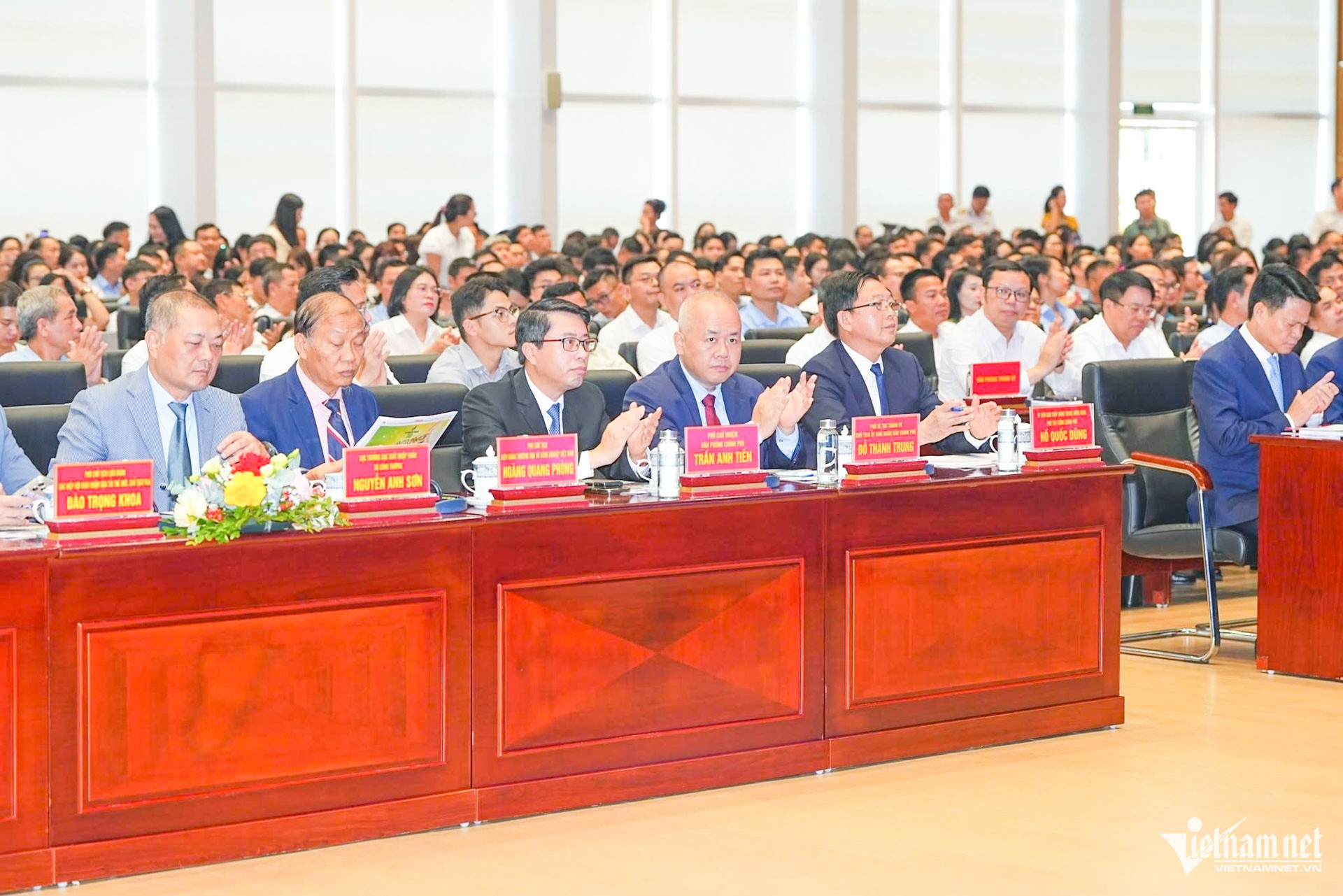
VCCI Chairman Ho Sy Hung said in his opening remarks that Vietnam’s logistics industry has grown by an average of 14-15% annually in recent years, around twice the global average. The market is valued at approximately $40-42 billion, equivalent to about 10% of the country’s GDP.
The Red River Delta, a gateway connecting northern Vietnam with the rest of the country and international markets, is increasingly establishing itself as an important growth engine for the logistics industry.
According to Hai Phong Party Secretary Le Ngoc Chau, the city’s logistics services grew by more than 10% annually on average between 2021 and 2025, contributing about 13.5% of its gross regional domestic product. Cargo throughput at Hai Phong’s seaports has continued to increase, making an important contribution to the city’s economic development.
Under its development plan through 2030, Hai Phong is expected to have 73 seaport berths with a combined length of more than 23 kilometers, as well as over 300 inland waterway ports and wharves. The Lach Huyen port area will continue to be expanded, reinforcing its role as a major deep-water port in northern Vietnam and a hub for international trade.
The city is also accelerating the development of logistics databases, digital transformation, the digital economy and e-commerce, while strengthening connections between different modes of transport. Hai Phong aims to develop smart ports and logistics centers alongside higher-value-added logistics services.
Logistics as a key part of economic infrastructure
Deputy Prime Minister Ho Quoc Dung said that as trade expands, supply chains undergo major changes and demands for faster, more cost-efficient transportation increase, logistics can no longer be regarded simply as a supporting service.
Instead, logistics should be viewed as an important component of Vietnam’s national economic infrastructure, directly affecting the competitiveness of goods, businesses and the wider economy, he said.
Vietnam’s logistics sector has grown by an average of 14-16% annually in recent years and directly contributes around 4.5-5% of GDP. More than 34,000 businesses nationwide currently operate in the sector.
Dung, however, pointed to several persistent bottlenecks. Freight transport remains heavily dependent on roads, the capacity of other major transport modes has yet to be fully utilized, links between transport infrastructure, production areas, warehouses and seaports remain limited, and logistics costs are still high.
“These issues require us to continue changing both our thinking and our actions, moving from ‘management and support’ toward ‘facilitation, service and development,’” he said.
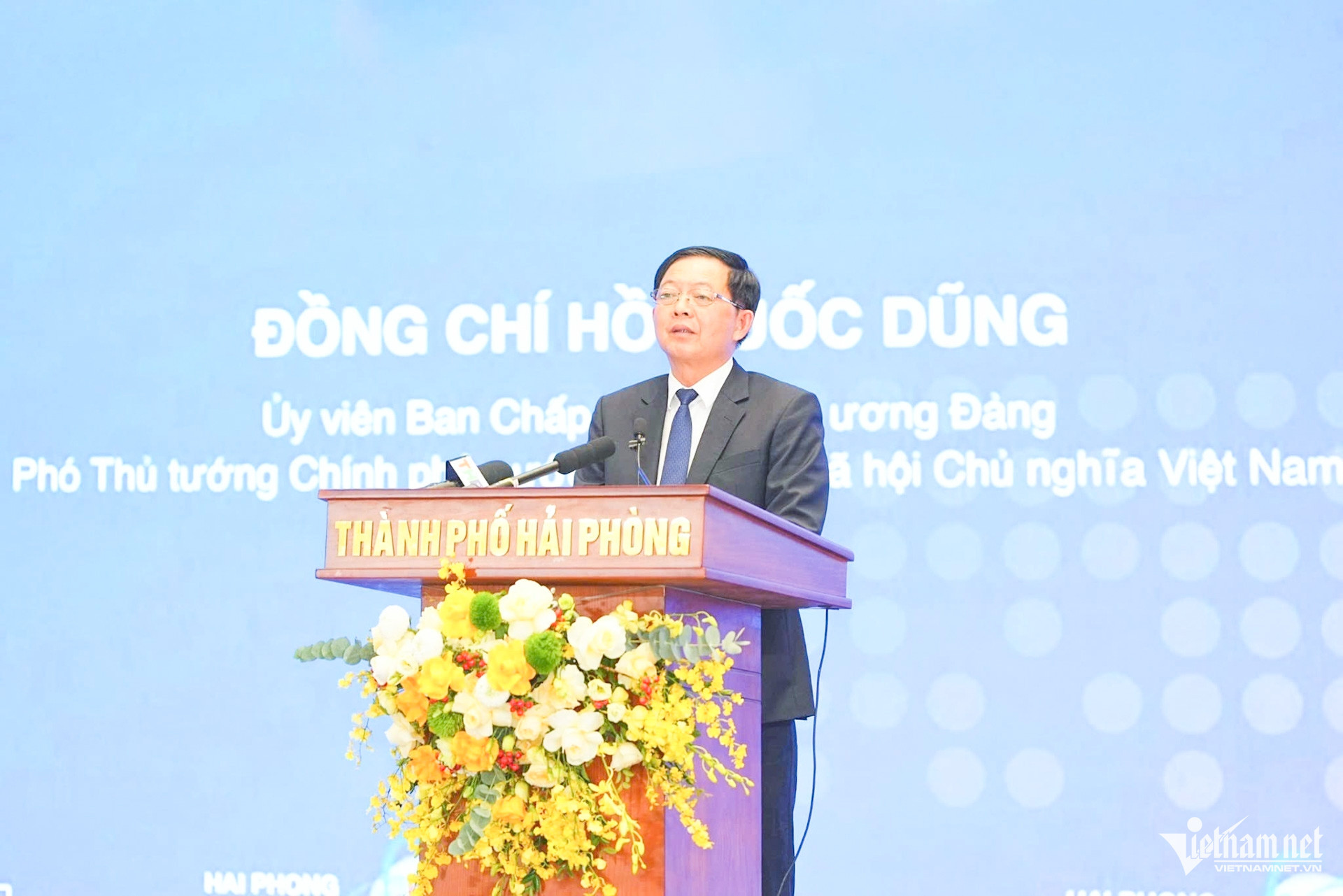
Under Vietnam’s logistics services development strategy for 2025-2035, with a vision to 2050, the country aims for average annual logistics growth of 12-15%, while gradually reducing logistics costs to around 12-15% of GDP. The strategy also seeks to accelerate digital and green transformation and establish modern logistics centers.
The Deputy Prime Minister called for logistics infrastructure to be developed in coordination with national, regional and local transport networks, with stronger connections among road, rail, maritime, inland waterway and air transport.
He also called for further improvements to the regulatory framework covering logistics, multimodal transport, maritime and inland waterways, customs, trade, electronic transactions and investment.
Dung said Vietnam needs to shift from developing logistics along administrative boundaries toward organizing logistics networks around economic regions, economic corridors and supply chains.
“Logistics has no administrative boundaries, so individual localities cannot build closed logistics systems of their own. They need to coordinate, connect and share resources effectively,” he said.
Hai Phong urged to strengthen its role as a regional logistics hub
For the Red River Delta, Dung called for comprehensive planning, a more rational distribution of production, and the development of transport, urban and logistics infrastructure with strong regional connectivity.
Local governments should coordinate logistics development around major economic corridors, including the North-South corridor, the Lao Cai-Hanoi-Hai Phong-Quang Ninh corridor and the Ninh Binh-Nam Dinh-Thai Binh-Hai Phong-Quang Ninh coastal belt.
The goal is to create integrated supply chains while limiting fragmented, overlapping and wasteful investment.
For Hai Phong specifically, the Deputy Prime Minister called on the city to continue playing a pioneering role and study an integrated development model combining seaports, logistics, industry, trade and urban development.
He highlighted the Lach Huyen and Nam Do Son areas, linked with the Dinh Vu-Cat Hai Economic Zone and the Hai Phong Free Trade Zone, as particular areas of focus.
Dung said Hai Phong should regard its international gateway port system and multimodal logistics network as distinctive competitive advantages and important long-term growth drivers.
The business community, meanwhile, should take a more active role in policymaking, technology adoption and workforce development, while improving service quality and strengthening partnerships to participate more deeply in global supply chains.
The government will continue improving institutions, developing infrastructure and enhancing the investment and business environment to create favorable conditions for domestic and international companies to make long-term, sustainable investments in Vietnam.
Hoai Anh - Bao Khanh
.svg)
