 Vietnamnet.vn

 Podcast



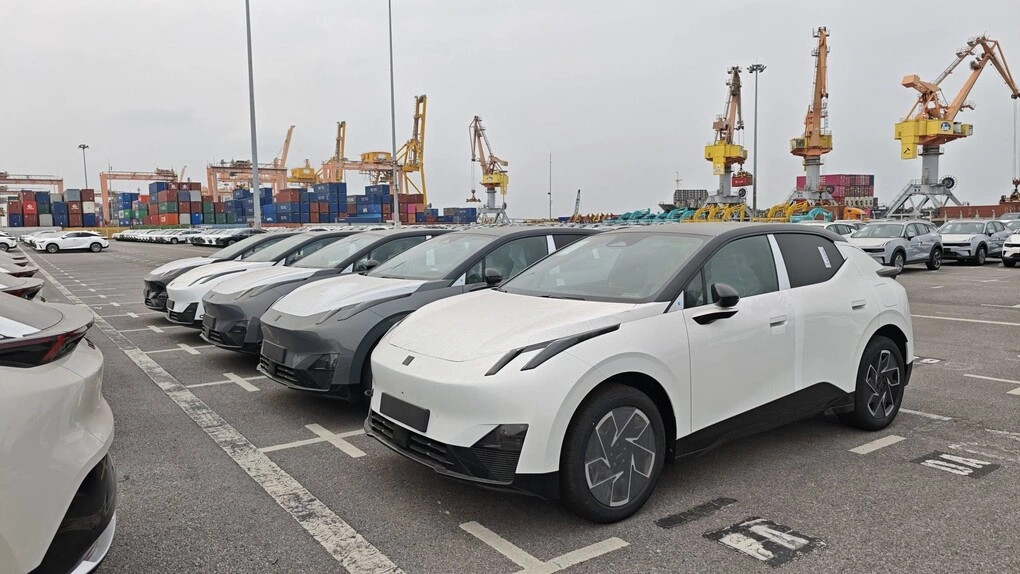
Vietnam imported 19,346 completely built-up vehicles in August, worth nearly $450 million, according to customs data.
That represented declines of 30.1% in volume and 24.7% in value from July, when imports reached 27,686 vehicles worth $597 million.
Compared with August 2025, however, imports were still up 18.9% in volume and 23.8% in value.
Over the first eight months of 2026, Vietnam imported a total of 168,033 completely built-up vehicles worth more than $3.9 billion, increases of 22% in volume and 29.5% in value from a year earlier.
Indonesia, Thailand and China remained the three largest suppliers of completely built-up vehicles to Vietnam. Together, they shipped 159,112 vehicles, accounting for 94.7% of total imports during the period.
Indonesia led by volume with 70,366 vehicles worth $1.011 billion, followed by Thailand with 44,411 vehicles worth nearly $923 million.
China ranked third by volume but first by import value.
Vietnam imported 44,335 completely built-up vehicles from China in the first eight months, worth about $1.567 billion, up 45.9% in volume and 58.8% in value year on year.
Chinese car imports surge in volume and value
The number of Chinese vehicles imported in the first eight months of 2026, while still below imports from Indonesia and Thailand, was already equivalent to more than 92% of the total for all of 2025.
Vietnam imported 47,895 completely built-up vehicles from China in 2025, compared with 31,112 in 2024 and just 11,002 in 2023.
That means imports from China in the first eight months of 2026 were already more than four times the 2023 level and nearly 1.5 times the 2024 figure.
Import value has risen even faster.
The roughly 44,300 Chinese vehicles imported during the period were worth nearly $1.6 billion, about $644 million more than vehicles imported from Thailand despite the two countries supplying similar numbers of cars.
The difference is reflected in the average import value per vehicle. Based on total import value and volume, a vehicle from China averaged about $35,300, compared with roughly $20,800 for vehicles from Thailand and $14,400 for those from Indonesia.
Product mix is one factor behind the difference. Vehicles imported from China span a broad range of categories and price segments, from mass-market models to higher-priced SUVs and from gasoline and hybrid vehicles to electric cars.
Imports from China also include significant numbers of higher-value specialized vehicles used for construction and other purposes.
Domestic production maintains a substantial lead
Vietnam's auto market is seeing strong growth in imports, but domestic vehicle production is expanding even faster.
According to the National Statistics Office, domestic manufacturers produced an estimated 47,000 vehicles in August, up 5.9% from the previous month and 24.3% from August 2025.
Over the first eight months, domestic automobile production reached about 371,500 vehicles, up 24% year on year.
That was around 2.2 times the number of completely built-up vehicles imported during the same period, indicating that locally produced and assembled cars continue to account for a substantially larger share of supply.
Domestic output growth of 24% also slightly outpaced the 22% increase in imported vehicles.
The figures suggest that automakers with production facilities in Vietnam are expanding supply to meet market demand rather than relying solely on imports.
VinFast, Hyundai Thanh Cong, THACO and other manufacturers continue to play important roles in maintaining supplies of locally produced and assembled vehicles.
At the same time, rising imports are intensifying competition as manufacturers bring an increasingly diverse range of vehicles into Vietnam from Indonesia, Thailand and China.
For automakers, competition is playing out across pricing, production volumes, localization rates and the ability to respond quickly to market demand.
For consumers, growing supplies of both imported and domestically produced vehicles are putting greater competitive pressure on automakers to adjust prices, sales policies and product lineups as the market enters the peak final months of the year.
Hoang Hiep
.svg)
