 Vietnamnet.vn

 Podcast



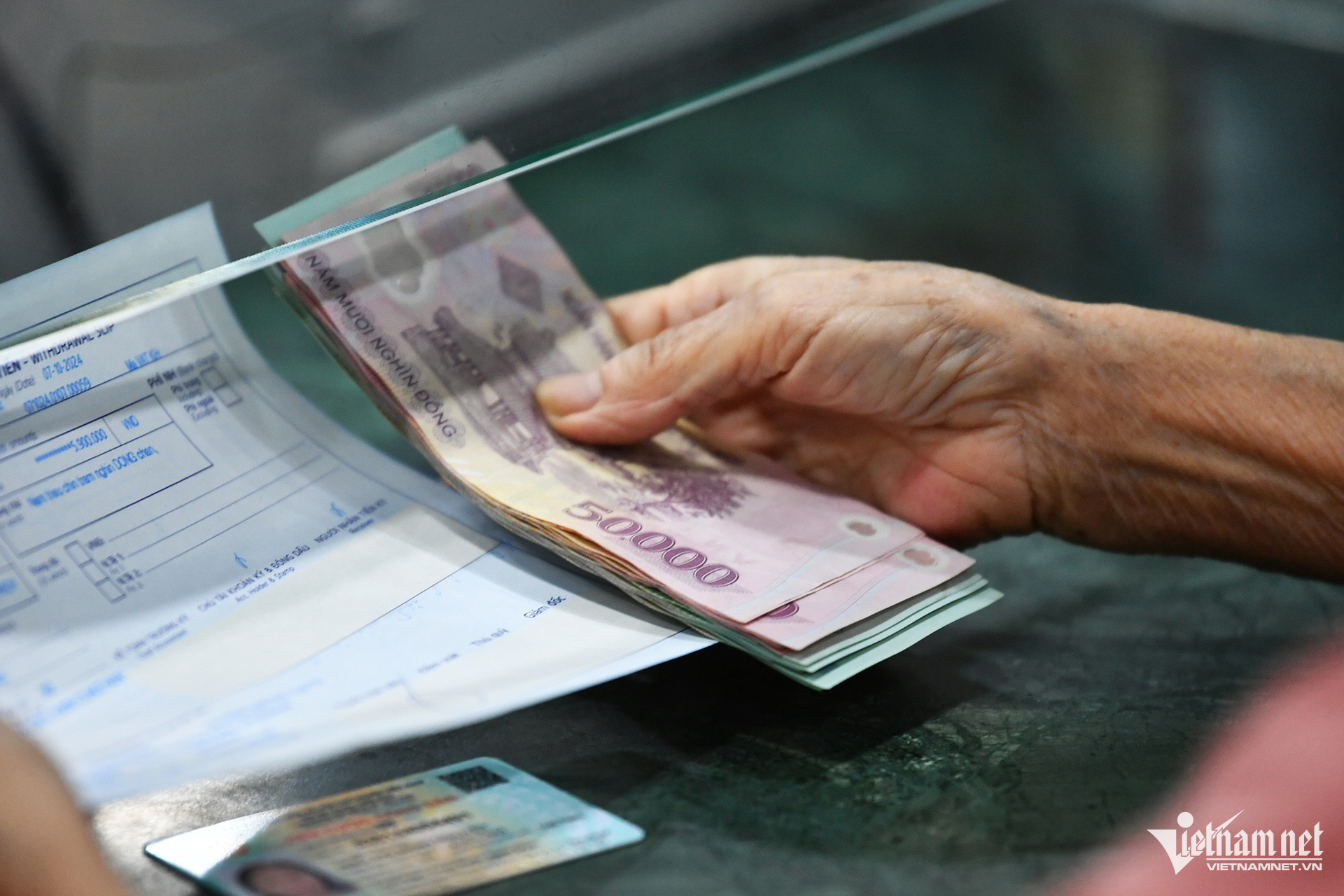
The Ministry of Home Affairs is currently working with relevant ministries and agencies to submit a proposal to competent authorities, seeking approval to increase the base salary in 2026 as part of broader efforts to improve the livelihoods of public employees and ensure alignment with the country’s socio-economic conditions.
This was stated in the Ministry’s official response to a petition from voters in Ninh Binh Province, who had raised concerns over policies affecting commune-level officials and part-time workers at village and hamlet levels - particularly in the context of Vietnam’s ongoing implementation of a two-tier local government model and efforts to streamline administrative structures.
According to the petition, the volume of work at the grassroots level has surged due to the new two-tier governance framework, placing increasing demands on local cadres. Despite this, salaries and allowances for commune-level civil servants and non-specialist workers remain low, falling short of the responsibilities they shoulder. This discrepancy has made it difficult to attract and retain capable and dedicated personnel.
Voters urged the government to promptly adjust allowances and finalize support policies for part-time workers, and to issue clear guidance on organizational restructuring, including the management of mass organizations and the roles of grassroots officials following administrative streamlining. They also called for a unified national framework for base salary increases and additional allowances for commune-level officials to ensure long-term stability and equity.
New decree under development for villages and residential groups
In response, the Ministry of Home Affairs confirmed it is in the process of drafting a decree on the organization and operations of villages and residential groups, as well as the policies governing non-specialist personnel, following instructions from the Prime Minister.
To ensure the policy is well-informed, the Ministry has requested localities to conduct reviews and assessments of existing regulations. Based on these findings, it is comprehensively reviewing current organizational models and related policies to serve as the foundation for the new decree.
This draft decree is being developed in alignment with the roadmap to restructure villages and residential groups by May 31, in accordance with the Political Bureau’s directive. The goal is to maintain an efficient administrative apparatus that still meets the needs of residents at the grassroots level.
Restructuring mass organizations
Regarding the merger and consolidation of mass organizations, the Ministry noted that these efforts are being carried out under current legal provisions and central-level directives, with the aim of standardizing administrative structures following the reorganization of local government units.
For mass organizations that are not assigned duties by the Party or the State, the processes of splitting, merging, or dissolving will follow Decree No. 126/2024 on the organization, operation, and management of associations, and Decree No. 129/2025, which clarifies the division of authority between the two levels of local government under the Ministry’s jurisdiction. Under this framework, commune-level People’s Committee chairpersons have the authority to process administrative procedures for associations operating within their communes.
To ensure consistent implementation, the Ministry issued Official Letter No. 1911, providing detailed instructions on jurisdiction, documentation, and procedures for merging or consolidating mass organizations that are not assigned by the Party or the State, and that operate at the provincial or commune level.
As for associations with official mandates from the Party or State, restructuring and consolidation are to be conducted under Conclusions No. 174/2025, No. 177/2025, and No. 178/2025 from the Political Bureau. These directives are tailored to suit the two-tier local governance model and the overarching aim of streamlining administrative machinery. Implementation is guided by the Central Committee of the Vietnam Fatherland Front to ensure unified, efficient operations at the local level.
On salary policy reform
The Ministry of Home Affairs noted that wage reform efforts have already been initiated in line with Central Resolution No. 27. From July 1, 2024, the base salary was increased from 1.8 million VND to 2.34 million VND (approximately 95 USD/month), helping to improve living standards for public employees and boosting work motivation.
In the coming period, the Ministry will continue to report to competent authorities on the rollout of new salary structures and updated allowance schemes. In the immediate term, it will coordinate with other ministries to propose another increase to the base salary in 2026. The adjustment will be based on consumer price indices, economic growth rates, and the state budget’s capacity.
Vu Diep
.svg)
