 Vietnamnet.vn

 Podcast



According to information released by the ministry on April 22, a draft decree detailing the implementation of several provisions of the Population Law has been submitted to the Ministry of Justice for appraisal, with plans to present it to the Government later this month.
Three groups of women eligible for financial support
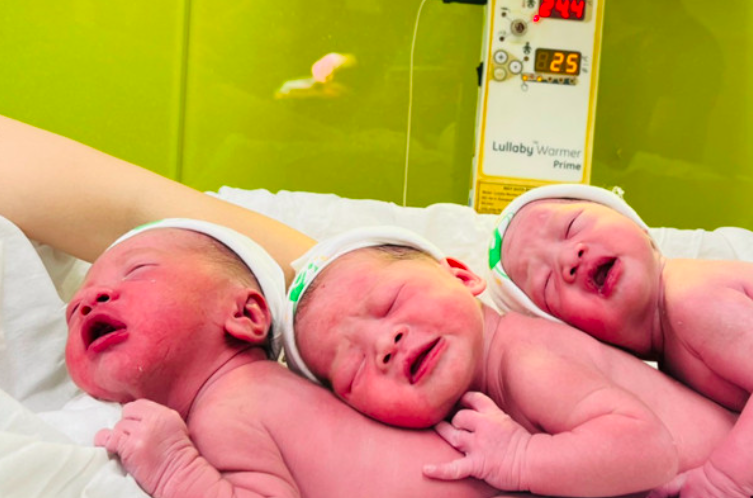
A key highlight of the draft decree is the proposal to provide financial assistance for childbirth to three groups of women, with a minimum level of VND2 million (US$80) per case. These include women from very small ethnic minority groups, women living in provinces and cities with fertility rates below the replacement level of 2.1 children per woman, and women who have two children before the age of 35.
Under the proposal, a woman living in a low-fertility locality or belonging to a very small ethnic minority group would receive at least VND2 million (US$80) for each childbirth. If she has two or three children, the total support would amount to VND4 million (US$160) and VND6 million (US$240), respectively.
In cases where a woman falls into multiple eligible categories, she would receive the full combined support corresponding to each group.
Speaking to VietNamNet on April 22, a representative from the Population Department under the Ministry of Health explained that this means a woman who belongs to a very small ethnic minority group, lives in a low-fertility area, and has two children before the age of 35 could receive VND6 million (US$240) for a single childbirth.
According to estimates by the drafting agency, the total annual budget required for this policy would exceed VND1.8 trillion (US$74 million), to be covered by local government budgets. The draft also allows provincial People’s Councils to set higher support levels. Payments, either in cash or via bank transfer, are expected to be administered by commune-level People’s Committees.
In practice, several localities have already implemented financial support policies for women who have two children before the age of 35. Some areas offer higher levels than those proposed by the Ministry of Health. For example, Ho Chi Minh City, which has recorded the lowest fertility rate in the country for many years, currently provides support ranging from VND3 million to VND5 million (US$120-200). To date, nearly 9,000 women have received this benefit, including some from areas merged from Ba Ria - Vung Tau and Binh Duong.
If approved, the provisions in the draft decree are expected to take effect from July 1.
Fertility decline may lead to negative population growth
Vietnam’s fertility rate has been declining below the replacement level for several consecutive years, dropping from 2.11 children per woman in 2021 to 1.91 in 2024 and slightly rising to 1.93 in 2025. This downward trend has spread across multiple regions.
Projections suggest that a “worst-case” scenario could unfold if fertility continues to decline. By 2036, Vietnam would exit its golden population period; by 2044, the working-age population would begin to shrink; and by 2051, the country’s population could start experiencing negative growth. Toward the end of the projection period (2069-2074), the average annual population decline could reach approximately 461,000 people.
As a result, policies aimed at encouraging childbirth are being actively considered and implemented.
Sharing his view with VietNamNet, Professor Giang Thanh Long, a senior expert in population and development at the National Economics University in Hanoi, said that such financial support measures primarily serve as a form of encouragement and demonstrate local authorities’ concern. However, he noted that the decision to have additional children does not depend solely on the amount of financial assistance.
Vo Thu
.svg)
