 Vietnamnet.vn

 Podcast



Le Minh Tri, Secretary of the Party Central Committee and Standing Deputy Head of the Central Internal Affairs Commission, has revealed that many large-scale corruption cases with unprecedented complexity and organization - resembling interlinked “ecosystems” - were discovered and handled during the 13th Party Congress term.
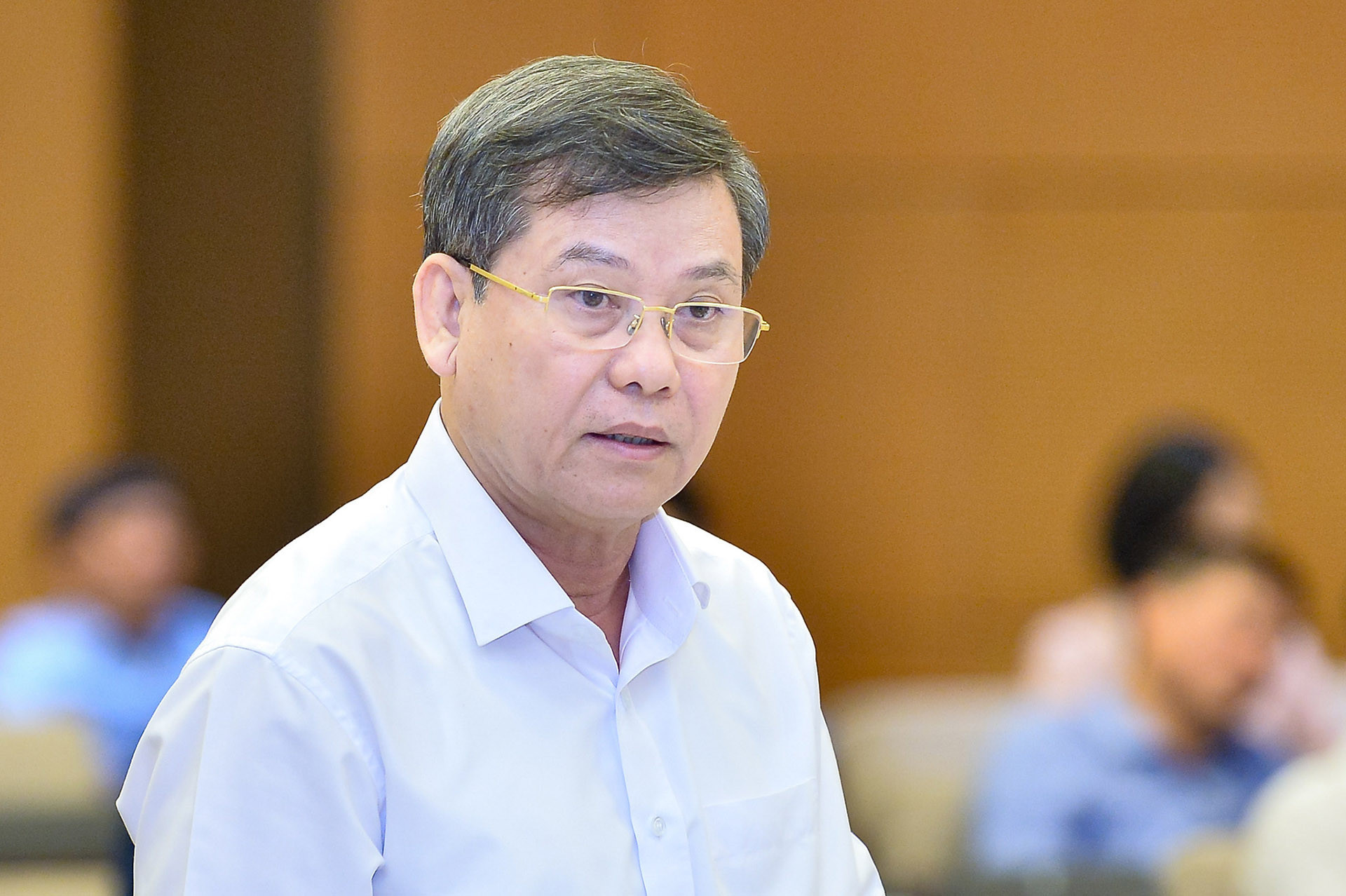
Le Minh Tri: We must broaden asset monitoring and perfect cashless transaction systems. Photo: National Assembly
The Central Executive Committee’s report to the 14th National Party Congress emphasized that the anti-corruption campaign was carried out with consistency, determination, and comprehensiveness. It achieved notable results, strengthening public trust and reinforcing Party discipline and rule of law.
The Congress documents continued to highlight the importance of exemplary leadership from Party officials, especially top leaders. They reaffirmed the commitment to upholding Party discipline, state rule of law, and a corruption-free, civil, secure, and humane society focused on development.
On the occasion of the 14th Party Congress, Le Minh Tri spoke in an interview about the key achievements in the fight against corruption, wastefulness, and misconduct during the 13th Congress, as well as the priorities ahead.
Anti-corruption has become a national movement
According to Tri, the anti-corruption campaign in the 13th Party term was steered directly and comprehensively by the Party, particularly the Politburo and the Central Steering Committee for Anti-Corruption, led by the General Secretary. It was implemented methodically, persistently, and with significant breakthroughs.
Corruption, waste, and misconduct were increasingly contained and pushed back. The efforts contributed to building a cleaner, stronger Party and political system. Public confidence grew, and the fight against corruption transformed into a vigorous movement that extended from the central government to local levels.
Discipline within the Party and control over power have been significantly strengthened. Disciplinary actions were enforced across Party channels, state administrative systems, and through criminal prosecution where appropriate.
Tri revealed that authorities had exposed many large-scale corruption cases involving numerous individuals, severe consequences, and unprecedented structures. These operations formed closed networks - or “ecosystems” - spanning banks, securities firms, valuation agencies, and notary offices, with hundreds of affiliated companies both domestically and abroad. These entities colluded to manipulate stocks and bonds, rig auctions and tenders, distort public investment flows, and exploit emergency situations such as the COVID-19 pandemic for personal gain.
Asset recovery of stolen or lost state property has markedly improved in both speed and effectiveness. Coordination between Party inspection bodies and judicial agencies has also tightened across all levels, further enhancing the impact of anti-corruption efforts. According to Tri, this represents a critical achievement in Party building and reform during the last term.
Plugging legal loopholes and strengthening institutional safeguards
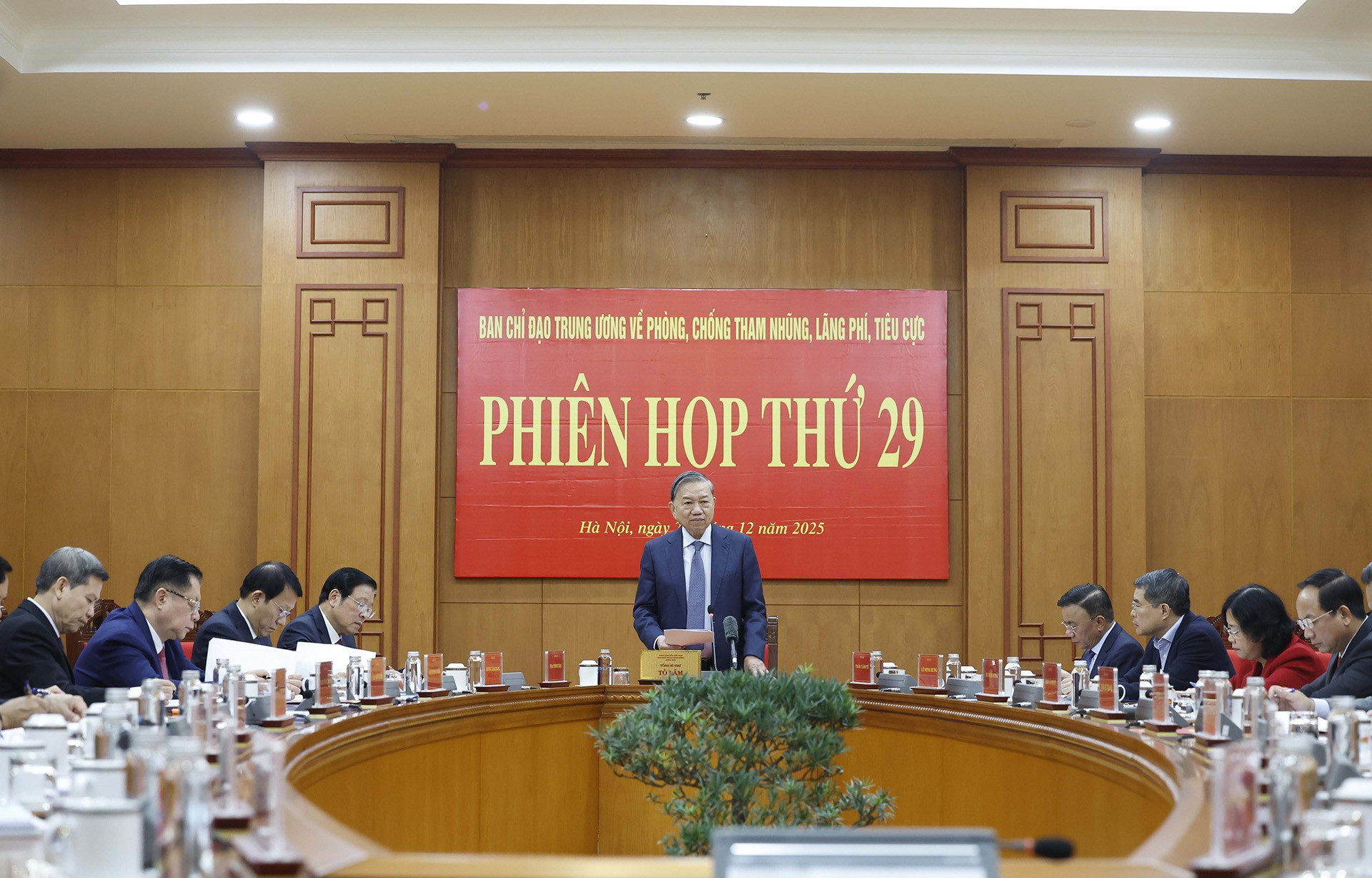
The 29th session of the Central Steering Committee for Anti-Corruption in December 2025. Photo: VNA
Looking ahead, Tri said Vietnam’s anti-corruption work must align with the goals of the 14th Party Congress. First and foremost, he stressed the need to reinforce the Party’s direct and comprehensive leadership, while also empowering Party organizations and leaders across all sectors.
Discipline and order must be upheld, and legal responses must be both strict and humane, persuasive yet developmental - contributing to sustained double-digit economic growth in the coming years.
To achieve this, Tri emphasized the need for a paradigm shift in mindset and methodology. The anti-corruption agenda must go hand-in-hand with legal and institutional reforms, ensuring synchronization, feasibility, and responsiveness to real-world dynamics. These reforms must also align with Resolution No. 66 of the Politburo on legislative innovation.
He called for focused research and development of specific criteria and mechanisms to realize the goals of Resolution No. 68 on private sector development, tapping into this vast resource to drive national progress in a new era.
Tri also stressed the need to address bottlenecks in land-related investment projects to unlock resources, and to promptly amend or repeal problematic laws that hinder implementation or enable corruption.
“We must swiftly close the legal loopholes that bad actors exploit,” he stated. “And we must dismantle regulatory deadlocks that hinder economic restructuring, creating a sound legal framework and growth momentum for rapid and sustainable development.”
Prevention first: transparency, recovery, and legal innovation
Tri urged stronger preventative measures, especially against waste. He underscored the importance of empowering prosecutors to initiate civil and administrative lawsuits in defense of public and state interests. Voluntary cooperation and damage recovery should be encouraged and recognized as grounds for more lenient treatment, focusing on early detection rather than just criminal punishment.
Transparency in public life must be expanded. A clear roadmap is needed to promote cashless transactions and to broaden asset monitoring coverage across society.
He also called for the continued development of anti-corruption institutions, avoiding overlapping mandates and ensuring real efficiency from central to local levels.
At the same time, he said, it’s critical to adopt policies and laws that protect and incentivize innovation and responsible risk-taking. A safe legal corridor should be established for those who innovate and contribute to national development, alongside mechanisms to sanction those who shirk responsibility.
Tri also emphasized the need to elevate public education and awareness campaigns, embedding a culture of integrity across all levels of society.
“Importantly,” he concluded, “we must combat corruption and misconduct even within anti-corruption agencies themselves. These bodies must remain irreproachable in both function and character - they must embody integrity to be true guardians of integrity.”
Tran Thuong
.svg)
