 Vietnamnet.vn

 Podcast



More than 11,000 surplus public land and property assets across Vietnam still require processing. Government Resolution No. 31/2026/NQ-CP introduces a series of special mechanisms aimed at bringing these assets into productive use as quickly as possible and preventing waste.
Accelerating the use of surplus public property
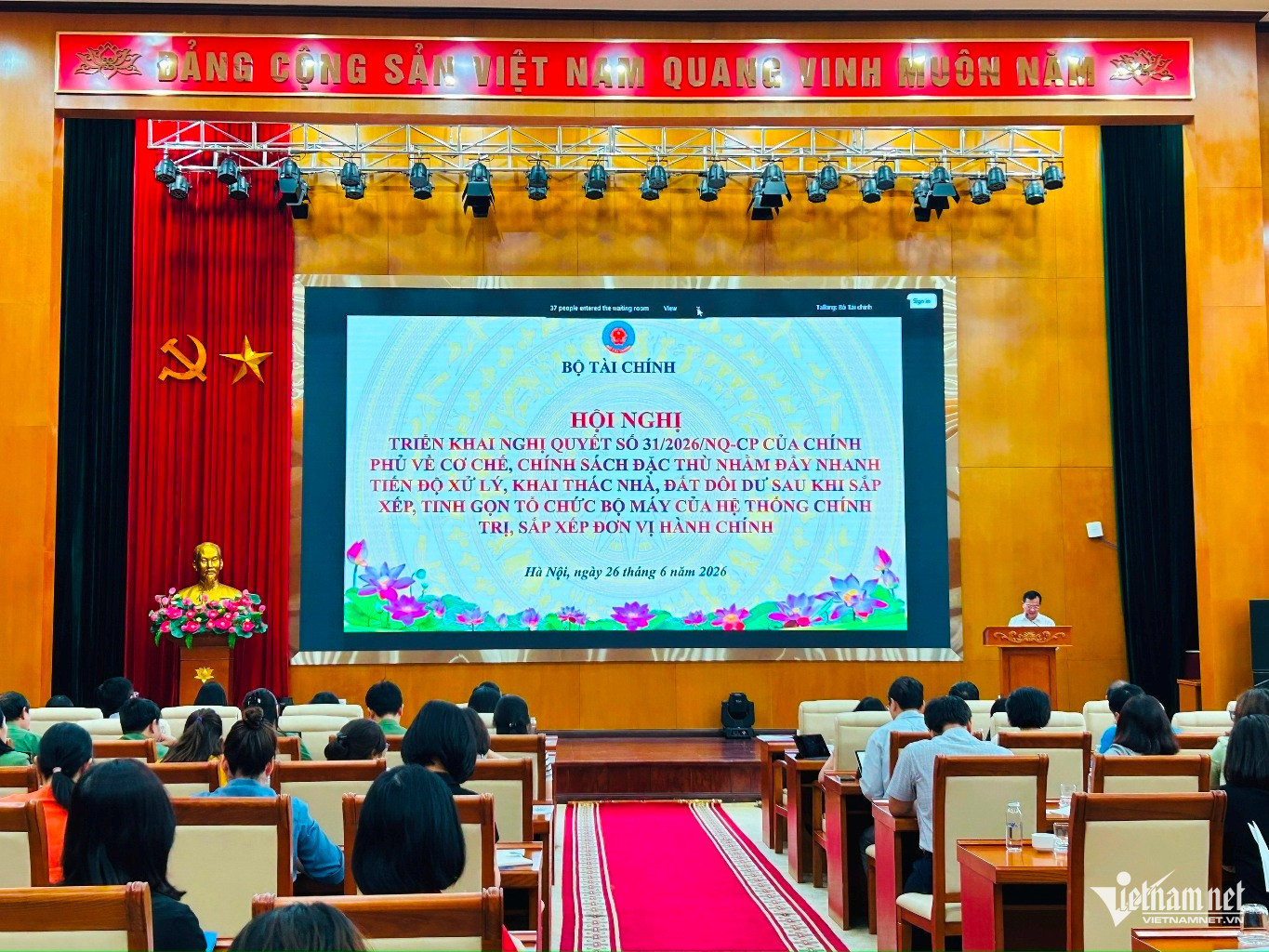
On June 26, the Ministry of Finance held a conference to implement Government Resolution No. 31 on special mechanisms and policies designed to accelerate the handling of surplus public land and buildings so they can be put to effective use.
Speaking at the conference, Deputy Minister of Finance Ta Anh Tuan said that managing, reorganizing and handling public assets - particularly surplus land and buildings - is of particular importance as Vietnam restructures the political system and reorganizes administrative units.
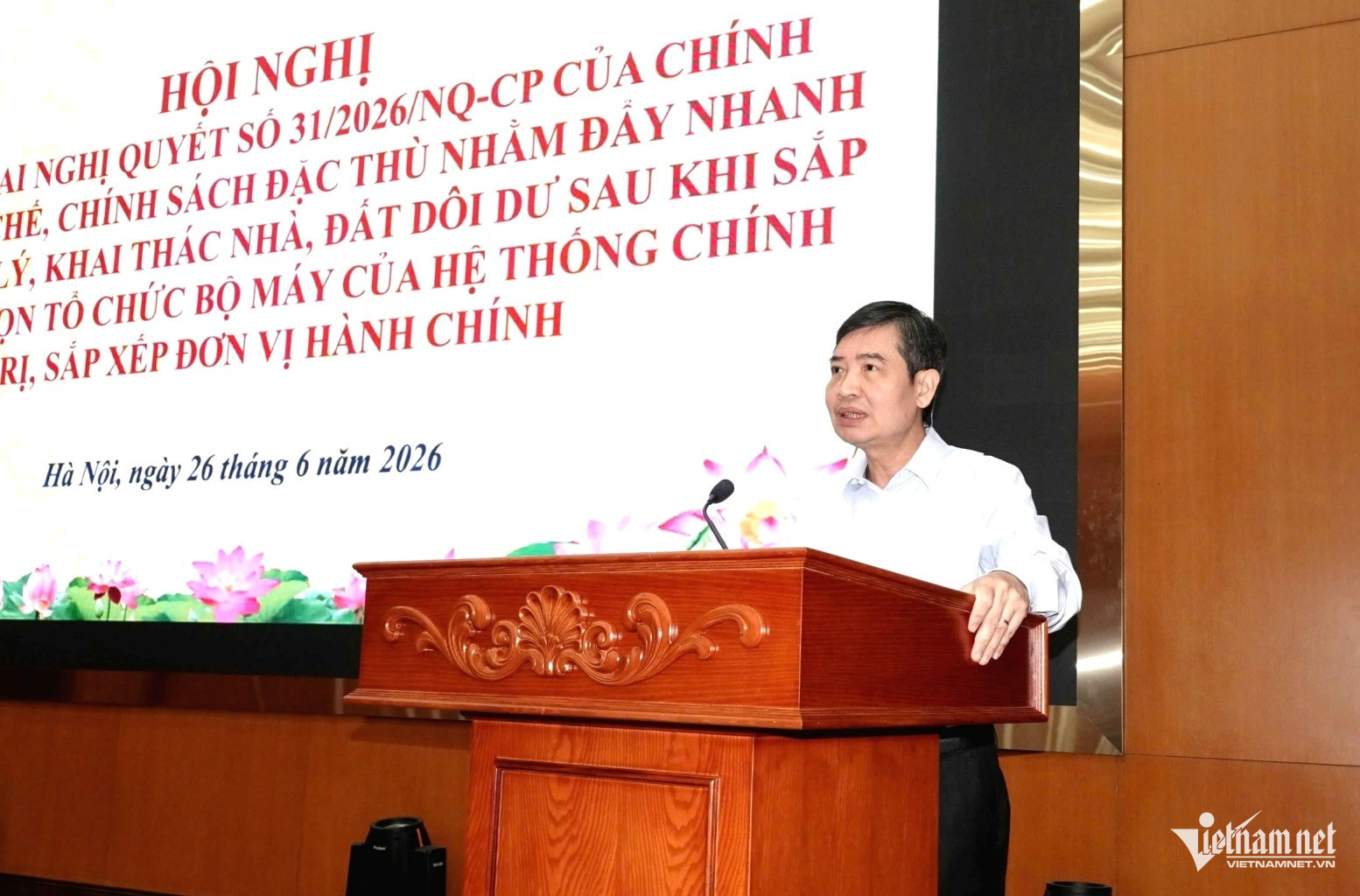
According to him, this is not only necessary to ensure adequate facilities for the newly reorganized administrative system but also serves to unlock public resources, promote thrift, prevent waste and support socio-economic development.
In recent years, ministries, government agencies and local authorities have worked together to ensure that facilities required for the new administrative model are largely in place, avoiding disruptions to public administration and public services. Initial progress has also been made in reviewing and handling surplus land and buildings despite the enormous workload, tight timeline and unprecedented nature of the task.
However, according to reports compiled by ministries, agencies and local governments, more than 11,000 public land and property assets that have already been transferred to local authorities still require further processing before they can be effectively utilized.
Deputy Minister Ta Anh Tuan stressed that the Party and the State expect more than simply completing administrative procedures or assigning management responsibilities. Every surplus public property must be put to productive use, generating new value for socio-economic development. Public assets, he emphasized, must not be left vacant, deteriorate or become a source of waste and financial loss.
Resolution No. 31 took effect on June 24, 2026, with the objective of accelerating the processing and utilization of surplus land and buildings so that these assets can be brought into effective use as quickly as possible while minimizing vacancy, deterioration and waste.
Greater decentralization and fewer administrative procedures
The resolution introduces a range of special mechanisms and policies to accelerate the management and utilization of surplus public land and buildings resulting from administrative restructuring.
One of the most notable changes is greater decentralization of authority to provincial People's Committee chairpersons. They are authorized to decide how surplus public properties within their jurisdictions are managed and utilized, revise previous decisions on allocation, transfer and reassignment where appropriate, and determine operating expenditure norms for organizations responsible for managing public housing.
In addition, the heads of public housing management organizations and commune-level People's Committee chairpersons are authorized to approve rental rates directly, replacing the previous requirement to hire valuation firms and submit pricing proposals to provincial authorities.
According to the Ministry of Finance, stronger decentralization will shorten processing times, increase local autonomy and eliminate unnecessary administrative steps.
The resolution also removes a number of administrative procedures. Organizations responsible for managing public housing may now independently develop plans for managing and utilizing assigned properties without having to amend or supplement existing implementation plans.
For properties that have already been officially transferred to local authorities and assigned to public housing management organizations, no additional asset transfer procedures are required.
Notably, the resolution allows certain surplus properties to be put into use even if land use right certificates have not yet been issued or have been lost. It also permits surplus land and buildings to be utilized without first revising land-use plans or zoning, allowing assets to be put into operation more quickly.
For leasing activities, the maximum lease term has been extended from five years to ten years, with multiple renewals permitted if legal conditions are met. The resolution also introduces competitive price quotations as an alternative leasing method with simpler procedures than formal auctions while maintaining transparency and openness.
In addition, the resolution provides flexible mechanisms for certain special cases. These include allowing outdated structures to be demolished and converted into parks, playgrounds, cultural facilities or innovation and startup spaces, as well as permitting changes in property use before land-use planning adjustments are formally completed.
The special mechanisms under Resolution No. 31 will remain in effect for five years. After the first year of implementation, the Ministry of Finance will lead a review of the results and report to the Government as the basis for refining relevant legislation.
Nguyen Le
.svg)
