 Vietnamnet.vn

 Podcast



The Vietnamese government has issued Decree No. 297/2026 defining the functions, responsibilities, powers and organizational structure of the Ministry of Ethnic and Religious Affairs.
Under Decree No. 297/2026, the ministry is a government agency responsible for state management of ethnic affairs, beliefs and religions, as well as public services within the sectors and fields under its authority in accordance with the law.
The ministry comprises the following units: the Department of Planning and Finance; Department of Personnel and Organization; Department of Legal Affairs; Department of International Cooperation; Department of Communications for Ethnic and Religious Affairs; Ministry Office; Government Committee for Religious Affairs; Department of Ethnic Strategy and Policy; Digital Transformation Center; Academy of Ethnic and Religious Affairs; VietNamNet Newspaper; and the Journal of Ethnic and Religious Studies.
The first eight are administrative units assisting the minister in performing state management functions and internal administration. The remaining four are public service units supporting the ministry’s state management responsibilities.
The Minister of Ethnic and Religious Affairs will issue decisions defining the functions, responsibilities and organizational structures of units under the ministry. The Department of Communications for Ethnic and Religious Affairs will have two divisions based in Dak Lak Province and Can Tho City.
The minister will also submit to the Prime Minister a list of other public service units under the ministry in accordance with regulations.
The decree stipulates that the Department of Policy and the Academy for Ethnic Minorities will continue to perform their existing duties and exercise their powers under current regulations until decisions by the Minister of Ethnic and Religious Affairs defining the functions, responsibilities, powers and organizational structures of the Department of Ethnic Strategy and Policy and the Academy of Ethnic and Religious Affairs take effect.
Responsibilities and powers
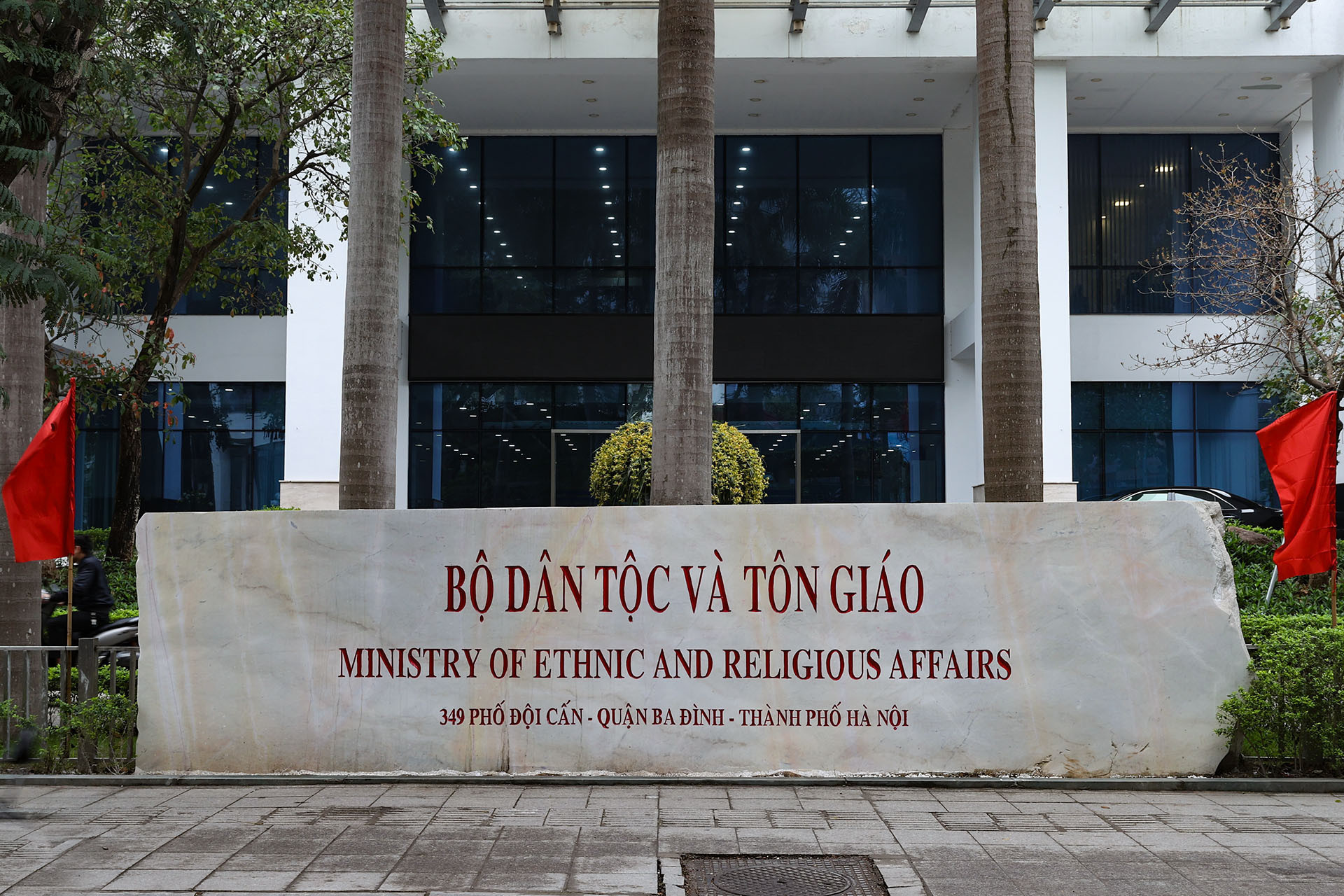
The Ministry of Ethnic and Religious Affairs will perform its responsibilities and exercise its powers in accordance with the Law on Government Organization and government regulations governing the functions, responsibilities, powers and organizational structures of ministries and ministerial-level agencies, alongside a range of specific duties.
The ministry will submit to the government draft laws and National Assembly resolutions, draft ordinances and resolutions of the National Assembly Standing Committee, as well as draft government decrees and resolutions under the government’s annual legislative program.
It will also submit resolutions, projects and proposals as assigned by the government and Prime Minister.
The ministry is responsible for submitting ethnic policies and policies concerning beliefs and religions within its state management remit to the government for subsequent submission to the National Assembly.
It will also submit to the government and Prime Minister long-, medium- and short-term development strategies, master plans and annual plans, as well as nationally important projects and works in sectors under its management.
In ethnic affairs, the ministry will submit to competent authorities specialized policies, programs and projects for socioeconomic development in communes and villages facing difficult or particularly difficult socioeconomic conditions in ethnic minority and mountainous areas, border communes and designated revolutionary base areas.
Its responsibilities also cover investment and assistance policies aimed at stabilizing the lives of ethnic minority communities; programs supporting people in particularly disadvantaged areas; and policies and projects to preserve and support the development of very small ethnic minority groups and ethnic minorities facing severe or specific difficulties.
The ministry will submit policies concerning respected and influential individuals within ethnic minority communities to competent authorities.
It is also responsible for policies on human resource development and attracting and strengthening the contingent of officials, civil servants and public employees working in ethnic minority and mountainous areas.
Other areas include policies to improve educational levels; train, develop and employ ethnic minority officials; and provide specialized policies for officials and civil servants working within the government system responsible for ethnic affairs.
The ministry will also submit to competent authorities, or issue within its own authority, criteria for classifying ethnic minority and mountainous areas according to their level of development, as well as lists categorizing provinces, communes and villages on that basis.
It will establish criteria for identifying ethnic minority groups facing significant or specific difficulties.
The ministry will coordinate with other ministries and relevant agencies in planning the allocation of resources for socioeconomic development and other forms of investment in ethnic minority and mountainous localities.
It will also propose and participate in the appraisal of programs, projects, proposals and policies relating to ethnic minority and mountainous areas in accordance with the law.
The ministry will oversee specialized schools and other educational institutions when assigned by competent authorities and in accordance with legal regulations.
It will also conduct investigations, surveys and research and compile information on the socioeconomic development of ethnic groups, ethnic composition, names, customs and practices of ethnic minorities, as well as other issues concerning ethnic affairs.
In the field of beliefs and religions, the ministry is responsible for implementing Party guidelines, state policies and laws, as well as strategies, plans, programs and projects concerning or related to beliefs and religions once they have been issued or approved by competent authorities.
The ministry will serve as the main liaison with domestic and international religious organizations, handle religious external relations and human rights issues in the religious field, and promote greater solidarity among religious communities in Vietnam.
It will take the lead in coordinating with ministries, government agencies, local authorities, central bodies of socio-political organizations and other relevant organizations to provide information, conduct public communications and encourage people to comply with Party guidelines and state policies and laws concerning beliefs and religions.
The ministry’s responsibilities also extend to the management of publications, religious scriptures, works, teaching materials and cultural products devoted exclusively to beliefs and religions produced by belief communities and religious organizations authorized by the state to operate.
Tran Thuong
.svg)
