 Vietnamnet.vn

 Podcast



Although E10 fuel is considered compatible with more than 90% of vehicles currently in use and does not require engine modification, consumer reception in Vietnam remains hesitant, shaped largely by perception rather than technical evidence.
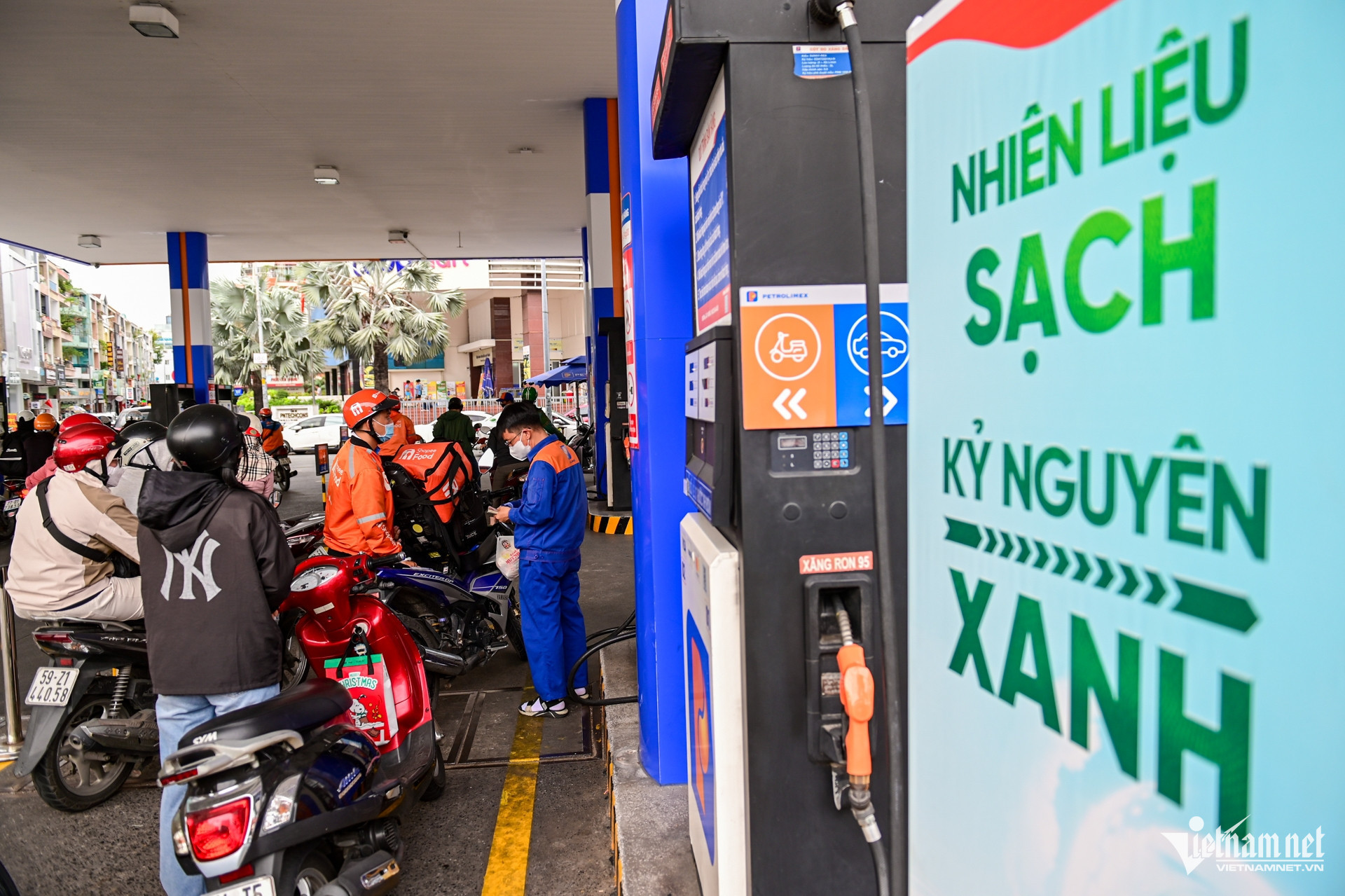
For many drivers, the choice of fuel is influenced less by official guidance and more by habit and informal information channels.
Phan Thi Thu Hong, a resident of Ho Chi Minh City, said she has never used biofuel such as E5 in the past or E10 at present. Her decision, she explained, is guided by two main factors.
The first is herd mentality. At fuel stations, she observes that most customers opt for RON95 gasoline, and she follows suit. The second is word-of-mouth information. A family member once told her that biofuels could negatively affect engine performance.
“Every day, I travel about 35km to and from work. I choose conventional gasoline to avoid any unexpected engine issues,” she said.
A similar concern is shared by Pham Quang Dien in Hanoi, who has been using a Honda Dream motorbike purchased in 2012. After more than a decade running on mineral gasoline, the vehicle continues to operate reliably. He has also heard that E10 may lead to higher fuel consumption.
Despite knowing that biofuel is cheaper, he said he has no intention of switching unless required to do so.
Such vague but persistent concerns have contributed to a lukewarm response to E10. In Ho Chi Minh City, since August 1, 2025, the Vietnam National Petroleum Group (Petrolimex) has introduced E10 at its retail stations.
However, a representative from a Petrolimex Saigon outlet noted that daily E10 sales remain around 800 liters, a figure that has barely changed over more than eight months. Customer uptake has shown little growth.
Ngo Ngoc Nga, head of Petrolimex Saigon’s Station No. 36, said consumers remain cautious. E10 sales at her station average about 1,000 liters per day, accounting for just 5% of RON95 consumption.
According to a draft amendment to Circular 50 on the roadmap for biofuel blending, issued by the Ministry of Industry and Trade, E5 gasoline once held about 40% market share but has now declined to 15-20%.
The primary reasons include the relatively small price difference between biofuel and traditional gasoline, as well as ongoing consumer hesitation.
The ministry noted that stronger policy incentives are needed to promote biofuel consumption, particularly through more meaningful price gaps. Communication, it added, plays a critical role in shaping public acceptance.
Regarding engine performance, the drafting agency emphasized that studies show E10 is compatible with over 90% of existing vehicles and requires no engine modifications. It also contributes to emissions reduction, cutting carbon monoxide (CO) by about 20-30% and hydrocarbons (HC) by 10-20%.
From a policy perspective, Dr Dao Le Trang Anh, senior lecturer in Finance at RMIT University Vietnam, described the accelerated rollout of E10 in 2026 as a strategic move to restructure the energy market toward sustainability and reduce reliance on fuel imports.
At the macroeconomic level, analysis suggests that E10 could help Vietnam save between US$700 million and nearly US$1 billion annually by reducing gasoline imports, while improving the energy trade balance.
The policy could also strengthen linkages with the agricultural sector, as ethanol is produced from cassava and sugarcane, thereby supporting rural incomes and advancing the bio-industry.
However, Dr Trang Anh stressed that the success of E10 implementation depends not only on administrative decisions but also on the alignment of market and institutional conditions.
First, a stable and cost-competitive ethanol supply is essential. With nationwide E10 adoption, demand for ethanol could reach 1.2 to 1.3 million cubic meters per year. Without stable supply at reasonable cost, E10 would lose its price advantage over conventional gasoline.
Second, pricing and tax mechanisms must be carefully designed to protect consumer welfare. Policies should maintain environmental tax incentives or special consumption tax reductions to ensure E10 remains competitively priced.
Third, infrastructure and distribution systems require coordinated investment. Expanding E10 availability nationwide will demand upgrades in blending, storage and logistics systems among fuel distributors.
These investments represent significant upfront costs. Without proper preparation, businesses may face supply disruptions or increased distribution expenses. Authorities, therefore, need to provide financial support mechanisms or clear transition roadmaps.
Finally, managing consumer expectations and trust is crucial. Although real-world testing shows minimal impact on engines, concerns about performance and durability persist.
Transparent and consistent communication is key to changing consumer behavior. This includes publishing clear technical standards, ensuring rigorous quality control and delivering evidence-based information.
International experience also offers valuable lessons. In the US, the Renewable Fuel Standard helped make E10 widely adopted through mandatory blending requirements and effective market support mechanisms.
In Brazil, success has been driven by a comprehensive ecosystem, including a high proportion of flex-fuel vehicles and a well-developed distribution network.
By contrast, Indonesia has faced difficulties implementing E10 due to insufficient ethanol supply and limited production capacity, underscoring the importance of securing stable inputs before scaling up.
Tran Chung
.svg)
