 Vietnamnet.vn

 Podcast



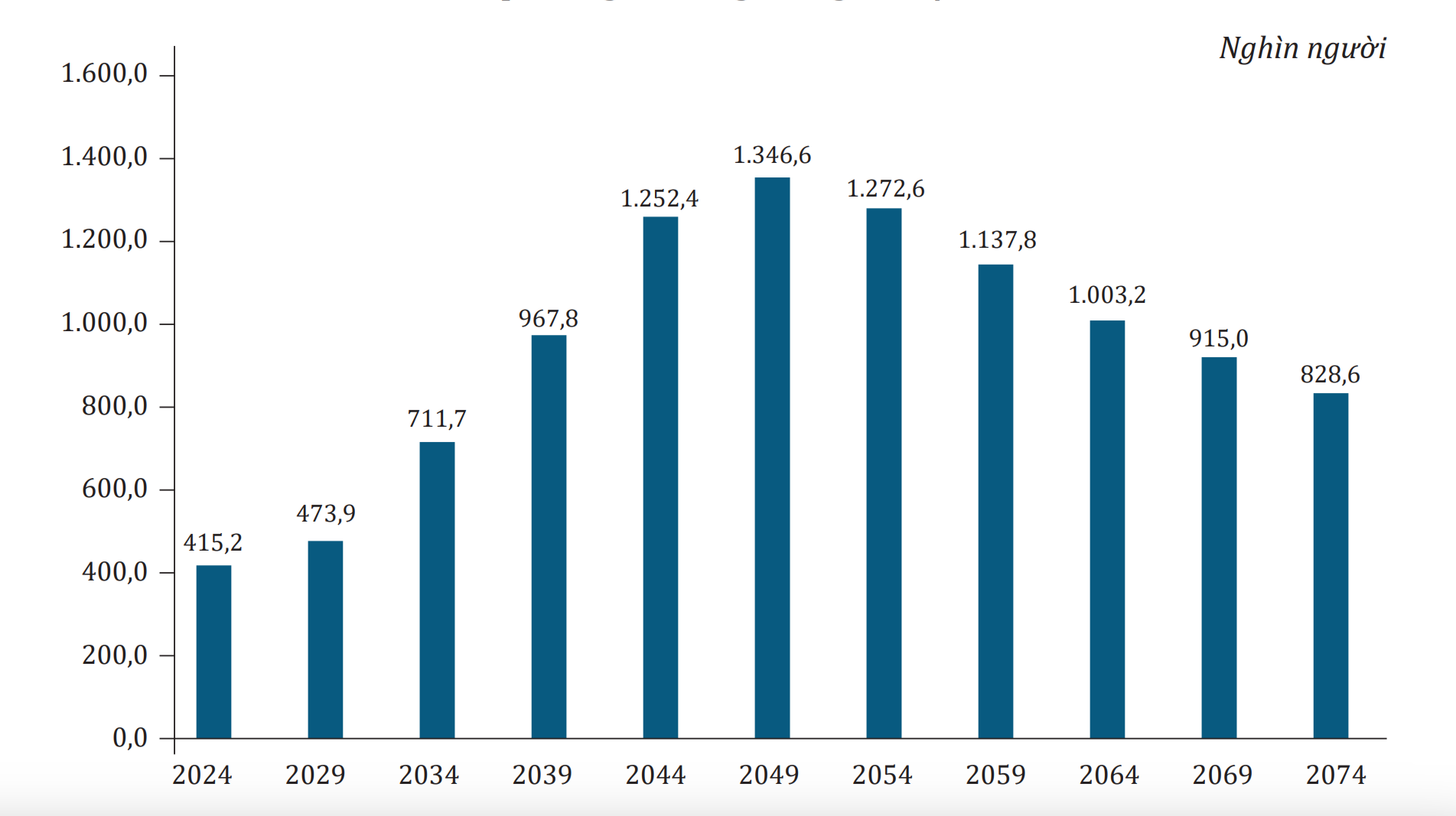

The report predicts the imbalance will continue to worsen after 2034 before gradually easing.
By 2049, Vietnam is expected to face its largest shortage of women of marriageable age, with an estimated 1.3 million fewer women than men in the 20-39 age group.
At that point, the shortfall would be equal to 8.7% of the country's male marriage-age population.
After 2049, the imbalance is forecast to gradually decline as the report assumes Vietnam's sex ratio at birth will begin returning to its natural level from around 2034, reaching 106 to 107 boys for every 100 girls.
Even then, the demographic effects are expected to persist for decades.
By 2074, Vietnam is still projected to have 829,000 more men than women of marriageable age.
The report says the consequences of the country's imbalanced sex ratio at birth during the first three decades of the 21st century will continue to shape Vietnam's demographic structure well into the future.
Vietnam's current sex ratio at birth stands at 111.4 boys for every 100 girls, considerably higher than the biological norm of about 106 boys per 100 girls.
Despite years of public awareness campaigns and measures aimed at preventing sex-selective practices, the imbalance has yet to be reversed.
Most recently, Government Decree No. 90/2026, which took effect on May 15, introduced tougher penalties for intentional sex selection before birth.
Under the new regulations, performing ultrasound examinations, blood tests or other procedures to determine or disclose the sex of a fetus, except where permitted by law, is punishable by fines ranging from VND7 million to VND15 million (US$267 to US$573), up from the previous VND5 million to VND10 million (US$191 to US$382).
The penalty for terminating a pregnancy solely because of fetal sex has increased from VND3 million to VND5 million (US$115 to US$191) to VND5 million to VND7 million (US$191 to US$267).
Individuals who provide or instruct others in the use of drugs or chemicals to terminate a pregnancy for sex-selection purposes face fines of VND20 million to VND25 million (US$764 to US$955).
The highest penalty applies to healthcare providers who perform abortions while knowing the procedure is intended to eliminate a fetus because of its sex. They now face fines of VND25 million to VND30 million (US$955 to US$1,146), compared with the previous VND15 million to VND20 million (US$573 to US$764).
According to the General Statistics Office, the growing shortage of women of marriageable age could increase the vulnerability of women by exposing them to greater risks of gender-based violence, sexual exploitation and human trafficking as competition among men seeking spouses intensifies.
Vo Thu
.svg)
