 Vietnamnet.vn

 Podcast



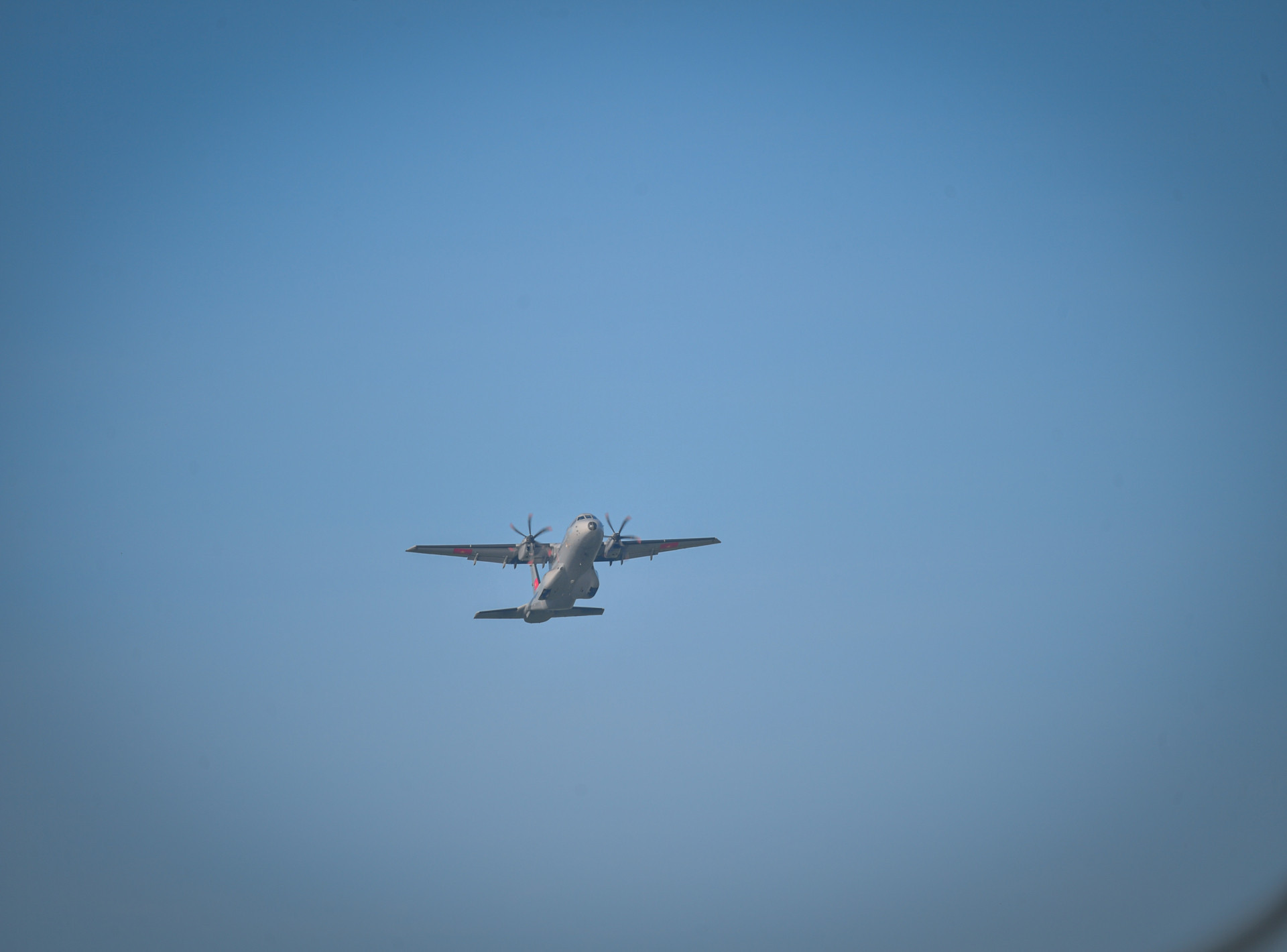
At 10:15 a.m. on Oct. 5, a CASA C-295 military transport aircraft carrying 15,401 biological samples from the remains of fallen soldiers landed at Gia Lam military airport in Hanoi after departing from Can Tho International Airport.
The flight was jointly organized by Military Region 9 Command and the Air Defense-Air Force Service as part of Vietnam's "500-day-and-night campaign" to accelerate the search, recovery and identification of fallen soldiers' remains.
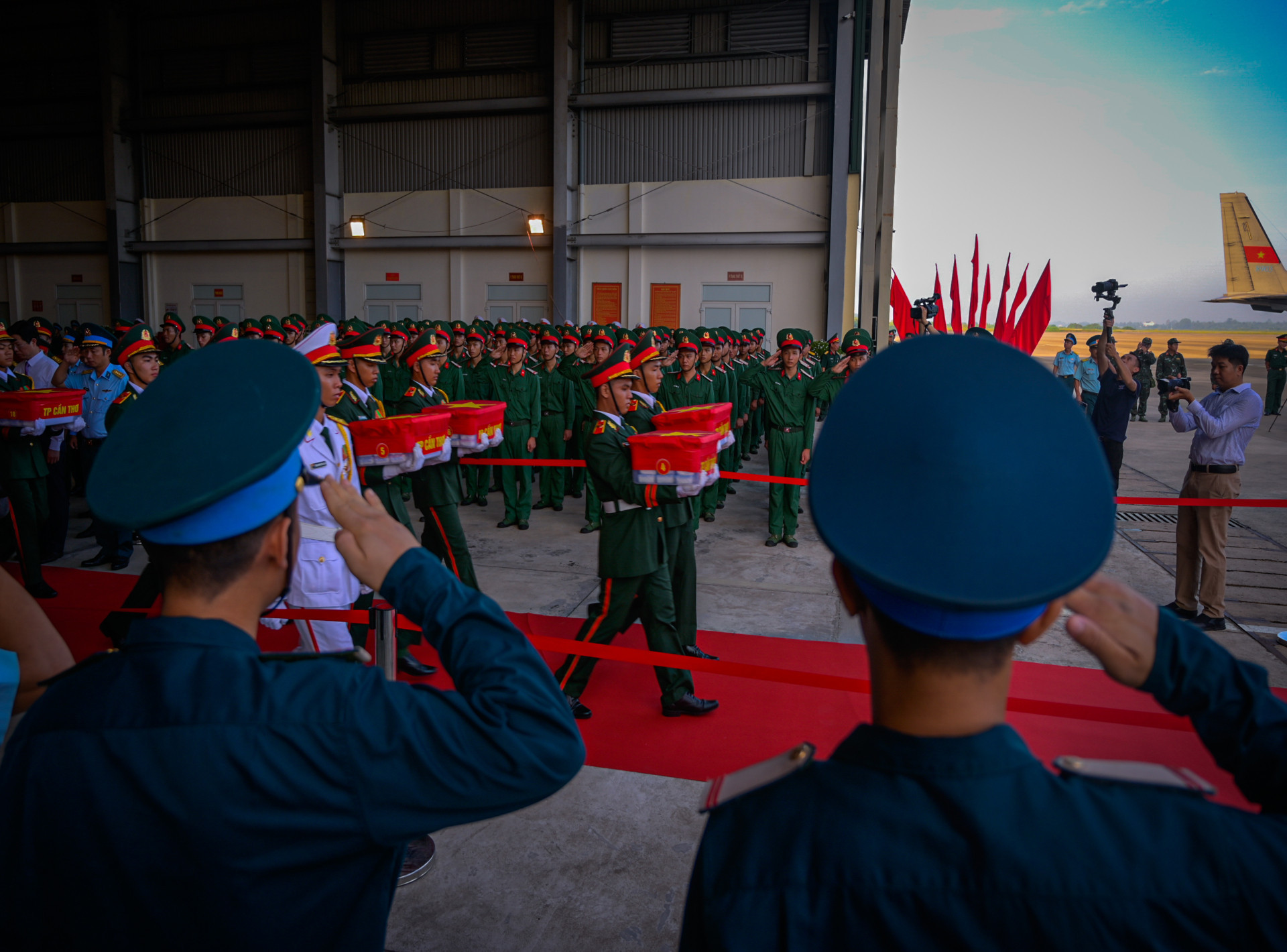
Before departure, a ceremony was held at Can Tho airport, where representatives of the military and authorities from Mekong Delta provinces and cities offered incense and flowers in tribute to the fallen soldiers.
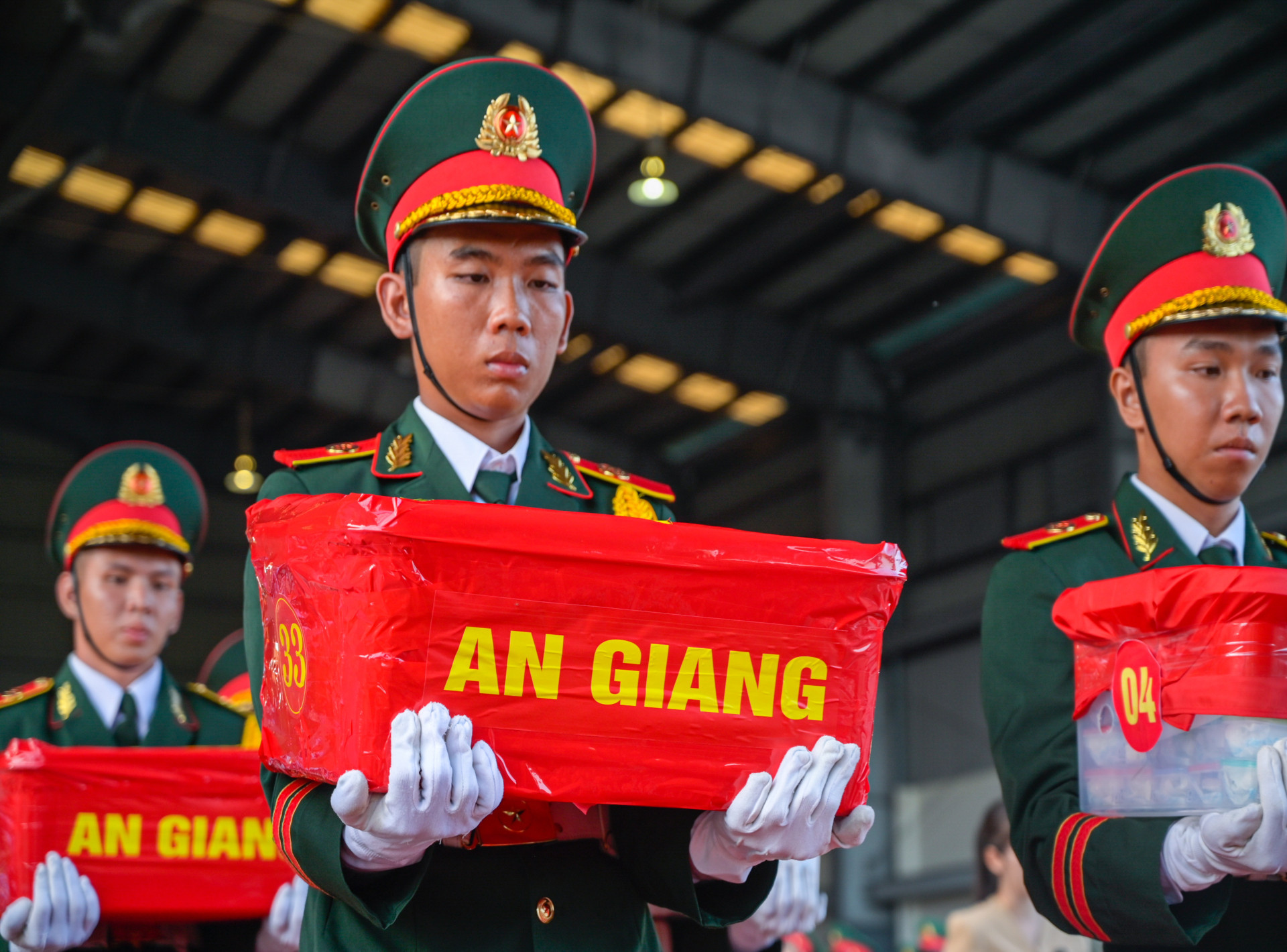
The 15,401 samples were collected from remains exhumed in five southern localities: An Giang, Can Tho, Dong Thap, Vinh Long and Ca Mau.
They were packed in about 161 specialized containers weighing a total of approximately 2,093 kilograms.
This was the 11th time Military Region 9 had organized the transportation of samples from fallen soldiers' remains for DNA analysis and the first time it had used a CASA C-295 operated by Air Force Brigade 918 for the mission.
It was also the third shipment of such samples transported by military aircraft and, with 15,401 samples, the largest airlift of its kind to date.
Lieutenant General Ho Van Thai, Political Commissar of Military Region 9, said the DNA testing is intended to establish the identities of fallen soldiers whose names remain unknown, creating hope that they can ultimately be reunited with their families and hometowns.
After the aircraft landed at Gia Lam, the specialized containers were solemnly unloaded. Organizers then held another flower- and incense-offering ceremony to honor those who sacrificed their lives for national independence.
Major General Hoang Van Lau, Political Director of the Air Defense-Air Force Service, said extensive preparations had been made for the mission, covering personnel, aircraft and other necessary support.
"We selected our best pilots, with the highest level of flying proficiency. The brigade commander directly served as the lead pilot, alongside other highly experienced pilots," Lau said. "They are among our key pilots, who have undergone systematic training and possess a high level of expertise to ensure the flight was carried out safely."
Lau said that after successfully completing previous flights with absolute safety, the Air Defense-Air Force Service would continue to draw lessons from the missions, make thorough preparations and remain ready to coordinate with units in southern Vietnam to transport soldiers' remains and biological samples in the future.
"This is an extremely meaningful mission and an opportunity for us to pay tribute to the sacrifices of earlier generations, particularly the fallen heroes," Lau said. "We have therefore made sure that our troops fully understand their responsibilities and are determined to carry out the mission under all circumstances."
Following the ceremony at Gia Lam, the containers were loaded onto 20 ambulances for transportation to three institutions responsible for DNA analysis: the Military Institute of Forensic Medicine under the Ministry of National Defense, the Institute of Criminal Science under the Ministry of Public Security, and the Vietnam Academy of Science and Technology.
The testing is expected to support efforts to identify fallen soldiers whose remains have yet to be matched with names, families and hometowns.
Ky Long - Thach Thao - Kieu Oanh
.svg)
