 Vietnamnet.vn

 Podcast



The Standing Secretariat will be responsible for reviewing and approving proposals to deploy Vietnamese military and police forces abroad for disaster response, humanitarian assistance and recovery operations under newly issued government regulations.
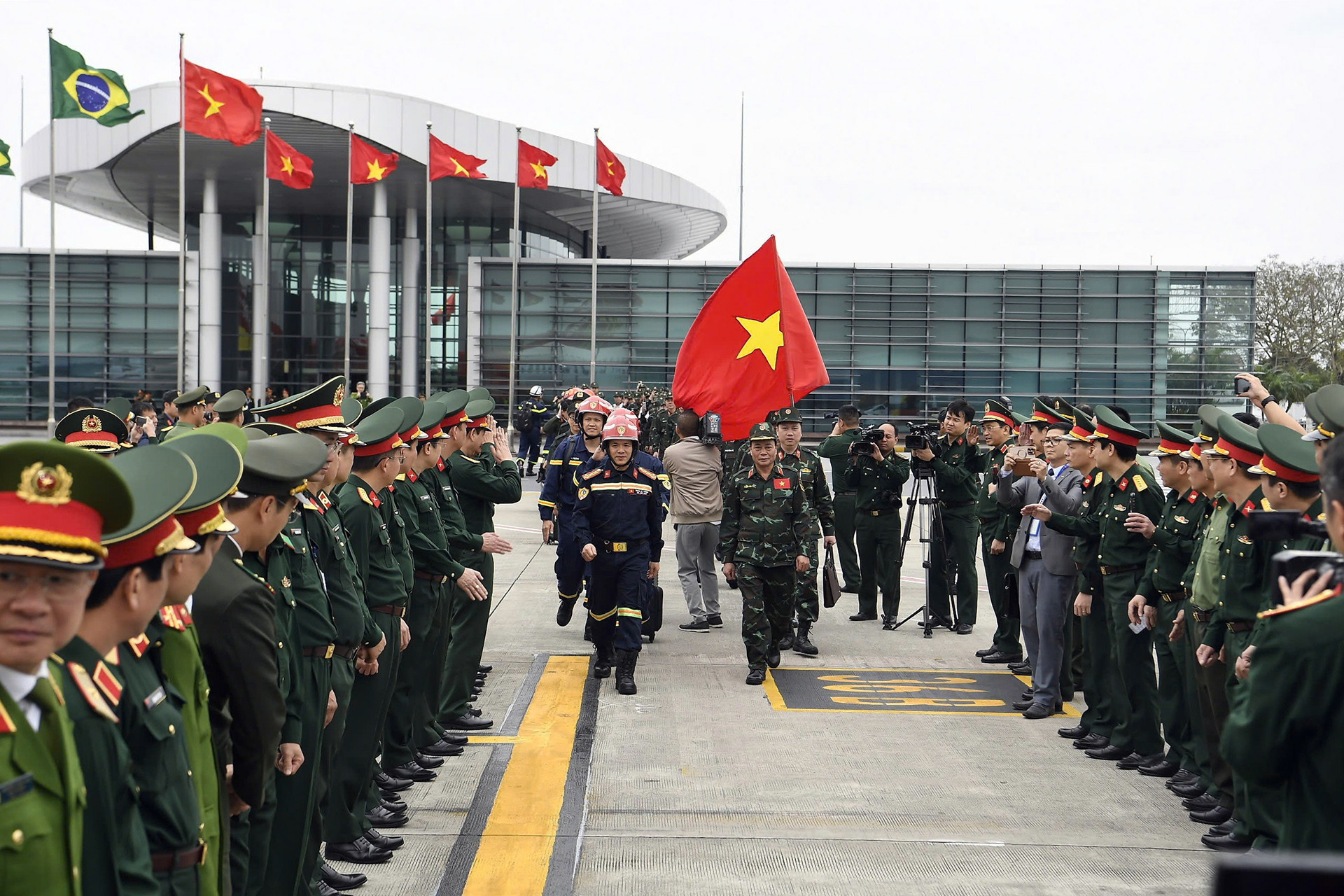
Deputy Prime Minister Phan Van Giang has signed a Prime Ministerial decision governing the receipt and coordination of foreign relief assistance and the deployment of Vietnamese personnel and equipment overseas for disaster response, recovery, humanitarian assistance and disaster relief activities.
Under the decision, Vietnam's overseas disaster response forces will consist of permanent units and other supporting forces. The permanent force will be made up of personnel from the Ministry of National Defence and the Ministry of Public Security.
Military and police designated as core response forces
The Ministry of National Defence will deploy urban search and rescue teams, environmental recovery units, search-and-rescue dog teams, maritime rescue vessels, submarine rescue centers, field hospitals and military medical teams.
The Ministry of Public Security will deploy firefighting and rescue teams, search-and-rescue dog units and emergency medical response teams.
Other participating forces may include personnel and experts mobilized by ministries, government agencies and provincial authorities according to specific areas of responsibility and the requirements of competent authorities.
Vietnamese personnel participating in international disaster relief and humanitarian assistance missions must receive training in foreign languages and professional skills related to international humanitarian operations. Training exercises and drills will be conducted at least once each year.
Personnel selected for deployment must demonstrate strong ethical standards, possess the physical capacity to work in harsh conditions and generally be under 45 years of age, except for commanding officers. Exceptions may be approved by competent authorities in special circumstances.
Equipment deployed overseas must be modern, lightweight, multifunctional and highly mobile, allowing rapid transportation and adaptation to different disaster scenarios and host-country requirements.
Uniforms worn during overseas missions will follow regulations issued by the relevant state management authority.
Funding for overseas disaster response and humanitarian assistance missions will come from annual state budget allocations assigned to ministries, central agencies and local authorities.
Standing Secretariat to review deployment proposals
According to the decision, deployment proposals will be based on Vietnam's diplomatic relations with affected countries and on requests for assistance from nations experiencing disasters.
The ministry responsible for the relevant sector will lead coordination with ministries, central agencies and local authorities to prepare deployment proposals.
As a general principle, any proposal involving the deployment of both military and police forces overseas for disaster response, recovery and humanitarian assistance must be coordinated by the Ministry of National Defence in consultation with the Ministry of Public Security and other relevant agencies before being submitted to the Standing Secretariat for consideration and approval.
If a proposal involves only police forces, without military participation, the Ministry of Public Security will take the lead in preparing and submitting recommendations to the Standing Secretariat for approval.
In cases where no armed forces are involved, the ministry, agency or local authority assigned to lead the mission will submit recommendations directly to the Prime Minister for consideration and decision.
The new framework formalizes procedures for Vietnam's growing participation in international humanitarian assistance and disaster relief operations.
Tran Thuong
.svg)
