 Vietnamnet.vn

 Podcast



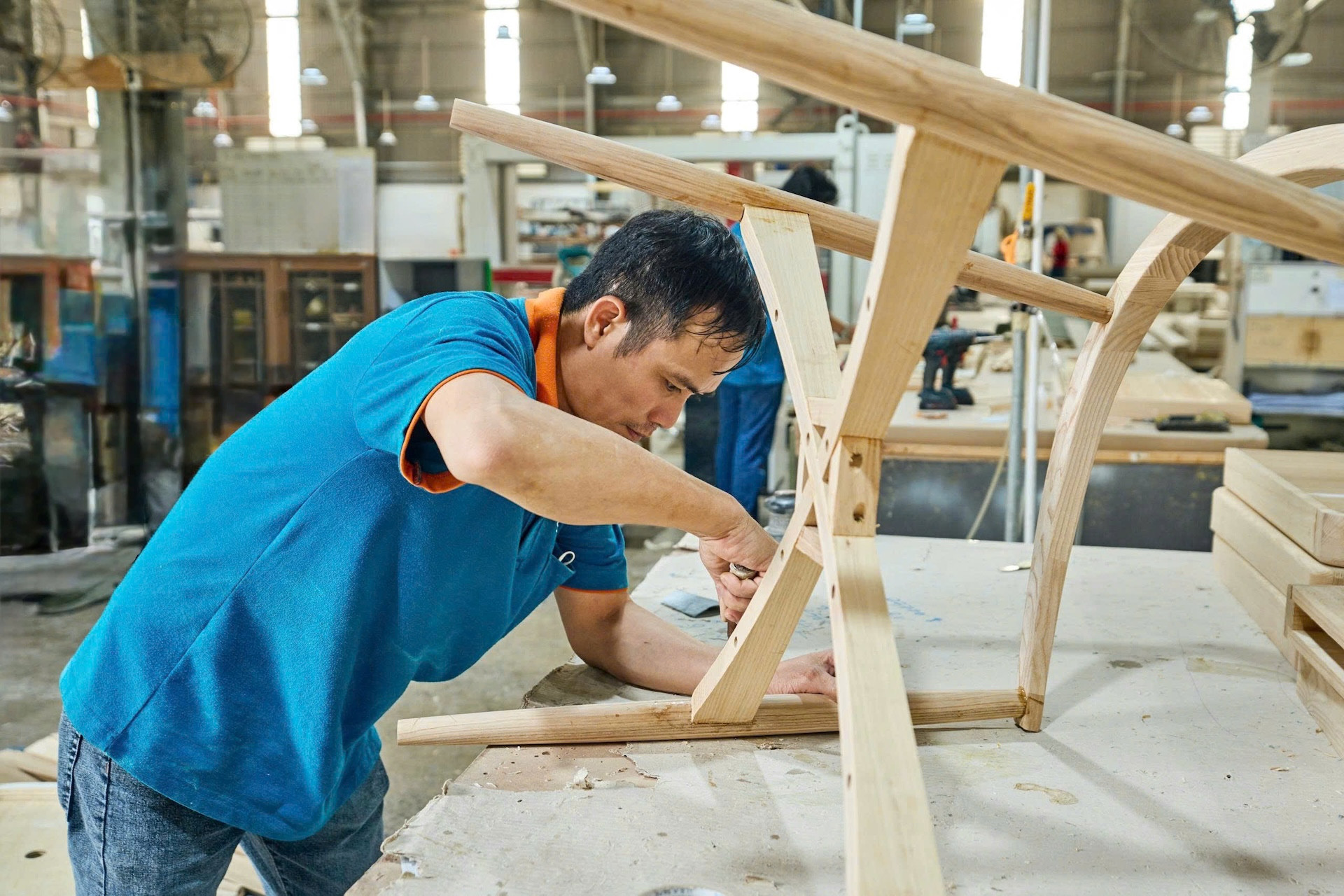
Vietnam’s furniture industry is undergoing a dramatic transformation, moving from contract manufacturing for global retailers to building its own brands and selling directly to international consumers through e-commerce platforms.
Industry experts say Vietnamese businesses should not fear China’s ultra-low-cost products, but instead focus on a strategy that targets a different segment of the market.
Speaking at the seminar “Vietnam furniture – Export strategies to win in a new context,” held on March 4, Pham Thi Trang Dai, Senior Account Manager at Amazon Global Selling Vietnam, shared several striking examples of Vietnamese furniture companies achieving extraordinary growth online.
One company, referred to as company A, began selling products on Amazon in 2019. After just six years, its revenue had grown 200-fold, reaching US$200 million in 2025.
Another firm, company B, expanded even further, increasing revenue from US$500 million in 2020 to US$1 billion in 2024.
According to Dai, what these online retail “rising stars” share is not necessarily large factories but the ability to design their own products rather than relying solely on OEM manufacturing.
Company B, for example, already holds more than 40 recognized furniture design patents, with dozens more currently under review in the US.
The “affordable premium” opportunity
Dai noted that data from global e-commerce platforms shows the online furniture market clearly divided into two segments.
The first is the low-cost segment, dominated largely by Chinese manufacturers. These companies often use inexpensive materials such as bamboo, MDF wood or wood-look plastic to produce extremely affordable products.
For example, a set of three wooden cutting boards can sell for around US$14, while a bed frame may cost as little as US$119. However, the durability of these products is often limited.
The second segment is the high-end market, where manufacturers use premium materials such as solid wood, walnut or oak. Prices in this segment are significantly higher.
A set of three teak cutting boards, for example, may cost nearly US$60, while a basic bed frame can reach US$1,395 - many times more expensive than low-cost alternatives.
Based on this market data, Dai suggested that Vietnamese furniture businesses should avoid direct price competition with Chinese manufacturers.
Instead, the real opportunity lies in the middle segment, which she described as the “affordable premium” category.
In this segment, manufacturers can use reasonably priced wood materials such as acacia or rubberwood while still delivering durability and attractive natural grain that surpasses bamboo or MDF products.
These products remain affordable but still offer a sense of quality and design appeal.
To optimize logistics costs on e-commerce platforms, furniture products should also be designed with smart modular structures that allow them to be easily disassembled and packed into compact shipping boxes.
Huynh Le Dai Thang, director of Nghia Son Wood Co., Ltd., agreed with this strategy.
His company previously specialized in contract manufacturing for global retailers such as IKEA and Costco. Today, however, Nghia Son has built its own brand in the US after four years of selling through e-commerce platforms.
The company now operates six warehouses in the US.
“Don’t be afraid when you see China producing extremely cheap products,” Thang said. “Don’t compete directly with them. Vietnamese furniture companies can succeed in the middle segment thanks to our strong raw material resources. The export potential in this segment is still very large.”
Global e-commerce continues to expand rapidly. According to eMarketer data, worldwide e-commerce revenue is expected to reach US$8.9 trillion by 2030.
In 2025 alone, e-commerce accounted for 21 percent of global retail sales, with total revenue exceeding US$6 trillion.
Phung Quoc Man, chairman of the Handicraft and Wood Industry Association of Ho Chi Minh City (Hawa), noted that Vietnam’s wood industry has already demonstrated remarkable growth.
Export value increased from US$217 million in 2000 to US$17.3 billion in 2025 - an 85-fold rise.
However, Man said the industry must now adapt to a new phase of development.
Through e-commerce, Vietnamese manufacturers can now sell directly to consumers in distant markets such as the US and Europe.
The shift from traditional B2B manufacturing to B2C online retail is becoming a powerful growth driver.
At the opening ceremony of HawaExpo 2026 on the morning of March 4, Ho Chi Minh City People’s Committee Chairman Nguyen Van Duoc also emphasized that the wood industry needs to transform its mindset.
Manufacturers must move beyond pure contract manufacturing to master design and technology, shifting from “Made in Vietnam” to “Made by Vietnam.”
Industry leaders say this transformation is essential for increasing the value of Vietnamese furniture products in global markets.
Tran Chung
.svg)
